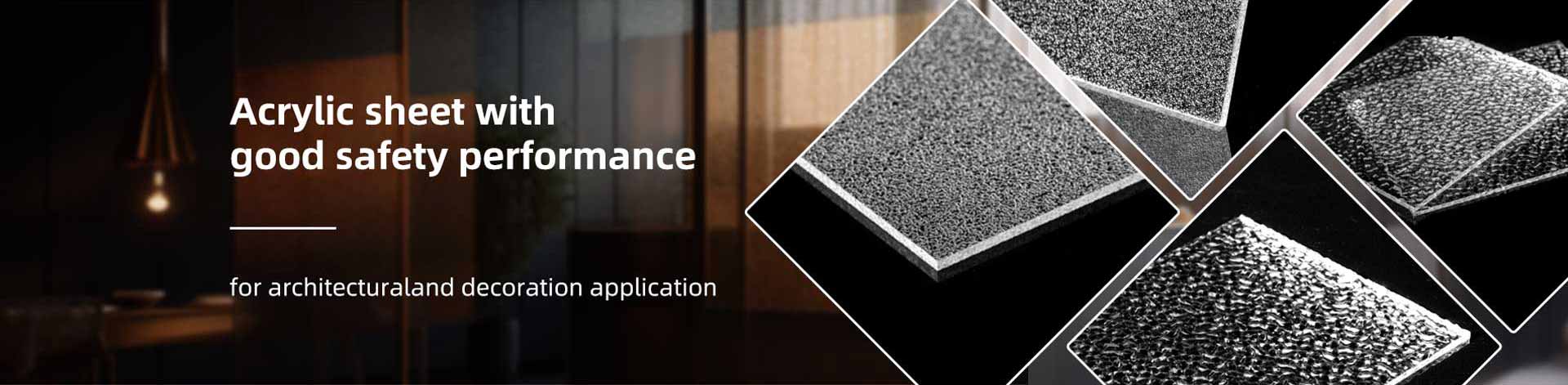
Acrylic sheet—commonly known as PMMA (Polymethyl Methacrylate) or plexiglass—is famous for its crystal clarity and lightweight strength.
However, many first-time users ask:
Does acrylic sheet break easily?
The answer is no—acrylic does not break easily under normal use. In fact, it is 10 times more impact-resistant than glass and can withstand everyday knocks, weather changes, and fabrication stresses remarkably well.
At KUNXIN Plastics, we manufacture optical and Decorative Acrylic Sheets designed for high strength, durability, and long service life across lighting, signage, and architectural projects.
Acrylic offers an outstanding balance of rigidity and toughness. The table below compares its key mechanical properties with standard glass.
| Property | Acrylic (PMMA) | Glass | Result |
|---|---|---|---|
| Impact Resistance | ~10 × greater than glass | — | Acrylic resists shattering |
| Density | 1.19 g/cm³ | 2.5 g/cm³ | ~50 % lighter |
| Flexural Strength | 110 MPa | 70 MPa | Acrylic bends before breaking |
| Elongation at Break | 4 – 5 % | < 1 % | Acrylic absorbs impact stress |
| Transparency | 92 – 93 % light transmission | 90 – 91 % | Clearer and lighter |
Because of this unique combination, acrylic is widely used as a safety glazing material where glass would be too fragile or heavy.
Several characteristics explain its excellent durability:
Acrylic is a thermoplastic polymer with long, flexible molecular chains. These absorb impact energy rather than fracturing suddenly like glass.
When properly supported and drilled with clearance holes, stress spreads evenly throughout the sheet instead of concentrating at one point.
Unlike glass, acrylic does not crack under rapid temperature changes between –20 °C and +80 °C.
Acrylic has a slight flexibility that allows it to bend under load instead of shattering—making it safer for indoor and outdoor installations.
Although tough, acrylic can break if mishandled.
Understanding its limits helps ensure long-term performance.
| Cause | Explanation | Prevention |
|---|---|---|
| Over-tightened screws or bolts | Local stress cracks | Drill oversized holes and use rubber washers |
| Sharp impacts on edges | Edges are more brittle | Use edge protectors or rounded corners |
| Improper drilling or cutting | Generates heat and stress | Use low speed and plastic-specific tools |
| Extreme bending | Exceeds elastic limit | Heat-form instead of cold-bend |
| Solvent contact stress-crazing | Certain chemicals attack PMMA | Use acrylic-safe cleaners |
In short, acrylic doesn’t break easily—but it can crack from mechanical or chemical stress if basic handling rules are ignored.
Lighting Diffusers: Endure years of heat and vibration in LED fixtures.
Outdoor Signage: Withstand wind loads and temperature swings without shattering.
Protective Barriers: Absorb daily contact in retail or industrial environments.
Architectural Glazing: Maintain structural integrity even under hail or accidental impact.
Acrylic’s balance of strength and safety makes it ideal for both indoor and outdoor projects.
| Property | Acrylic (PMMA) | Polycarbonate (PC) |
|---|---|---|
| Impact Strength | ~10 × glass | ~250 × glass |
| Surface Hardness | Higher (more scratch-resistant) | Softer (needs coating) |
| UV Stability | Excellent | Requires UV-protected grade |
| Transparency | 92 – 93 % | 88 – 90 % |
| Cost | Moderate | Higher |
While polycarbonate is tougher for extreme impact, acrylic delivers the ideal mix of strength, clarity, and UV resistance for most architectural and decorative uses.
Pre-drill mounting holes slightly larger than fasteners.
Support edges evenly to avoid concentrated stress.
Avoid harsh solvents (acetone, benzene, etc.).
Handle sheets vertically with both hands or suction lifters.
Use rounded corners on designs to distribute stress evenly.
Store flat in a cool, dry environment to prevent warping.
When treated correctly, acrylic maintains its appearance and strength for 10–15 years or longer.
At KUNXIN Plastics, we produce optical-grade and decorative acrylic sheets using 100 % virgin PMMA resin. Our products feature:
High impact resistance and stable mechanical performance
UV-stabilized grades for outdoor use
Precise cutting, drilling, and finishing by CNC and laser systems
OEM/ODM customization for lighting, signage, and architecture
Consistent quality control across every production batch
Our sheets combine strength, clarity, and formability, trusted by international buyers for demanding applications.
Q1: Is acrylic shatterproof?
Not completely, but it’s shatter-resistant—it cracks into large, dull pieces rather than sharp shards like glass.
Q2: How thick should acrylic be to avoid breaking?
For structural or load-bearing uses, 4 – 6 mm thickness is typical. Thicker panels provide greater rigidity.
Q3: Does cold weather make acrylic brittle?
Acrylic remains stable down to –20 °C. Below this, it becomes slightly more rigid but does not suddenly break.
Q4: Can I drill or screw acrylic without cracking it?
Yes—pre-drill clearance holes, use plastic-compatible bits, and avoid overtightening.
Q5: How long does acrylic last outdoors?
UV-stabilized acrylic from KUNXIN Plastics retains its clarity and strength for 10 – 15 years or more in outdoor conditions.
Previous: Does Acrylic Sheet Fade in Sunlight