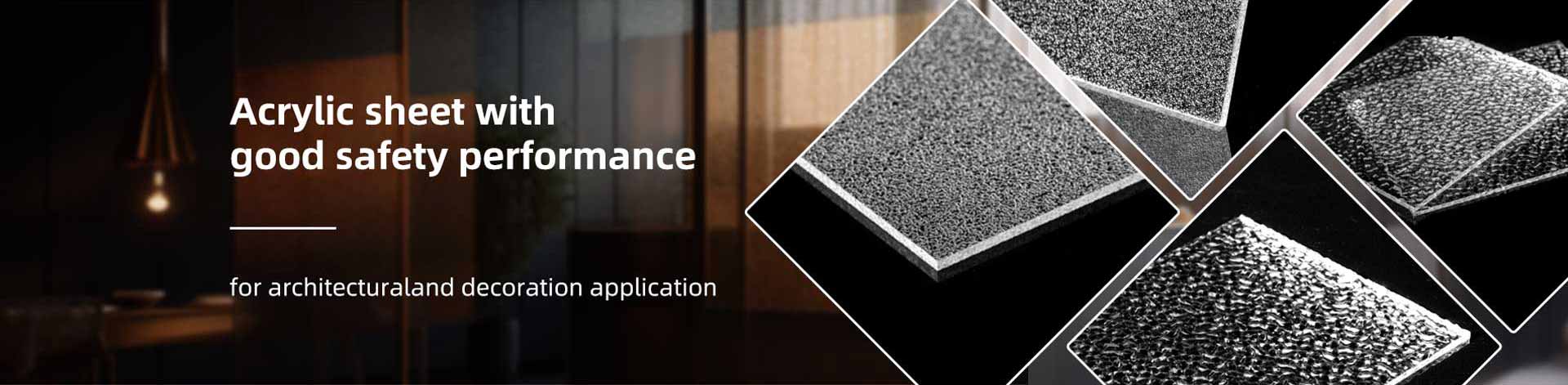
Acrylic sheet—scientifically known as PMMA (Polymethyl Methacrylate) and commonly called plexiglass—is one of the most popular transparent plastics used in modern manufacturing.
It offers the clarity of glass, but with greater strength, lighter weight, and superior weather resistance.
But have you ever wondered: how is acrylic sheet made?
At KUNXIN Plastics, we produce optical and Decorative Acrylic Sheets using advanced casting and extrusion technologies. This article explains the full process—from raw materials to finished sheets ready for architectural, lighting, and signage applications.
Acrylic sheet is produced by polymerizing methyl methacrylate (MMA) monomers—a clear, liquid chemical—into solid PMMA plastic.
Depending on the process, there are two main production methods:
| Production Type | Process | Characteristics |
|---|---|---|
| Cast Acrylic Sheet | Polymerized between glass molds | High clarity, rigid, excellent weather resistance |
| Extruded Acrylic Sheet | Melted and extruded through rollers | Consistent thickness, cost-effective, ideal for fabrication |
Both types are available at KUNXIN Plastics, offering flexibility for different applications—from precision optical use to decorative installations.
The journey begins with methyl methacrylate monomer, a transparent, colorless liquid.
It serves as the base building block for PMMA.
Before polymerization, MMA is purified to remove water and impurities, then blended with:
Catalysts (such as peroxides) to initiate polymerization
Stabilizers to control reaction rate and prevent premature curing
Colorants or pigments for tinted acrylic sheets
UV absorbers for weather and sunlight protection
High-purity MMA ensures optical clarity and chemical stability in the final product.
Cast acrylic is prized for its crystal transparency and excellent optical performance.
Here’s how it’s made step by step:
Two flat glass plates are assembled with a rubber gasket to form a sealed mold cavity.
Spacers determine the final sheet thickness, typically 1–25 mm.
The prepared MMA mixture is poured between the glass plates.
The mold is then sealed and clamped for curing.
The filled molds are placed in a temperature-controlled oven.
Polymerization occurs gradually over 8–12 hours, transforming the liquid monomer into solid acrylic.
Slow, even curing prevents bubbles and stress inside the sheet.
After polymerization, the sheets undergo annealing at around 80–90 °C.
This step relieves internal stresses and improves dimensional stability.
The glass molds are removed, and the edges are trimmed.
The sheet is then inspected for clarity, thickness, and surface quality, ensuring optical-grade standards.
Extruded acrylic is made by melting pre-polymerized PMMA pellets and forcing them through precision rollers.
This method is faster and ideal for high-volume production.
Pre-dried PMMA pellets are loaded into a hopper above the extruder.
Inside the extruder, heat (200–250 °C) and rotating screws melt the pellets into a viscous, uniform flow.
The molten acrylic passes through a flat die, forming a continuous sheet.
Rollers then calibrate the thickness and cool the sheet evenly.
After cooling, the continuous sheet is cut to standard sizes (e.g., 1220 × 2440 mm) and stacked for inspection.
Extruded acrylic features:
Uniform thickness tolerance
Smooth surfaces
Easy thermoforming and bending
Lower production cost compared with cast sheets
At KUNXIN Plastics, we maintain tight extrusion control systems to ensure consistent quality and optical stability.
After casting or extrusion, acrylic sheets can undergo several finishing processes based on the customer’s needs:
| Process | Description | Result |
|---|---|---|
| Polishing | Mechanical or flame polishing of edges | High-gloss finish |
| Texturing / Frosting | Surface treatment for diffusion or decoration | Anti-glare / aesthetic look |
| Coloring | Incorporation of pigments or dyes | Custom shades, opaque or translucent |
| Coating | Hard-coat or anti-scratch surface layer | Enhanced durability |
| Laser or CNC Cutting | Precision shaping and trimming | Ready-to-install components |
These finishing options make KUNXIN acrylic sheets suitable for lighting diffusers, display panels, signage, and architectural glazing.
Each batch of acrylic sheet undergoes strict quality checks:
Optical Clarity Test (ASTM D1003): Ensures > 92 % light transmission
Thickness Uniformity Measurement: Maintains ± 0.2 mm tolerance
Impact and Tensile Testing: Confirms mechanical strength
UV Aging Simulation: Tests resistance to sunlight exposure
Surface Inspection: Detects bubbles, haze, or inclusions
Only sheets meeting optical and structural standards are approved for export.
Modern acrylic production emphasizes sustainability and efficiency:
Closed-loop water cooling systems reduce resource waste.
Monomer recovery captures unused MMA for reuse.
Regrind recycling turns production scrap into reusable PMMA pellets.
UV-stable, long-life materials minimize replacement frequency and waste.
At KUNXIN Plastics, our manufacturing process aligns with green production principles to ensure minimal environmental impact.
Acrylic sheets made by casting or extrusion are used in countless industries:
Architectural glazing and skylights
LED lighting diffusers and lamp covers
Retail display stands and signage
Protective shields and partitions
Furniture and interior decoration
Aquarium and exhibit panels
Every sheet combines optical beauty, strength, and adaptability, making acrylic one of the most versatile materials available.
Q1: What is the difference between cast and extruded acrylic?
Cast acrylic offers higher optical clarity and strength, while extruded acrylic is more uniform and easier to fabricate.
Q2: How thick can acrylic sheets be made?
Typically from 1 mm to 50 mm, depending on the casting or extrusion setup.
Q3: Is the acrylic sheet production process environmentally friendly?
Yes. Modern facilities like KUNXIN Plastics reuse water, recycle waste, and recover monomers for sustainability.
Q4: Can acrylic be colored during manufacturing?
Yes. Pigments and dyes can be added during polymerization to produce clear, frosted, translucent, or opaque sheets.
Q5: How long does the production cycle take?
Casting may take 10–12 hours including curing, while extrusion produces continuous sheets in minutes.