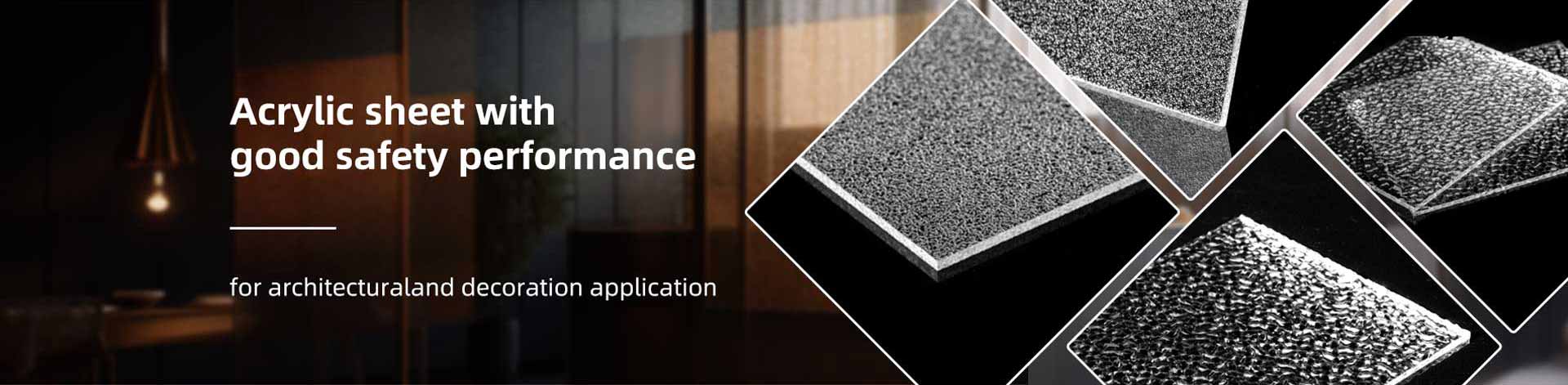
Acrylic sheet—also known as PMMA (Polymethyl Methacrylate) or plexiglass—is famous for being lightweight yet remarkably strong.
But when used for display shelves, aquarium panels, machine guards, or glazing, one key question arises:
How much weight can an acrylic sheet hold before bending or breaking?
The answer depends on thickness, size, support method, and load distribution, but in general, acrylic is far stronger than it looks.
At KUNXIN Plastics, our optical and structural-grade acrylic sheets are engineered to support substantial loads safely—making them ideal for both decorative and functional applications.
Acrylic has a tensile strength of about 70 MPa (10,000 psi) and a flexural strength around 110 MPa (16,000 psi), meaning it can withstand significant stress before deforming or breaking.
It’s roughly 10–20 times stronger than glass of the same thickness and can carry moderate mechanical loads with proper support.
| Property | Typical Value | Comparison |
|---|---|---|
| Tensile Strength | 70 MPa | High for transparent plastic |
| Flexural Strength | 110 MPa | 3× greater than standard glass |
| Elastic Modulus | 3.2 GPa | Good rigidity under load |
| Density | 1.19 g/cm³ | About half the weight of glass |
Because acrylic bends slightly before breaking, it can bear static loads effectively when supported evenly across its surface.
Several design factors influence how much weight an acrylic sheet can hold:
The thicker the sheet, the more load it can handle without bending.
For example, doubling the thickness increases load-bearing capacity by roughly 300–400%.
The wider the unsupported span, the more the sheet will flex under the same load.
Reducing span dramatically increases weight tolerance.
Uniform loads (like evenly distributed weight on a shelf) are safer.
Point loads (like heavy objects on small contact areas) cause stress concentration.
Vertical installation (like windows or partitions) bears more load than horizontal (like shelves).
Edge supports, frames, or reinforcement bars can multiply the load capacity.
Acrylic softens slightly above 80 °C. In warm or outdoor conditions, load limits should be reduced by about 10–15%.
To give a general idea, here are reference values for cast acrylic under evenly distributed loads with full edge support:
| Acrylic Thickness | Span (Distance Between Supports) | Max Uniform Load Before Noticeable Deflection | Application Example |
|---|---|---|---|
| 3 mm (1/8") | 300 mm (12") | ~2–3 kg | Small display covers, signage |
| 4.5 mm (3/16") | 400 mm (16") | ~4–5 kg | Photo frames, protective screens |
| 6 mm (1/4") | 500 mm (20") | ~6–8 kg | Wall-mounted displays |
| 8 mm (5/16") | 600 mm (24") | ~10–12 kg | Small shelves, enclosures |
| 10 mm (3/8") | 700 mm (28") | ~15–18 kg | Large display boxes, tanks |
| 12 mm (1/2") | 800 mm (32") | ~20–25 kg | Aquarium panels, load-bearing glazing |
Note: These are approximate values for indoor room-temperature conditions with cast acrylic. Extruded acrylic may flex slightly more under the same load.
At KUNXIN Plastics, we can calculate exact load requirements using finite element modeling (FEM) and mechanical testing for custom projects.
| Property | Acrylic | Glass |
|---|---|---|
| Weight | 50% lighter | Heavy |
| Impact Resistance | 10–20× stronger | Brittle |
| Bending Strength | High | Low |
| Safety Under Load | Flexes before breaking | Shatters suddenly |
| Durability Outdoors | Excellent UV resistance | Can yellow or crack |
Acrylic’s ability to flex without shattering makes it ideal for structural or display applications that demand both transparency and safety.
If your design requires more weight-bearing strength, several engineering solutions are available:
Use thicker acrylic sheets to increase rigidity.
Add edge framing or metal supports to reduce deflection.
Reinforce horizontal panels with ribs or mid-span supports.
Opt for cast acrylic rather than extruded—cast offers higher molecular weight and stiffness.
Combine with aluminum or steel backing for architectural or load-bearing applications.
At KUNXIN Plastics, our engineering team can recommend the optimal sheet thickness, support method, and material grade based on your project’s design load.
| Application | Key Performance Need | Typical Acrylic Thickness |
|---|---|---|
| Display Shelving | Support distributed loads | 8–12 mm |
| Protective Shields / Guards | Impact and bending resistance | 4–6 mm |
| Aquarium Panels | Withstand water pressure | 10–25 mm |
| Machine Enclosures | Safety and rigidity | 6–12 mm |
| Architectural Canopies / Skylights | Structural load and weather resistance | 10–20 mm |
Each project demands precise calculation. KUNXIN Plastics provides custom-engineered acrylic solutions for both aesthetic and structural performance.
Avoid placing sharp or concentrated loads on thin sheets.
Do not over-tighten screws—acrylic expands with temperature.
Always support sheets along the edges or entire underside.
For outdoor installations, consider UV-stabilized grades to maintain strength over time.
Avoid exposure to solvents or high heat during load-bearing applications.
High mechanical strength and dimensional stability
UV-stabilized grades for outdoor use
Tight thickness tolerance for structural accuracy
Custom machining and polishing services
OEM/ODM solutions for architectural, industrial, and display systems
Strict quality control for impact and flexural performance
Every KUNXIN acrylic sheet is manufactured using virgin PMMA resin, ensuring long-term reliability and consistent load performance.
Q1: How much weight can a 1/4-inch acrylic sheet hold?
Approximately 6–8 kg (13–18 lbs) over a 20-inch span with full edge support.
Q2: Is acrylic strong enough to walk on?
Not recommended unless specifically designed and reinforced. Structural-grade panels must be at least 25 mm thick with metal framing.
Q3: Can acrylic bend under weight?
Yes. It will flex slightly before breaking—this flexibility prevents sudden failure, unlike glass.
Q4: Does temperature affect strength?
Yes. At high temperatures (>80 °C), load-bearing capacity drops slightly due to reduced stiffness.
Q5: Is cast acrylic stronger than extruded?
Yes. Cast acrylic has a higher molecular weight and resists bending and stress cracking better than extruded types.
Previous: How Strong Is Acrylic Sheet