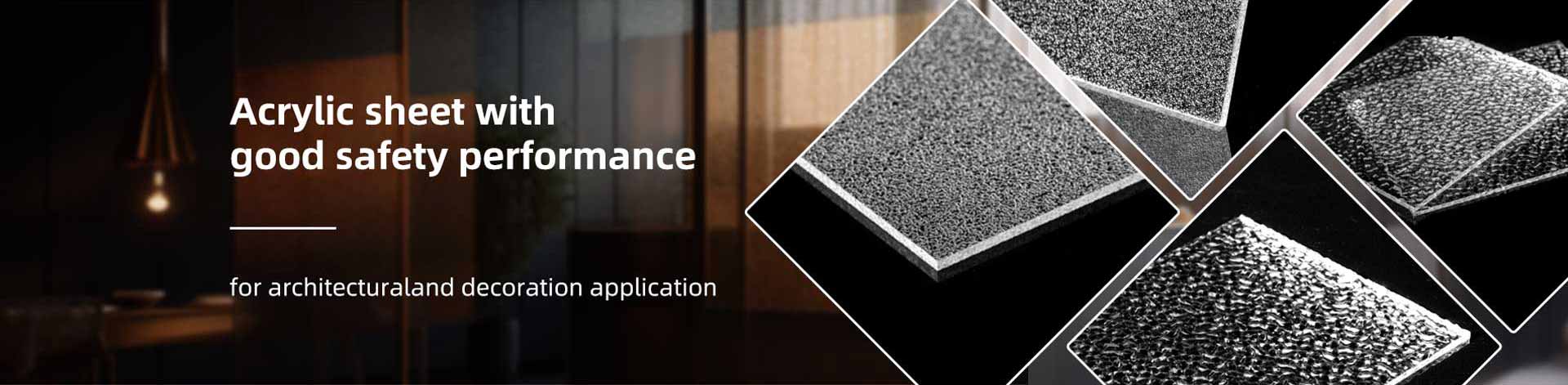
Acrylic sheet—commonly known as PMMA (Polymethyl Methacrylate) or plexiglass—is one of the most versatile and durable materials used in architecture, signage, lighting, and industrial design.
It combines the clarity of glass, the strength of engineered plastic, and the flexibility of modern fabrication techniques, making it suitable for everything from protective screens and displays to furniture, skylights, and art installations.
However, to achieve perfect results, you must know how to cut, shape, drill, bond, and finish acrylic sheet correctly. Improper handling can lead to cracking, melting, or poor edge quality.
This complete guide explains how to work with acrylic sheet safely and professionally, whether you are a designer, craftsman, or manufacturer.
Before working with acrylic, it’s important to understand its key characteristics:
Lightweight: About 50% lighter than glass, making it easy to handle.
High Impact Resistance: 10–20 times stronger than glass.
Excellent Optical Clarity: 92–93% light transmission for clear grades.
UV Resistance: UV-stabilized grades resist yellowing outdoors for 10–15 years.
Thermoformable: Can be heated and molded into complex shapes.
Machinable: Easily cut, drilled, and polished with standard tools.
KUNXIN Plastics produces both cast and extruded acrylic sheets, available in a range of thicknesses from 1 mm to 50 mm, tailored for specific applications such as lighting, architectural glazing, furniture, and display systems.
Cutting acrylic requires precision and control to avoid chipping or melting the edges.
There are several effective methods depending on the sheet thickness and required finish.
Mark the cutting line using a straight edge.
Score deeply along the line with a sharp acrylic knife 10–15 times.
Align the score along a table edge and snap downward sharply.
Smooth the edge with 400–600 grit sandpaper.
Use a fine-tooth circular saw or table saw designed for plastics.
Set blade speed to around 3000 rpm.
Keep steady feed rate to prevent heat buildup.
Support the sheet fully to avoid vibration.
Always wear protective goggles and gloves.
Laser cutting produces smooth, flame-polished edges ideal for signage, art, and display fabrication.
At KUNXIN Plastics, our CO₂ laser cutting lines achieve ±0.1 mm accuracy for complex geometries.
Drilling acrylic requires care to prevent cracking or “crazing” around holes.
Follow these best practices:
Use a plastic-specific drill bit or a modified metal bit with a shallow rake angle.
Drill slowly (500–1000 rpm) while applying light, consistent pressure.
Clamp the sheet securely between wooden boards to prevent vibration.
Cool the drill bit with water or compressed air to prevent melting.
Deburr and polish the holes with a countersink tool or fine sandpaper.
For heavy-duty applications, KUNXIN Plastics can provide CNC-drilled and pre-fabricated holes with precise tolerances, eliminating the need for manual drilling.
Acrylic becomes soft and bendable at around 150–160°C.
There are two main forming techniques:
Used for straight, sharp bends such as display stands or machine guards.
Heat the bend line with a strip heater until pliable.
Bend gently along a form or jig.
Hold until the material cools and solidifies.
Used for curved or 3D shapes such as domes, skylights, and signage covers.
Heat the entire sheet evenly in an oven to 160°C.
Drape, vacuum form, or press mold it to shape.
Cool gradually to avoid internal stress.
Cast acrylic is better for thermoforming due to its higher molecular weight and stability.
Bonding acrylic requires special adhesives that chemically fuse the surfaces for seamless joints.
Use methylene chloride or acrylic cement.
Apply along the seam; the solvent temporarily dissolves the acrylic surface.
Once evaporated, the joint becomes optically clear and strong.
Suitable for structural bonding or large assemblies.
Mix resin and hardener, apply with a syringe or brush, and clamp for 24 hours.
Ideal for clear-to-clear joints requiring perfect transparency.
Cures instantly under UV light.
At KUNXIN Plastics, our acrylic sheets are compatible with Weld-On, ACRIFIX, and other industrial-grade adhesives.
After cutting or bonding, polishing restores edge clarity and gloss.
| Method | Process | Result |
|---|---|---|
| Hand Sanding | Start with 400-grit, progress to 1000-grit wet sandpaper | Smooth matte finish |
| Buffing Wheel | Use a soft cloth wheel with polishing compound | Glossy edges |
| Flame Polishing | Pass a propane flame quickly along the edge | Clear, mirror-like finish |
| Vapor Polishing (Industrial) | Expose to solvent vapor (e.g., chloroform) | Optical-grade transparency |
For export-grade clarity, KUNXIN Plastics uses automated edge polishing systems ensuring a perfectly uniform surface.
Acrylic requires gentle maintenance to preserve its brilliance:
Use mild soap and water for cleaning—avoid ammonia or alcohol-based agents.
Wipe with a microfiber cloth to prevent scratching.
Avoid dry wiping as static charge can attract dust.
Apply anti-static cleaner for display or protective panels.
For outdoor sheets, inspect annually for dirt buildup or UV wear.
KUNXIN UV-stabilized acrylic sheets remain clear and glossy for 10–15 years with minimal maintenance.
Always wear gloves, goggles, and a mask when cutting or polishing.
Keep tools sharp to prevent chipping or overheating.
Avoid open flames near acrylic—it is flammable when ignited.
Allow acrylic to acclimate to room temperature before machining.
Store sheets flat on smooth surfaces to prevent warping.
Following these safety measures ensures smooth, professional fabrication results.
Acrylic’s strength, formability, and beauty make it suitable for countless industries:
| Industry | Application Example |
|---|---|
| Architecture | Skylights, partitions, facades |
| Lighting | Diffuser panels, LED covers |
| Retail & Display | Product stands, signage, advertising boxes |
| Automotive | Interior panels, light covers |
| Industrial Equipment | Machine guards, safety enclosures |
| Home & Furniture | Tabletops, decorative wall panels |
Each of these applications benefits from KUNXIN Plastics’ precision fabrication, UV protection, and durability standards.
At KUNXIN Plastics, we combine advanced manufacturing with professional finishing expertise to deliver:
Cast and extruded acrylic sheets from 1 mm to 50 mm thick
Custom cutting, drilling, and CNC shaping services
Laser and flame-polished finishes
UV-stabilized and impact-resistant grades
OEM/ODM production for global customers in architecture, lighting, and display
Every sheet is produced using 100% virgin PMMA resin, ensuring optical-grade clarity, structural strength, and consistent performance.
Q1: Can I cut acrylic sheet at home?
Yes—thin sheets can be cut by scoring and snapping. For thicker ones, use a fine-tooth saw or laser cutter.
Q2: How do I glue two acrylic sheets together without bubbles?
Use solvent cement and apply slowly with a syringe along the joint line to avoid trapped air.
Q3: Can acrylic be bent without heating?
Only thin sheets (below 2 mm) can flex slightly cold. For precise bends, controlled heating is necessary.
Q4: How do I prevent cracks while drilling?
Use slow speed, low pressure, and a plastic drill bit. Always drill pilot holes before larger diameters.
Q5: How do I clean outdoor acrylic panels?
Wash with mild detergent and rinse with clean water. Avoid abrasive brushes and harsh chemicals.
Previous: How To Attach Acrylic Sheet To Wall