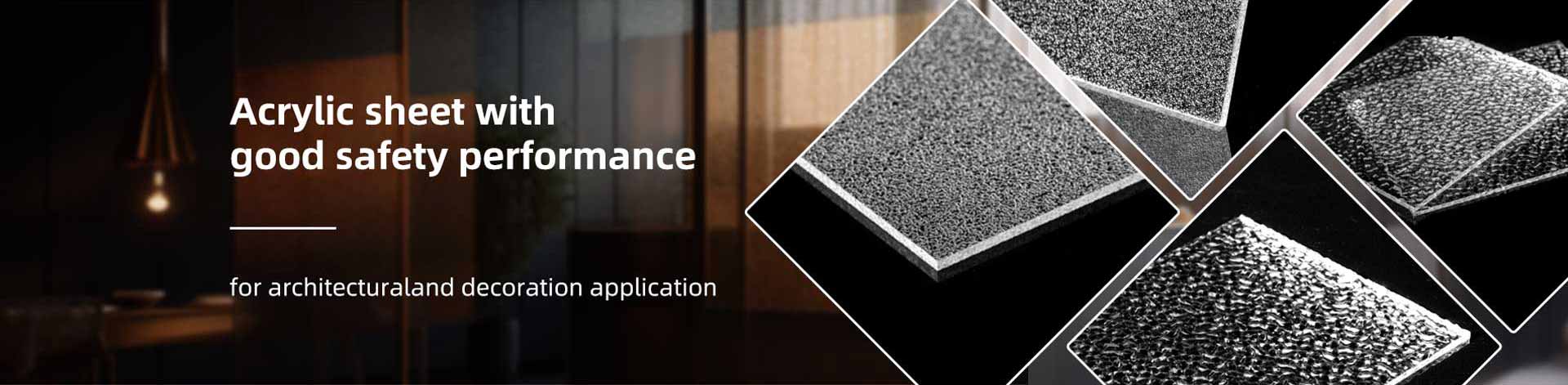
Polishing acrylic sheet edges is a critical finishing step in signage fabrication, retail displays, architectural panels, light guides, and decorative installations. A well-polished edge enhances visual clarity, improves light transmission, and reflects overall product quality.
However, edge polishing performance depends not only on technique but also on sheet stability, internal stress control, and thickness consistency. From a manufacturer’s and project decision perspective, selecting acrylic engineered for stable machining significantly reduces edge defects during polishing.
Kunxin Plastics produces acrylic sheet designed for consistent thickness, controlled internal stress, and reliable fabrication performance across bulk OEM and export projects.
Step 1: Ensure Proper Cutting Before Polishing
Edge quality begins at the cutting stage.
Common cutting methods include:
CNC routing
Laser cutting
Saw cutting
Poor cutting may leave:
Rough burrs
Micro-chipping
Uneven edge geometry
Before polishing, edges should be:
Evenly trimmed
Square to the surface
Free from deep chipping
Manufactured sheets with uniform density and thickness respond more predictably to cutting and finishing.
Step 2: Progressive Sanding
Polishing should follow gradual sanding stages:
Start with 320–400 grit for rough edges
Move to 600–800 grit
Finish with 1000–2000 grit for smooth pre-polish surface
Skipping grit levels may leave visible sanding lines after polishing.
Wet sanding is recommended to reduce heat buildup and prevent surface whitening.
Heat management is critical because excessive friction may soften acrylic or release internal stress.
Step 3: Mechanical Buffing
After fine sanding:
Use polishing compound designed for acrylic
Apply with soft buffing wheel
Maintain moderate rotation speed
Avoid concentrated pressure
Excess pressure can cause:
Edge deformation
Stress whitening
Surface melting
Uniform buffing restores optical clarity.
Step 4: Flame Polishing (Optional)
Flame polishing is often used for high-gloss transparent edges.
Procedure requires:
Controlled flame intensity
Quick and even movement
Experience to avoid overheating
Advantages:
Produces glass-like edge finish
Faster for high-volume production
Risks:
Internal stress amplification
Edge warping
Reduced long-term crack resistance if improperly executed
Sheets manufactured with balanced internal stress respond better to flame polishing.
Why Material Quality Influences Edge Polishing
acrylic sheets with high internal stress or inconsistent thickness may show:
Micro-cracking after polishing
Uneven clarity
Edge whitening
Surface distortion
Material stability is determined during production through temperature control, cooling rate management, and stress-relief processes.
Controlled manufacturing ensures edges maintain structural integrity during finishing.
Manufacturing Process Overview and Machining Stability
High-performance acrylic sheet production includes:
High-purity PMMA raw material selection
Stable extrusion or casting parameters
Gradual cooling to minimize internal stress
Thickness tolerance monitoring
Surface flatness inspection
Protective film application
Uniform molecular structure and low residual stress reduce polishing defects.
Manufacturing precision directly impacts finishing efficiency in bulk fabrication.
Quality Control Checkpoints Relevant to Edge Finishing
For projects requiring polished edges, evaluate:
Internal stress testing results
Thickness tolerance consistency
Surface smoothness uniformity
Impact resistance verification
Batch-to-batch stability
Structured quality inspection reduces downstream finishing variation.
Manufacturer vs Trader: Edge Consistency in Bulk Orders
When acrylic sheets are sourced from multiple upstream sources, machining behavior may vary between batches.
This can result in:
Different polishing response
Inconsistent clarity levels
Variable sanding time
Increased scrap during finishing
Working directly with a manufacturer ensures:
Stable formulation
Controlled process parameters
Repeatable machining behavior
Consistent bulk supply for multi-phase projects
Consistency reduces labor time and finishing cost.
OEM / ODM Considerations for Polished Applications
Projects may require:
Custom thickness for structural strength
Pre-cut panels
Optical-grade clarity
UV-resistant formulations
Protective packaging for finished panels
OEM process includes:
Technical requirement confirmation
Sample validation
Finishing compatibility testing
Locked production parameters for bulk replication
ODM capability allows adaptation of standard acrylic platforms for decorative or illuminated applications.
Bulk Supply Considerations
For large fabrication runs, confirm:
Thickness uniformity across shipment
Protective packaging integrity
Stable machinability
Lead time consistency
Technical documentation availability
Predictable material performance lowers polishing labor cost and reduces defect rate.
Material Standards Used
High-quality acrylic sheet for edge-polished applications emphasizes:
Optical-grade PMMA
Thermal stability under machining
Surface hardness control
UV resistance
Controlled impact resistance
Material discipline supports durable, clear edges.
Export Market Compliance
For international architectural and signage projects, acrylic supply should include:
Material safety documentation
Dimensional tolerance reporting
Batch traceability
Packaging standards for long-distance transport
Reliable documentation supports inspection and regulatory approval.
Strategic Perspective
Polishing acrylic sheet edges is both a finishing technique and a reflection of upstream manufacturing quality. When material internal stress is balanced and thickness is consistent, edge polishing becomes predictable, efficient, and scalable.
For project buyers and fabricators, selecting acrylic engineered for stable machining reduces cracking risk, improves visual clarity, and enhances overall product value in bulk production environments.
Conclusion
To polish acrylic sheet edges effectively, begin with proper cutting, follow progressive sanding, apply controlled mechanical buffing, and optionally use flame polishing with care.
Long-term edge clarity and structural stability depend heavily on manufacturing precision and internal stress control. By sourcing from a manufacturer with structured production processes, strict quality inspection checkpoints, and stable bulk supply capability, project buyers can achieve consistent, high-quality polished acrylic edges across large-scale applications.