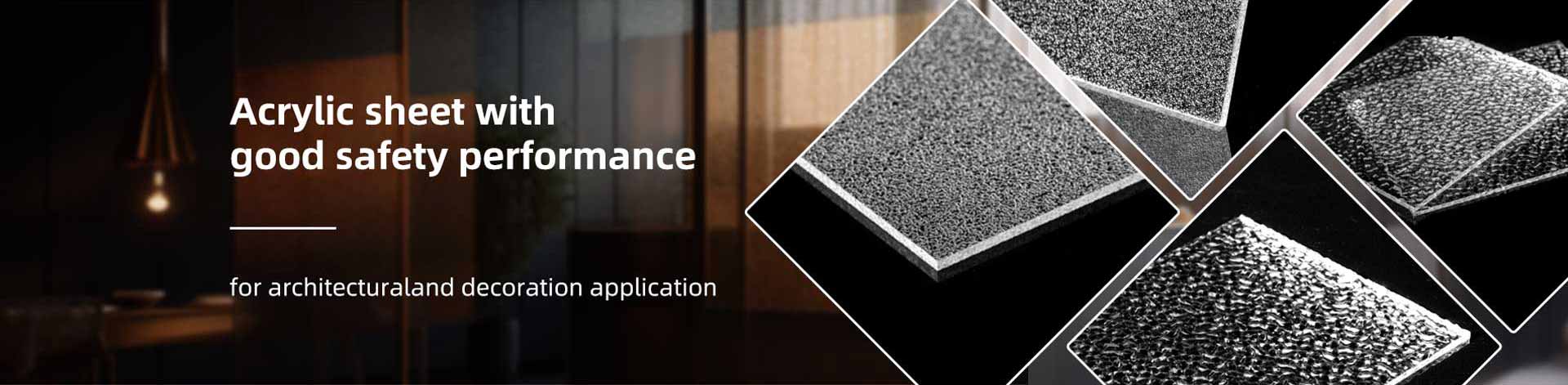
Acrylic sheet (PMMA) is widely used for signage, decorative panels, display boards, architectural features, and lighting elements. When applying acrylic paint to acrylic sheet, proper surface preparation and sealing are critical to ensure long-term adhesion, color stability, and environmental resistance.
Without correct sealing, painted surfaces may experience peeling, scratching, UV fading, or chemical degradation — especially in commercial or export-oriented applications.
As a professional acrylic sheet manufacturer, Kunxin Plastics produces high-clarity PMMA sheets, diffuser panels, and textured acrylic products engineered for surface uniformity, machinability, and coating compatibility. Understanding the material characteristics of acrylic sheet helps ensure optimal paint adhesion and sealing performance.
Acrylic sheet has a smooth, non-porous surface. Unlike wood or paper, it does not absorb paint naturally. This means:
Surface preparation is essential
Mechanical keying may be required
Compatible primers improve adhesion
Improper sealing may result in peeling
High-quality acrylic sheets manufactured under controlled extrusion processes typically exhibit uniform surface energy, which supports consistent coating performance.
Remove dust, grease, and protective film residue using:
Mild soap and water
Isopropyl alcohol (non-aggressive)
Lint-free cloth
Avoid harsh solvents that may craze or damage the sheet.
For enhanced adhesion:
Use very fine grit sandpaper (800–1000 grit)
Sand lightly to create micro-texture
Clean dust thoroughly afterward
This step increases mechanical bonding without affecting optical clarity in non-display areas.
Use high-quality acrylic-based paint designed for plastic surfaces.
Best practices include:
Apply thin, even coats
Allow adequate drying time between coats
Avoid excessive thickness that may crack
Maintain stable ambient temperature during application
For large production runs, spray application ensures more uniform coverage.
Sealing acrylic paint on acrylic sheet provides:
Scratch resistance
UV protection
Moisture barrier
Chemical resistance
Extended color durability
This is particularly important for:
Outdoor signage
Retail displays
Architectural panels
Industrial labeling systems
Easy application
Suitable for indoor projects
Available in matte, satin, or gloss finish
Higher durability
Stronger abrasion resistance
Suitable for commercial use
Recommended for outdoor exposure
Prevents fading and discoloration
Sealer compatibility must be verified to avoid chemical reactions that cause haze or cracking.
Ensure paint is fully cured.
Clean surface gently to remove dust.
Apply thin, even sealer layer.
Allow proper drying time.
Apply second coat if required.
Avoid heavy buildup to prevent surface distortion.
For industrial applications, controlled spray booths provide better uniformity.
Successful sealing performance depends heavily on the quality of the acrylic sheet itself.
A manufacturer controls:
PMMA resin grade
Surface uniformity
Internal stress levels
Thickness tolerance
UV stability additives
A trader may not verify production conditions or resin origin.
Kunxin Plastics uses controlled extrusion and calendaring processes to produce sheets with consistent surface energy and stable dimensional properties, improving coating and sealing performance.
For commercial projects requiring painted and sealed acrylic panels in bulk, structured OEM / ODM collaboration can include:
Defining color specifications
Selecting compatible coating system
Performing adhesion tests
Conducting UV exposure simulation
Approving prototype panels
Scheduling controlled mass production
Factory pre-coating ensures uniformity and reduces on-site inconsistencies.
When sourcing acrylic sheets for painted applications, buyers should verify:
Surface finish consistency
Protective masking film quality
UV stabilization properties
Thickness uniformity
Compatibility with coating systems
Packaging protection for transport
Uniform sheet quality minimizes adhesion issues during large-scale projects.
High-quality acrylic sheet production involves:
Virgin PMMA resin selection
Precision extrusion or casting
Controlled cooling to reduce internal stress
Surface inspection and polishing
Protective film application
Final dimensional verification
Controlled production directly influences paint adhesion and sealing reliability.
Professional acrylic sheet manufacturers implement:
Surface defect inspection
Thickness measurement
Optical clarity validation
Internal stress testing
Protective film adhesion testing
Batch traceability documentation
These checkpoints ensure consistent surface behavior during painting and sealing.
Premium acrylic sheets are manufactured from high-grade PMMA with:
High light transmission
UV resistance
Stable thermal expansion characteristics
Smooth surface finish
Material quality affects both paint adhesion and long-term sealer durability.
For international shipments, acrylic sheet suppliers align with:
ISO quality management systems
Environmental material standards
Proper packaging protocols
Batch traceability documentation
Compliance documentation supports global project approval and customs clearance.
To properly seal acrylic paint on acrylic sheet:
Prepare the surface carefully
Use compatible acrylic paint
Apply thin coats
Select an appropriate clear sealer
Ensure full curing before exposure
Beyond technique, sheet quality plays a crucial role. Working directly with a professional acrylic sheet manufacturer that controls raw materials, production processes, quality checkpoints, and export compliance ensures consistent coating performance and long-term durability across commercial and architectural applications.
Previous: How To Seal Paint on Acrylic Sheet