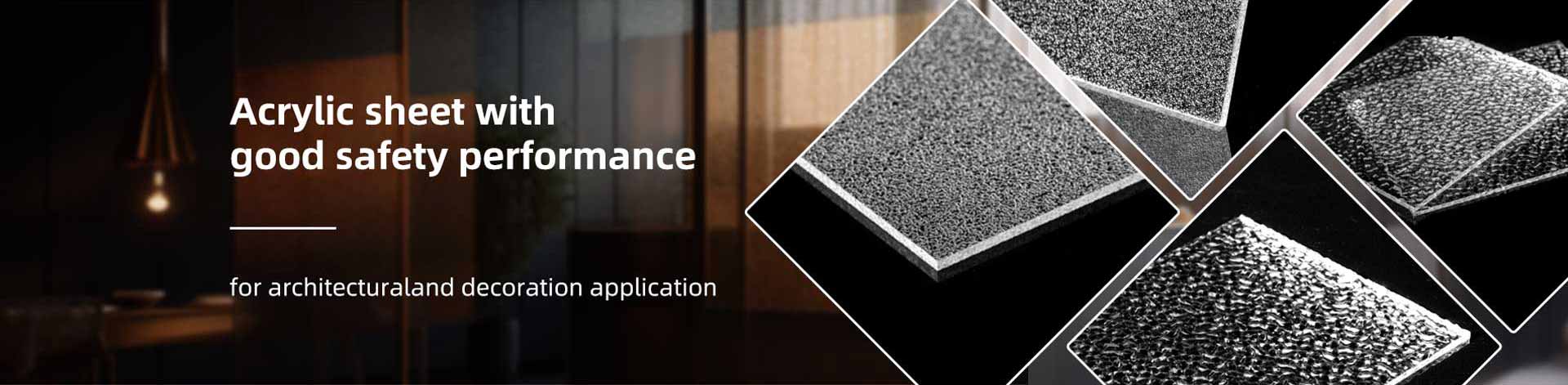
Acrylic sheet (PMMA) is widely used in signage, display panels, decorative installations, architectural elements, and industrial applications. When paint is applied to acrylic sheet, proper sealing is essential to protect the coating from abrasion, UV exposure, moisture, and chemical damage.
Because acrylic is a smooth, non-porous material, paint does not bond as naturally as it does to porous substrates. Sealing ensures durability and long-term visual performance — particularly in commercial or export-oriented projects.
As a professional acrylic sheet manufacturer, Kunxin Plastics produces optical-grade PMMA sheets, diffuser panels, and textured acrylic materials engineered for surface uniformity and coating compatibility. The following guide explains how to seal paint correctly while also outlining important sourcing and manufacturing considerations.
Acrylic sheet has:
A smooth, low-porosity surface
Controlled thermal expansion
High optical clarity
Stable UV-resistant properties (depending on resin grade)
Because of this smooth surface, paint adhesion depends heavily on preparation and compatibility between coating and substrate.
High-quality sheets produced under controlled extrusion or casting conditions provide more consistent surface energy, which improves paint and sealer bonding.
Do not seal wet or partially dried paint. Allow sufficient curing time according to paint manufacturer recommendations.
Use a lint-free cloth and mild cleaner to remove dust. Avoid aggressive solvents that may craze or damage the acrylic.
Ensure no peeling, bubbling, or uneven paint areas are present before applying sealer.
The correct sealing product depends on the environment and application.
Suitable for indoor signage
Easy to apply
Available in matte, satin, or gloss
Higher abrasion resistance
Suitable for commercial applications
More durable under frequent handling
Required for outdoor exposure
Protects against fading and discoloration
Compatibility testing is recommended to avoid surface haze or chemical reaction.
Place the painted acrylic sheet in a dust-free area.
Apply a thin, even coat of sealer.
Avoid heavy buildup that may cause surface distortion.
Allow proper drying time.
Apply additional thin coats if required.
Avoid mechanical stress until fully cured.
For industrial-scale production, spray booths provide more uniform coverage and reduce contamination risk.
Sealing performance is influenced by the acrylic sheet’s internal stress and surface consistency.
A manufacturer controls:
PMMA resin quality
Extrusion temperature regulation
Cooling and annealing processes
Surface finishing precision
Thickness tolerance
A trader may not control production conditions, which can lead to inconsistent surface behavior.
Kunxin Plastics utilizes advanced extrusion and calendaring systems to produce sheets with stable internal stress distribution, improving paint adhesion and sealing durability.
For projects requiring factory-painted and sealed acrylic sheets, a structured OEM / ODM process typically includes:
Confirming color and finish specifications
Selecting compatible coating systems
Performing adhesion and abrasion tests
Conducting UV aging simulations
Approving production samples
Implementing controlled mass production
Pre-coated panels ensure uniformity and reduce field variability.
When sourcing acrylic sheets for painted applications in volume, buyers should verify:
Surface finish consistency
Protective masking film quality
UV stabilization properties
Thickness tolerance control
Coating compatibility
Transport packaging protection
Uniform quality across batches reduces sealing defects in large installations.
High-quality acrylic sheet production includes:
Virgin PMMA raw material selection
Precision extrusion or casting
Controlled cooling to minimize internal stress
Surface inspection
Protective film application
Final dimensional and optical testing
Controlled production ensures predictable paint and sealer performance.
Professional acrylic manufacturers implement:
Surface clarity inspection
Thickness measurement
Internal stress evaluation
Film adhesion testing
UV stability validation
Batch traceability documentation
These checkpoints help maintain consistent sealing outcomes across export projects.
Premium acrylic sheets are manufactured from high-grade PMMA offering:
High light transmission
UV resistance
Stable expansion characteristics
Smooth surface finish suitable for coating
Material integrity directly impacts long-term paint and sealer durability.
For international deployment, acrylic sheet suppliers must align with:
ISO quality management systems
Environmental compliance standards
Proper export packaging protocols
Traceable batch documentation
Comprehensive documentation simplifies customs clearance and project approval.
To seal paint on acrylic sheet effectively:
Ensure complete paint curing
Clean and prepare the surface
Choose a compatible clear sealer
Apply thin, controlled layers
Allow full curing before use
Beyond technique, consistent acrylic sheet quality is critical. Partnering directly with a professional acrylic sheet manufacturer that controls material standards, production processes, quality checkpoints, and export compliance ensures reliable coating performance across commercial, architectural, and industrial applications.