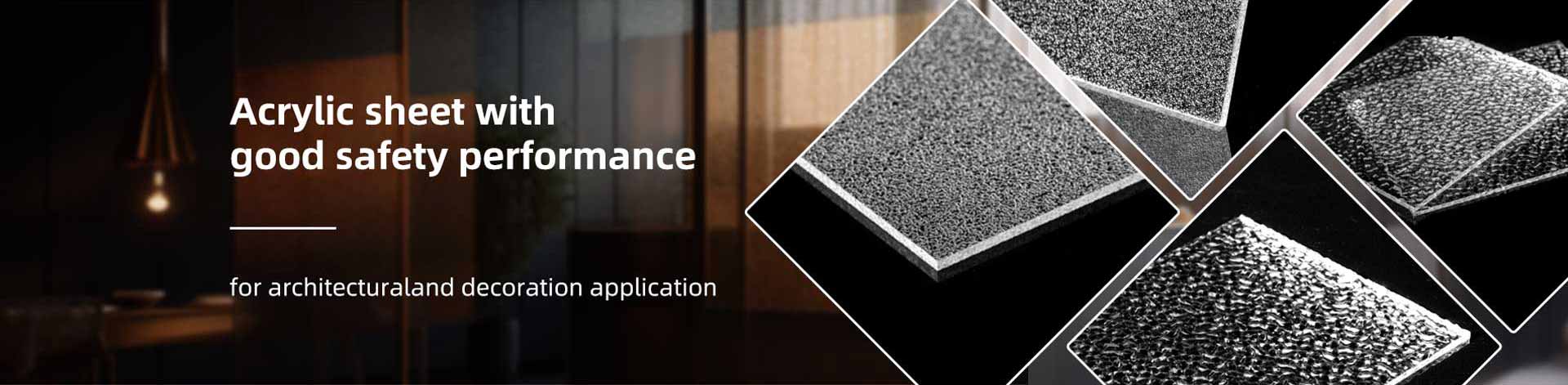
Acrylic sheet is widely used in lighting panels, architectural glazing, displays, and protective barriers because of its high transparency and excellent processability. One common question from international buyers and project engineers is whether acrylic sheet is scratch resistant. The answer depends on the material grade, manufacturing process, and surface treatment. Standard PMMA acrylic offers moderate surface hardness and performs well in everyday applications, but specialized abrasion-resistant acrylic sheets provide significantly improved scratch resistance for demanding environments.
For buyers evaluating acrylic materials for commercial or industrial use, understanding the differences between standard acrylic, coated acrylic, and engineered grades is essential. This also highlights why sourcing directly from a manufacturer can provide clearer technical insight than working with a general trading supplier.
Understanding Scratch Resistance In Acrylic Sheets
Acrylic sheet is made from polymethyl methacrylate, commonly known as PMMA. Compared with many transparent plastics, PMMA provides relatively good surface hardness. It resists light abrasion from daily handling, cleaning cloths, or air-borne dust better than softer thermoplastics.
However, acrylic is still a plastic material. Under pressure from metal tools, sand particles, or repeated friction, the surface can develop fine scratches or haze. For this reason, acrylic used in high-contact environments often includes special surface treatments designed to improve abrasion resistance.
Abrasion-resistant acrylic sheets use a hard-coat technology that increases surface hardness significantly while maintaining optical clarity. In industrial testing, coated acrylic sheets may reach pencil hardness levels of 4H to 5H while maintaining approximately 90 percent light transmission. These characteristics make them suitable for environments where durability and appearance must be maintained over long service periods.
Manufacturer Versus Trader In Acrylic Supply
When evaluating whether an acrylic sheet is scratch resistant, it is important to understand the difference between a manufacturer and a trading company.
Acrylic traders typically purchase finished sheets from multiple factories and resell them. While they can provide price quotations and stock availability, they may not have access to detailed information about raw materials, coating technology, or quality testing procedures.
Acrylic manufacturers, on the other hand, control production processes from raw material selection through final sheet fabrication. Kunxin Plastics operates as a manufacturing supplier specializing in acrylic, polycarbonate, and polystyrene sheet materials. The company focuses on optical-grade diffuser sheets, textured acrylic panels, and scratch-resistant acrylic products used in lighting systems, architectural components, and industrial equipment.
Working directly with a manufacturer allows buyers to verify technical data, confirm surface hardness specifications, and evaluate whether a material grade is suitable for a specific application.
OEM And ODM Process For Acrylic Sheet Projects
Many commercial projects require acrylic sheets with customized thickness, dimensions, or surface structures. This is where OEM and ODM production capabilities become important.
A typical OEM or ODM development process for acrylic materials includes several steps:
Project requirement confirmation
Buyers define the application environment, required optical performance, mechanical strength, and surface durability.Material grade selection
Engineers recommend suitable PMMA grades, including standard acrylic, optical acrylic, or abrasion-resistant sheets.Prototype sampling
Sample sheets are produced for evaluation of transparency, hardness, machining compatibility, and coating durability.Structural and dimensional customization
Manufacturers provide cut-to-size production, CNC shaping, laser cutting, drilling, and edge polishing according to project drawings.Mass production approval
After prototype confirmation, production parameters are finalized for bulk manufacturing.
Kunxin Plastics supports OEM and ODM development for Acrylic Diffuser Plates, optical PMMA panels, and Textured Acrylic Sheets used in lighting and architectural industries.
Bulk Supply Considerations For Acrylic Procurement
For large-scale commercial orders, buyers must consider more than just scratch resistance. Bulk supply stability is equally important.
Key aspects of bulk acrylic sourcing include:
Consistent material grade across production batches
Stable sheet thickness tolerance
Surface protection films to prevent transport scratches
Reliable packaging methods for international shipping
Capacity to meet continuous supply requirements
Typical physical performance values for high-quality PMMA sheets may include density around 1.19 grams per cubic centimeter, tensile strength exceeding 60 megapascals, and bending strength above 100 megapascals. These parameters indicate the structural integrity of the sheet during fabrication and long-term use.
For project procurement, consistent batch quality often determines whether the final product meets design expectations.
Project Sourcing Checklist For Acrylic Sheet Buyers
When sourcing acrylic sheets for construction, lighting, or equipment manufacturing projects, procurement teams typically review several technical factors before placing bulk orders.
Important evaluation points include:
Whether the sheet uses virgin PMMA raw materials
Availability of abrasion-resistant coating options
Thickness range and dimensional customization capability
Compatibility with laser cutting, drilling, and CNC machining
Surface protection during packaging and shipment
Availability of technical data sheets and testing reports
Production capacity for large-volume supply
Export documentation and compliance with international standards
By reviewing these points, buyers can better determine whether a supplier can support long-term project requirements.
Acrylic Sheet Manufacturing Process Overview
Acrylic sheet production generally involves two primary forming technologies: extrusion and casting.
Extruded acrylic sheets are produced by melting PMMA pellets and forming them through a continuous extrusion line. This process provides consistent thickness and is often suitable for large-volume applications.
Cast acrylic sheets are produced by polymerizing liquid monomer between glass molds. This method often results in higher molecular weight material and improved optical clarity, making it suitable for premium display and architectural applications.
Manufacturers may also apply additional treatments such as surface texturing, diffusion structures, or hard coatings to improve scratch resistance and functional performance.
Kunxin Plastics produces multiple acrylic sheet types including diffuser plates, textured acrylic panels, and optical PMMA sheets designed for lighting and decorative applications.
Quality Control Checkpoints In Acrylic Production
Quality control plays a critical role in ensuring scratch resistance and optical performance. Reliable acrylic manufacturers usually perform several inspection steps during production.
Typical quality checkpoints include:
Raw material verification
PMMA resin batches are tested to confirm purity and molecular consistency.
Sheet surface inspection
Manufacturers examine transparency, surface smoothness, and the presence of bubbles or contaminants.
Mechanical and thermal testing
Testing may include tensile strength, bending strength, heat distortion temperature, and impact resistance.
Optical performance testing
Light transmission and haze values are measured to confirm optical consistency.
Abrasion resistance testing
Pencil hardness tests and wear simulations evaluate surface durability under friction.
Such testing procedures help ensure that the finished acrylic sheets meet industrial performance standards.
Material Standards Used In Acrylic Sheet Production
High-quality acrylic sheets are typically evaluated using internationally recognized testing methods.
Common testing standards used in the plastics industry include ASTM procedures for density, tensile strength, impact resistance, and optical properties. For example, ASTM testing methods may be applied to evaluate transparency, hardness, and thermal deformation performance.
Using standardized testing procedures ensures that the performance data reported by a manufacturer can be reliably compared across projects and markets.
Export Market Compliance For Acrylic Sheet Products
International buyers often require materials that meet the expectations of construction, lighting, or industrial markets across North America, Europe, and Asia.
Export compliance for acrylic sheets generally includes:
Stable production quality
Clear material specifications
Reliable packaging for long-distance shipping
Documentation for customs clearance and project verification
Manufacturers with experience in global supply chains typically design their production and packaging systems to support international logistics requirements.
Kunxin Plastics supplies acrylic and optical sheet materials to overseas markets and supports customized production for industrial lighting, architectural decoration, and equipment manufacturing sectors.
Conclusion
Acrylic sheet provides moderate natural scratch resistance due to the hardness of PMMA material. However, standard acrylic can still be scratched under heavy friction or contact with hard objects. For applications requiring higher durability, abrasion-resistant acrylic sheets with hard-coat surfaces offer significantly improved performance.
For project buyers and engineering teams, selecting the right acrylic sheet involves evaluating not only scratch resistance but also manufacturing capability, quality control systems, bulk supply stability, and export compliance. Working with a specialized acrylic sheet manufacturer such as Kunxin Plastics can provide greater transparency in material standards, production processes, and technical support for large-scale projects.