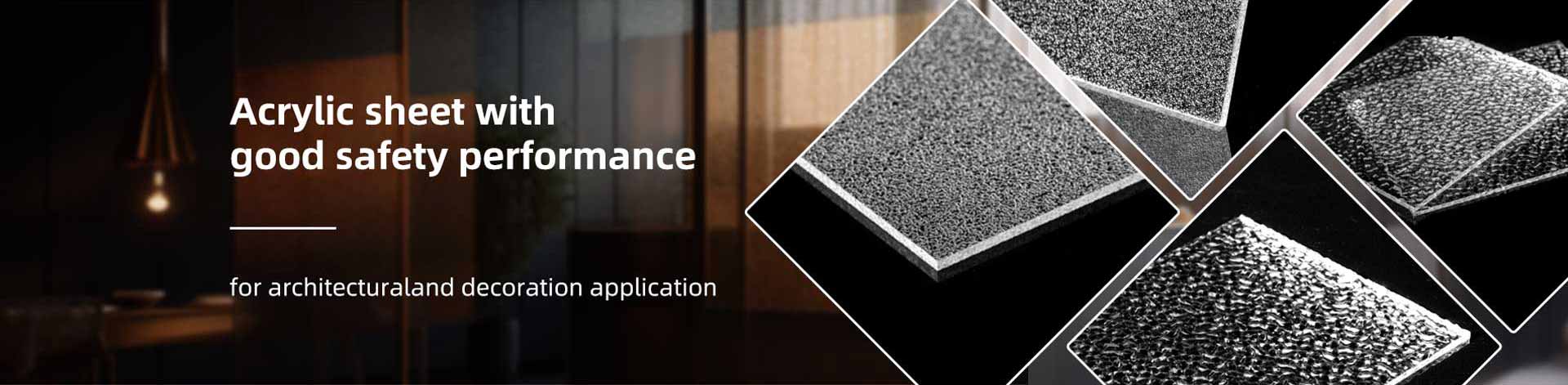
Glare in LED lighting fixtures usually comes from excessive brightness, visible LED points, unsuitable diffuser material or poor optical structure. In offices, classrooms, retail stores and commercial buildings, glare can reduce visual comfort and affect project acceptance. Lighting design often uses UGR to evaluate discomfort glare, and many office lighting projects require UGR below 19 according to common indoor lighting practice.
The diffuser sheet plays an important role in glare control. Clear PMMA can reach about 92% light transmission under ASTM D1003 testing, but LED fixtures need controlled haze, surface texture and light distribution instead of maximum transparency. A good diffuser should soften the light while keeping enough lumen output.
| Method | Practical Purpose |
|---|---|
| Use anti-glare diffuser sheet | Soften direct LED brightness |
| Increase haze level | Reduce visible LED points |
| Match LED spacing | Improve light uniformity |
| Add prismatic structure | Guide light distribution |
| Optimize fixture depth | Create better light mixing space |
A trader may only provide standard sheets, but glare control often requires optical matching. A manufacturer can adjust haze, transmission, surface texture, thickness and size according to fixture structure.
KUNXIN manufactures Optical Plastic materials for LED lighting, including anti-glare diffuser sheet, acrylic diffuser sheet, PC diffuser sheet, Prismatic Diffuser Sheet and Light Guide Plate. Our team can review LED layout, panel depth, wattage and target UGR before sample development.
A reliable OEM / ODM process should begin with lighting structure analysis. Buyers need to confirm LED pitch, fixture height, diffuser distance, power, beam requirement and target brightness. After sample production, testing should check glare level, light transmission, haze, uniformity and surface appearance.
For bulk supply, the project sourcing checklist should include optical data, thickness tolerance, sheet flatness, cutting accuracy, protective film, packaging strength and delivery stability. These details help reduce glare complaints and quality claims in overseas lighting projects.
During production, KUNXIN controls raw material selection, formula mixing, extrusion stability, surface texture, thickness measurement, optical testing and final inspection. ASTM D1003 is commonly used for haze and luminous transmittance testing of plastic sheets.
For export market compliance, stable batch documents, safe packaging and clear labeling help support projects in Europe, North America and other regions. Consistent quality is especially important when one lighting project requires repeated deliveries.
To reduce glare in LED lighting fixtures, the diffuser sheet must match the whole optical structure, not only the brightness target. Anti-glare surface design, proper haze, suitable thickness and stable manufacturing control can improve visual comfort while keeping the fixture commercially competitive.