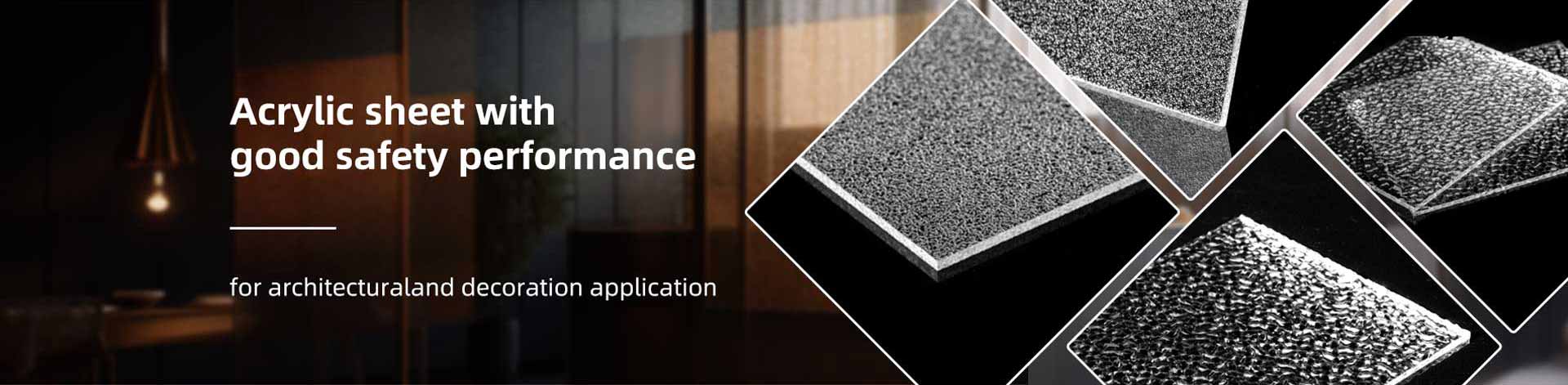
Acrylic sheet can be customized in both color and texture to meet different design, lighting, architectural, and decorative requirements. Through material formulation, surface treatment, and manufacturing control, acrylic manufacturers can create sheets with different colors, transparency levels, patterns, and visual effects.
For customized projects, color and texture are not only aesthetic choices. They also influence light transmission, privacy, surface appearance, processing performance, and final product functionality.
Acrylic color customization is achieved by adding pigments or color additives during the manufacturing process. Unlike surface painting, color additives become part of the acrylic material, helping maintain more consistent appearance throughout the sheet.
Common color options include:
| Color Type | Application |
|---|---|
| Transparent color acrylic | Lighting covers, decorative panels |
| Solid color acrylic | Furniture, displays, interior decoration |
| Frosted color acrylic | Privacy panels and soft lighting |
| Opal acrylic | LED diffusion applications |
| Custom matched colors | Brand and design projects |
For large projects, manufacturers can develop colors according to specific references such as Pantone or RAL standards to maintain consistency between production batches. (OFLA Plastic)
KUNXIN provides customized acrylic sheet solutions including clear acrylic sheets, frosted acrylic sheets, textured acrylic sheets, mirrored acrylic sheets, and colorful acrylic sheets for different applications. (CHINAPLAS)
Acrylic sheet texture customization changes the surface structure to create different visual and functional effects.
Common texture options include:
| Texture Type | Features |
|---|---|
| Frosted texture | Soft appearance and privacy effect |
| Reeded texture | Linear decorative pattern |
| Wave texture | Dynamic light reflection |
| Prism texture | Light control effect |
| Matte texture | Reduced glare |
Textured acrylic sheets are often produced through surface embossing or special forming processes that create patterns directly on the acrylic surface. These textures can influence light diffusion, visual depth, and decorative appearance.
Texture is not only for decoration. It can also improve product performance.
For example:
| Requirement | Suitable Texture Solution |
|---|---|
| Reduce glare | Matte or frosted surface |
| Create privacy | Textured translucent acrylic |
| Improve lighting effect | Diffuser or prism texture |
| Add design value | Custom patterns |
In lighting applications, textured acrylic sheets help control how light passes through the material. By adjusting surface structure, manufacturers can balance brightness, diffusion, and visual comfort.
Yes. Color and texture can be combined to create more customized acrylic solutions.
Examples include:
Colored textured acrylic panels
Frosted colored acrylic sheets
Decorative patterned acrylic sheets
Custom translucent panels
Combining different surface effects allows designers to achieve unique appearances while maintaining acrylic's lightweight and easy-processing advantages.
A customized acrylic project may require evaluation of:
Color requirements
Light transmission
Texture depth
Sheet thickness
Application environment
Processing method
Customization starts from the manufacturing stage.
A typical acrylic sheet production process includes:
Raw material preparation
Material mixing
Sheet forming
Cooling and stabilization
Surface treatment
Thickness inspection
Cutting and packaging
During production, manufacturers control:
Pigment distribution
Surface consistency
Thickness tolerance
Optical performance
KUNXIN uses optical-grade materials and computer-controlled production systems. The company focuses on acrylic and polycarbonate sheet manufacturing with customized solutions for different industries, including lighting, architecture, displays, and decoration.
For customized acrylic projects, manufacturers usually work through an OEM and ODM development process.
A typical workflow includes:
Manufacturers review:
Product drawings
Color requirements
Texture samples
Thickness specifications
Application purpose
Samples are created to confirm:
Color accuracy
Surface effect
Light transmission
Processing performance
After approval, manufacturers control:
Batch consistency
Surface quality
Dimension accuracy
Packaging protection
This process helps reduce risks before bulk production.
Different acrylic materials may perform differently during customization.
Important factors include:
| Material Factor | Influence |
|---|---|
| Raw material purity | Affects clarity and color stability |
| Thickness | Influences appearance and strength |
| Surface quality | Determines visual effect |
| Optical properties | Controls light performance |
For lighting applications, manufacturers need to balance color, texture, and transmission because excessive opacity may reduce brightness while insufficient diffusion may create uneven lighting.
For large-volume customized acrylic orders, quality control is essential.
Important checkpoints include:
| Inspection Item | Purpose |
|---|---|
| Color comparison | Maintain batch consistency |
| Texture inspection | Ensure pattern accuracy |
| Thickness measurement | Control dimensional stability |
| Surface inspection | Prevent defects |
| Optical testing | Verify light performance |
A complete project sourcing checklist should include:
Acrylic type
Color specification
Texture design
Sheet thickness
Size requirements
Processing requirements
Packaging standards
Export requirements
Working directly with an acrylic sheet manufacturer provides better control over customization.
A manufacturer can support:
Color development
Texture adjustment
Material selection
Production optimization
Quality inspection
A trader may provide standard acrylic sheets, but a manufacturer can modify production according to specific project requirements.
KUNXIN specializes in customized acrylic sheet manufacturing and provides solutions including optical acrylic sheets, diffuser sheets, textured acrylic panels, and decorative acrylic products. Its fabrication capabilities include laser cutting, CNC milling, heat bending, diamond polishing, thermoforming, surface treatment, and acrylic laminating.
For international projects, customized acrylic sheets require stable quality across every batch.
Before mass production, manufacturers should confirm:
Approved color sample
Texture sample
Technical specifications
Inspection requirements
Packaging method
Delivery schedule
Acrylic sheet can be customized in color and texture through controlled material formulation and surface processing. With the right manufacturing technology, acrylic can achieve different visual effects while maintaining optical performance, processing flexibility, and consistent quality.
With customized production capability and Optical Plastic manufacturing experience, KUNXIN helps provide acrylic solutions for lighting, architectural decoration, furniture, displays, and creative design applications.