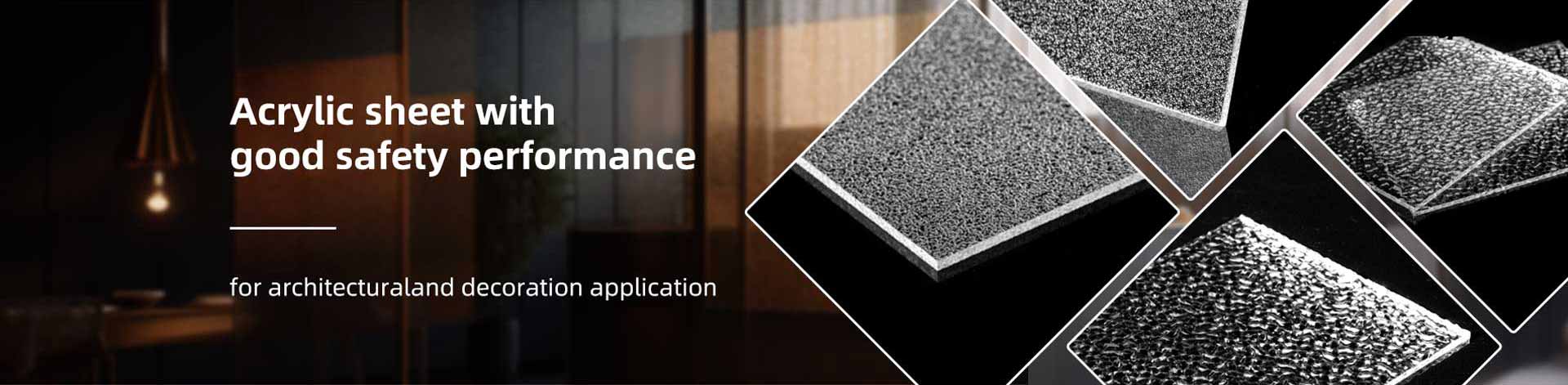
Acrylic diffusers provide better optical performance and long-term durability, while PS diffusers offer cost advantages for standard LED applications. The right choice depends on lighting requirements and product goals.
Acrylic diffuser and PS diffuser are two commonly used materials for led lighting applications. Both materials are designed to scatter LED light, reduce visible hotspots, and create more comfortable illumination, but their performance differs in optical efficiency, durability, and application range.
Acrylic diffuser, also known as PMMA diffuser, is widely used in commercial lighting, LED panels, and architectural lighting because of its excellent transparency, weather resistance, and stable optical performance.
PS diffuser, made from polystyrene, is commonly selected for cost-sensitive lighting products where basic diffusion performance and lightweight characteristics are required.
From a manufacturing perspective, choosing between acrylic diffuser and PS diffuser requires evaluating light transmission, service environment, processing requirements, and expected product lifespan.
Acrylic diffuser generally provides higher light transmission compared with PS diffuser.
Acrylic has excellent optical clarity and can maintain strong light transmission while achieving effective diffusion. Through controlled diffusion particles and optical surface treatment, acrylic diffusers can spread LED light evenly without significantly reducing brightness.
PS diffuser provides good light scattering performance but usually has lower optical clarity compared with acrylic. It is often selected for applications where moderate illumination quality is acceptable and material cost is a key consideration.
For LED lighting products that require higher brightness efficiency, acrylic diffuser is usually the preferred solution.
Acrylic diffuser improves LED lighting performance by balancing light transmission and diffusion.
LED light sources often create concentrated bright points that affect visual comfort. Acrylic diffuser materials scatter these light points and create smoother illumination across the surface.
The advantages of acrylic diffuser include:
High optical transparency
Better brightness retention
Stable diffusion performance
Excellent surface appearance
Long-term color stability
These characteristics make acrylic diffuser suitable for led panel lights, commercial fixtures, display lighting, and premium lighting applications.
PS diffuser provides a practical solution for general LED lighting applications.
The material can effectively scatter light and reduce direct visibility of LED sources. Its lightweight structure and lower production cost make it suitable for high-volume lighting products.
Common applications include:
Standard LED ceiling lights
Indoor lighting covers
Cost-focused panel lights
Decorative lighting products
PS diffuser performs well in controlled indoor environments where extreme durability and premium optical performance are not the main requirements.
Acrylic diffuser generally provides better durability and environmental resistance than PS diffuser.
Acrylic has excellent resistance to weathering, ultraviolet exposure, and aging. It maintains optical appearance over longer periods, making it suitable for applications requiring stable performance.
PS diffuser has good performance in indoor environments but has lower impact resistance and weather resistance compared with acrylic.
| Comparison | Acrylic Diffuser | PS Diffuser |
|---|---|---|
| Light transmission | Higher | Good |
| Optical clarity | Excellent | Moderate |
| Diffusion performance | Excellent | Good |
| Impact resistance | Better | Moderate |
| Weather resistance | Excellent | Limited |
| Color stability | Excellent | Good |
| Cost efficiency | Medium | Higher |
Acrylic diffuser is generally more suitable for LED panel lights that require high brightness, uniform illumination, and long-term reliability.
LED panel manufacturers usually consider:
Light efficiency
Surface brightness consistency
Glare control
Product lifespan
Visual appearance
Acrylic diffuser sheets can be customized with different haze levels, thicknesses, and optical structures to achieve better lighting results.
PS diffuser can also be used for LED panels, especially when the product design focuses on affordability and large-volume production.
The working environment plays an important role when selecting diffuser materials.
Acrylic diffuser performs well in applications where lighting products may experience:
Long operating hours
Temperature changes
Exposure to natural light
Higher appearance requirements
PS diffuser is more suitable for stable indoor environments where the lighting system has limited environmental stress.
For outdoor lighting, commercial buildings, and premium lighting products, acrylic usually provides stronger long-term reliability.
Professional LED manufacturers usually evaluate several factors before selecting diffuser materials.
Applications requiring higher brightness and better visual quality usually choose acrylic diffuser.
Projects requiring basic diffusion with controlled cost may select PS diffuser.
Premium lighting products often prioritize optical performance and durability, making acrylic diffuser more suitable.
Large-volume standard lighting products may benefit from the cost advantages of PS diffuser.
Indoor decorative lighting may use either material depending on requirements. More demanding environments usually require acrylic's stronger resistance.
Thickness, cutting methods, surface treatment, and assembly processes influence the final choice. Experienced Optical Plastic manufacturers evaluate the complete product design before recommending suitable diffuser materials.
Acrylic diffuser is the better choice when LED applications require higher light transmission, better durability, and premium optical performance.
PS diffuser is a practical choice when the main goal is cost efficiency and standard light diffusion.
For commercial LED lighting, architectural projects, and products requiring consistent appearance, acrylic diffuser provides stronger overall performance. For general indoor lighting with cost-focused requirements, PS diffuser remains an effective solution.
As an optical plastic manufacturer, Kunxin provides customized diffuser solutions for LED lighting applications, supporting different requirements in material selection, diffusion performance, thickness, and optical design.