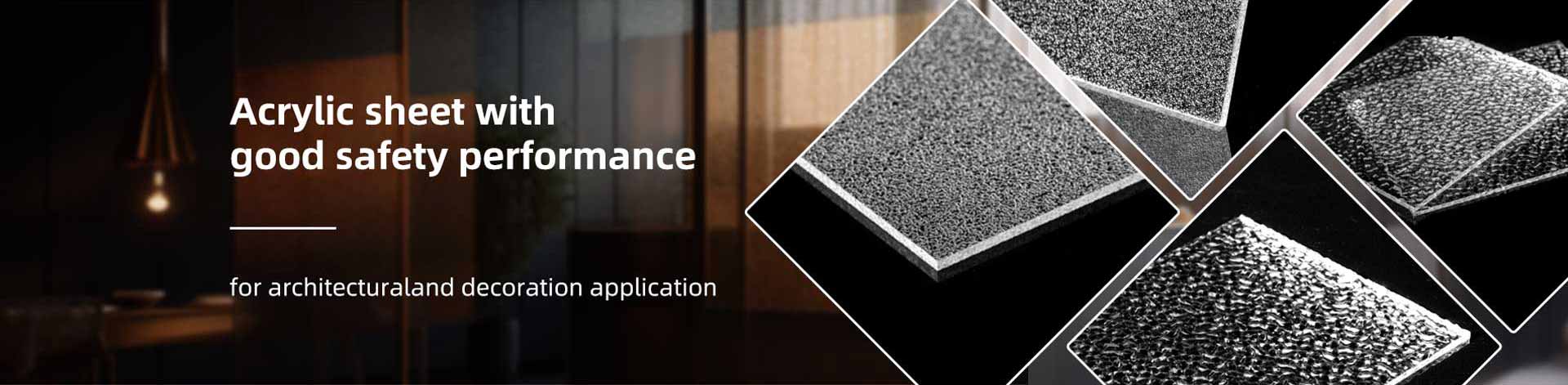
Polycarbonate diffuser offers higher impact resistance, while acrylic diffuser provides better optical clarity and surface appearance. The right choice depends on whether durability or lighting quality is the main priority.
Polycarbonate diffuser and acrylic diffuser are two widely used optical materials for led lighting applications. Both materials help control light distribution, reduce glare, and improve visual comfort, but their mechanical properties are different.
Polycarbonate diffuser, also known as PC diffuser, is made from an engineering plastic with excellent toughness and impact resistance. It is often selected for lighting applications where the material needs to withstand physical stress or harsh environments.
Acrylic diffuser, also known as PMMA diffuser, is valued for its high transparency, excellent light transmission, and premium optical appearance. It is commonly used in led panel lights, commercial lighting, and architectural lighting products.
From a manufacturing perspective, the selection between polycarbonate diffuser and acrylic diffuser should consider impact requirements, optical performance, operating environment, and product lifespan.
Polycarbonate diffuser provides stronger impact resistance because of its molecular structure and high toughness.
Compared with acrylic, polycarbonate can absorb more impact energy before deformation or failure. This makes it suitable for applications where lighting products may experience vibration, accidental impact, or mechanical stress.
The advantages of polycarbonate diffuser include:
Higher impact strength
Better resistance to cracking
Stronger mechanical protection
Better performance under vibration
Improved safety in demanding environments
These characteristics make polycarbonate diffuser suitable for industrial lighting, outdoor fixtures, transportation lighting, and public facilities.
Acrylic diffuser provides good rigidity and surface hardness but has lower impact resistance compared with polycarbonate.
Acrylic’s main advantages are optical rather than mechanical. It maintains excellent transparency, surface quality, and light transmission during long-term use.
For applications where the diffuser is protected inside a fixture and direct impact risk is low, acrylic diffuser provides reliable performance with better optical results.
Common applications include:
LED panel lights
Office lighting
Commercial ceiling fixtures
Decorative lighting
Display illumination
Polycarbonate diffuser provides better protection for LED fixtures exposed to physical risks.
LED fixtures installed in industrial facilities, warehouses, transportation areas, and outdoor locations may face:
Accidental impact
Vibration
Temperature changes
Mechanical pressure
In these environments, polycarbonate diffuser helps protect the lighting system by maintaining stronger structural integrity.
Acrylic diffuser is more suitable for controlled environments where lighting appearance and optical performance are the main concerns.
| Comparison | Polycarbonate Diffuser | Acrylic Diffuser |
|---|---|---|
| Impact resistance | Excellent | Good |
| Crack resistance | Excellent | Moderate |
| Light transmission | Very good | Excellent |
| Optical clarity | Good | Excellent |
| Surface appearance | Good | Premium |
| Heat resistance | Excellent | Good |
| Weather resistance | Good | Excellent |
Acrylic diffuser generally provides better optical performance compared with polycarbonate diffuser.
Acrylic has excellent transparency and can maintain high light transmission while achieving effective diffusion. This helps create brighter and more visually attractive LED lighting.
Polycarbonate diffuser provides good light diffusion but focuses more on durability and protection.
For applications requiring:
Smooth illumination
High brightness efficiency
Premium appearance
Reduced LED visibility
Acrylic diffuser is often preferred.
Yes, polycarbonate diffuser is often a better choice for outdoor lighting applications where impact resistance is important.
Outdoor lighting products may experience stronger environmental stress, including physical contact, weather changes, and installation risks.
Polycarbonate diffuser provides additional protection because of its toughness and structural stability.
However, acrylic diffuser also performs well outdoors due to its excellent UV resistance and optical stability, especially when the fixture design provides sufficient protection.
Professional LED manufacturers evaluate several factors before selecting diffuser materials.
Applications requiring strong protection usually select polycarbonate diffuser.
Projects with limited impact risk can benefit from acrylic diffuser’s optical advantages.
When brightness, transparency, and appearance are important, acrylic diffuser provides stronger optical performance.
When durability is the priority, polycarbonate provides better mechanical protection.
Industrial and outdoor environments often require stronger materials.
Indoor commercial lighting usually focuses more on visual quality and lighting comfort.
LED power, fixture structure, diffuser thickness, installation location, and maintenance requirements all influence the material selection.
Experienced Optical Plastic manufacturers evaluate the entire lighting system rather than choosing materials based on a single specification.
Yes, both materials serve different LED application requirements.
Polycarbonate diffuser is commonly used for:
Industrial lighting
Outdoor fixtures
High-impact environments
Safety-focused applications
Acrylic diffuser is commonly used for:
LED panel lights
Office lighting
Commercial fixtures
Architectural lighting
Decorative applications
The choice depends on balancing optical performance and mechanical durability.
Polycarbonate diffuser is the better choice when LED applications require maximum impact resistance, mechanical protection, and durability.
Acrylic diffuser is the better choice when lighting products require higher transparency, better light transmission, and premium appearance.
For demanding environments where protection is critical, polycarbonate diffuser provides stronger reliability. For commercial lighting and applications focused on visual quality, acrylic diffuser remains an excellent optical solution.
As an optical plastic manufacturer, Kunxin provides customized diffuser sheet solutions for LED lighting applications, supporting different requirements in material selection, diffusion performance, thickness, surface design, and production consistency.