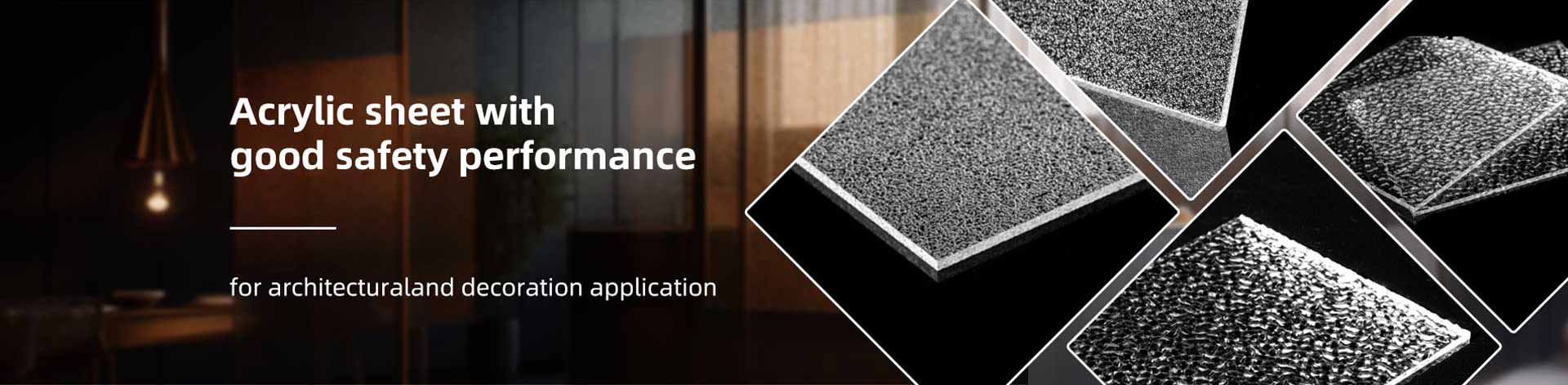
Light Guide Plates control brightness distribution inside LED panels, while diffuser sheets improve surface uniformity and visual comfort. Both components are essential, but they solve different lighting challenges.
Light guide plate and diffuser sheet are two core optical components used in LED panel systems. Although they are often installed together, their functions are different.
A light guide plate (LGP) manages how LED light travels inside the panel. It receives light from LED sources and distributes it across the entire surface to create even brightness.
A diffuser sheet controls the final light output. It scatters light passing through the optical system, reducing visible hotspots and improving the appearance of the illuminated surface.
From a manufacturer’s perspective, it is not a question of replacing one component with another. High-performance LED panels require the correct combination of light guidance and diffusion.
A light guide plate is the core optical component responsible for light distribution.
In edge-lit LED panels, LEDs are positioned along the side of the LGP. The plate uses optical structures, such as laser engraving dots or printed patterns, to redirect light from the edges toward the front surface.
The main functions include:
Distributing LED light across the panel
Improving brightness consistency
Increasing light extraction efficiency
Supporting thinner panel designs
Reducing uneven illumination
The quality of the light guide plate directly affects:
Overall brightness
Light utilization efficiency
Uniformity across the panel
Energy performance
A poorly designed LGP can result in dark areas, brightness differences, or reduced lighting efficiency.
A diffuser sheet improves the final appearance of LED panel lighting.
Even with a high-quality light guide plate, LED panels may still show optical differences caused by LED positions, optical patterns, or light concentration areas.
The diffuser sheet helps by:
Reducing visible LED points
Softening direct brightness
Improving surface uniformity
Reducing glare
Creating comfortable illumination
Diffuser sheets are especially important for applications where users directly view the lighting surface for long periods.
Common applications include:
Office LED panels
Commercial ceiling lights
Retail lighting
Indoor illumination systems
Light guide plate generally has a greater impact on brightness efficiency.
The LGP determines how effectively LED light is transferred and distributed throughout the panel.
Important LGP performance factors include:
Optical transparency
Dot pattern design
Light extraction efficiency
Thickness accuracy
Material consistency
A diffuser sheet mainly affects the quality of the visible light output rather than the internal light transmission process.
However, a diffuser sheet with poor optical performance can reduce brightness efficiency or create uneven illumination.
The answer depends on the type of uniformity being considered.
A light guide plate improves internal brightness distribution by spreading light across the panel area.
A diffuser sheet improves surface uniformity by smoothing the final light output.
| Comparison | Light Guide Plate | Diffuser Sheet |
|---|---|---|
| Main function | Light distribution | Light diffusion |
| Brightness efficiency | Excellent | Good |
| Surface uniformity | Very good | Excellent |
| Hotspot reduction | Moderate | Excellent |
| Optical position | Internal layer | Output layer |
| Impact on user experience | High | High |
Both components contribute to a high-quality LED panel.
Some LED panels can operate without a diffuser sheet, but the lighting quality may be affected.
Without proper diffusion, users may experience:
Visible LED patterns
Uneven brightness
Stronger glare
Reduced visual comfort
For professional lighting applications, diffuser sheets are commonly used to improve the final appearance.
The answer depends on the LED panel structure.
Edge-lit LED panels rely heavily on light guide plates because the LGP is responsible for spreading side-emitted LED light across the entire panel.
Without a suitable LGP, edge-lit designs cannot achieve efficient and uniform illumination.
Direct-lit LED panels may use different optical structures, but they still require appropriate light management components.
Both components require careful selection, but their importance depends on product goals.
For high-efficiency LED panels:
Light guide plate quality affects brightness and energy efficiency
Diffuser sheet quality affects appearance and visual comfort
Premium LED manufacturers usually optimize both components together.
A high-quality LGP combined with a suitable diffuser sheet can achieve:
Higher brightness
Better uniformity
Lower glare
Improved user experience
Professional LED manufacturers evaluate multiple factors before selecting optical components.
Different designs require different optical solutions.
Edge-lit panels depend heavily on LGP performance
Direct-lit panels may require stronger diffusion control
Manufacturers consider:
Brightness output
Uniformity requirements
Glare control
Energy efficiency
Viewing distance
Important factors include:
Optical transmission
Thickness tolerance
Surface quality
Long-term stability
Office lighting, commercial spaces, and industrial lighting may require different optical designs.
Experienced Optical Plastic manufacturers evaluate the complete LED system before recommending suitable materials.
Light guide plates are more critical for controlling internal light distribution and improving brightness efficiency.
Diffuser sheets are more critical for improving final light appearance, reducing hotspots, and enhancing visual comfort.
For high-quality LED panels, neither component can completely replace the other. The light guide plate creates the foundation of illumination performance, while the diffuser sheet improves the final user experience.
As an optical plastic manufacturer, Kunxin provides customized LED optical solutions, including light guide plates, diffuser sheets, and optical materials designed for different LED panel requirements.