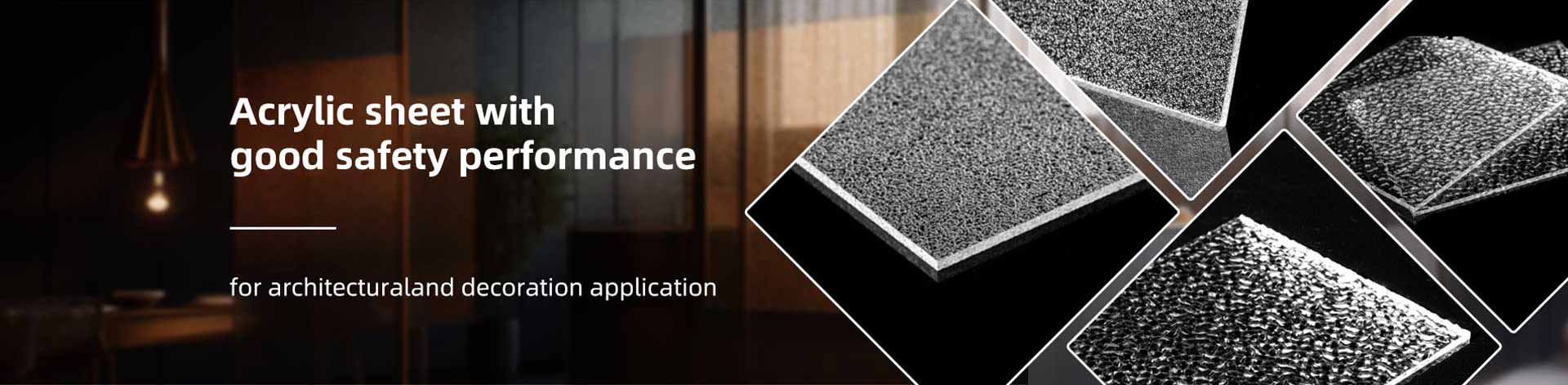
Acrylic diffuser generally provides higher light transmission and better optical clarity, while PS diffuser offers cost advantages and reliable diffusion performance. The better choice depends on lighting requirements and project goals.
Acrylic diffuser and PS diffuser are two common materials used in led lighting applications. Both are designed to improve light distribution and reduce visible LED points, but their material properties create different performance characteristics.
Acrylic diffuser, usually made from PMMA, combines excellent transparency with controlled diffusion performance. It allows more light to pass through while maintaining a smooth illumination effect.
PS diffuser, made from polystyrene, provides effective light scattering at a more economical cost. It is commonly used in general lighting products where cost efficiency is an important factor.
From a manufacturer’s perspective, selecting between acrylic diffuser and PS diffuser requires evaluating light transmission, durability, application environment, and final product requirements.
Acrylic diffuser improves light transmission through the optical advantages of PMMA material.
PMMA has high transparency and excellent optical clarity. When diffusion technology is added, it can maintain strong light output while reducing harsh LED points.
The main advantages include:
Higher light transmission
Better optical clarity
Stable brightness performance
Improved visual appearance
Long-term optical reliability
Acrylic diffusers are commonly used in:
Premium LED panels
Commercial lighting
Architectural lighting
Decorative fixtures
High-quality illumination systems
They are suitable for applications where both brightness efficiency and appearance are important.
PS diffuser improves LED lighting through effective light scattering.
Polystyrene is a lightweight plastic material that can be modified with diffusion additives to spread light evenly.
The main advantages include:
Good diffusion performance
Lightweight structure
Cost-effective production
Easy processing
Suitable for mass production
PS diffusers are commonly used in:
Standard LED panels
Residential lighting
Basic commercial fixtures
Cost-focused lighting products
They provide reliable diffusion performance for general lighting applications.
Acrylic diffuser generally provides better light transmission than PS diffuser.
The optical transparency of PMMA allows more light to pass through the material while maintaining diffusion performance.
PS diffuser provides good transmission, but its optical clarity is usually lower compared with acrylic because of the material characteristics.
| Comparison | Acrylic Diffuser | PS Diffuser |
|---|---|---|
| Material | PMMA | Polystyrene |
| Light transmission | Excellent | Good |
| Optical clarity | Excellent | Moderate |
| Diffusion performance | Excellent | Excellent |
| Surface appearance | Premium | Standard |
| Durability | Higher | Moderate |
| Cost efficiency | Medium | Higher |
Both acrylic diffuser and PS diffuser can provide good light uniformity when properly designed.
The final uniformity depends on:
Diffusion particle distribution
Surface structure
Sheet thickness
LED arrangement
Optical design
Acrylic diffusers often achieve a more balanced combination of transmission and diffusion.
PS diffusers can provide strong diffusion performance, especially in applications where maximum brightness efficiency is not the primary goal.
Acrylic diffuser is usually preferred for high-brightness LED applications.
High-output LED systems require materials that can maintain strong light transmission while controlling glare.
Acrylic diffuser provides advantages in:
Brightness efficiency
Optical stability
Surface appearance
Long-term performance
Applications include:
Professional LED panels
Commercial lighting systems
Premium indoor lighting
PS diffuser is more suitable for standard lighting products where cost control is a major consideration.
Acrylic diffuser generally provides better long-term optical performance.
PMMA offers:
Better UV resistance
Higher optical stability
Better surface appearance retention
PS diffuser provides good performance for indoor applications but may have lower resistance in demanding environments.
Manufacturers should consider:
Operating temperature
Exposure conditions
Expected service life
Installation environment
before selecting materials.
Yes, PS diffuser remains suitable for many LED lighting applications.
Its advantages include:
Lower material cost
Easy manufacturing
Good diffusion capability
Efficient mass production
For large-volume lighting projects where cost efficiency is important, PS diffuser can provide practical performance.
Yes, both materials can be customized according to LED product requirements.
Manufacturers can adjust:
Light transmission rate
Haze level
Thickness
Surface texture
Diffusion performance
Different lighting projects may require different optical balances between brightness and diffusion.
Professional LED manufacturers evaluate several factors before selecting diffuser materials.
When higher brightness and optical quality are required, acrylic diffuser is usually preferred.
When standard diffusion and cost efficiency are the priority, PS diffuser can be suitable.
Premium lighting products often require acrylic solutions.
Mass-market lighting products may prioritize PS materials.
Manufacturers consider:
Indoor or outdoor use
Temperature conditions
Required lifespan
Visual requirements
Material consistency, thickness accuracy, surface quality, and processing capability influence the final choice.
Experienced Optical Plastic manufacturers analyze the complete LED application before recommending the suitable material.
Acrylic diffuser is the better choice when LED applications require higher light transmission, better optical clarity, and premium lighting performance.
PS diffuser is the better choice when LED applications require cost-effective production, reliable diffusion, and large-volume manufacturing.
For commercial lighting, premium LED panels, and projects requiring high optical quality, acrylic diffuser provides stronger advantages. For standard lighting products focusing on cost efficiency, PS diffuser remains a practical solution.
As an optical plastic manufacturer, Kunxin provides customized diffuser solutions, including acrylic diffusers, PS diffusers, and LED optical materials designed for different lighting requirements.