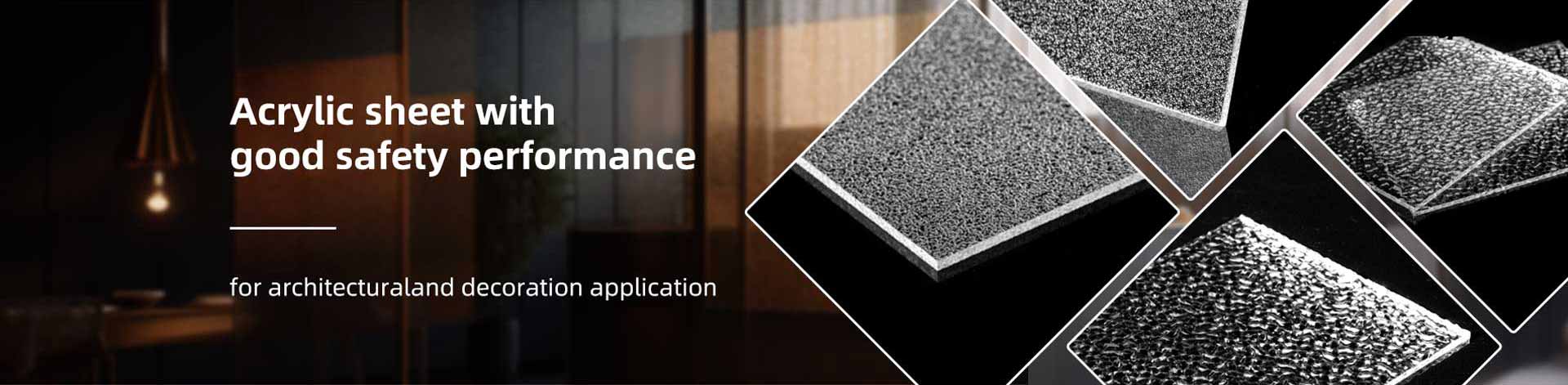
Acrylic sheet, also known as PMMA (Polymethyl Methacrylate) or plexiglass, is a clear, strong, and lightweight material widely used for lighting diffusers, signage, and architectural panels.
When cutting large or straight panels, many users ask: Can you cut acrylic sheet with a circular saw?
The answer is yes—a circular saw can cut acrylic accurately and efficiently if used correctly. With the right blade, speed, and setup, it produces smooth, chip-free edges suitable for both professional and DIY fabrication.
At KUNXIN Plastics, we not only manufacture optical and Decorative Acrylic Sheets but also provide precision CNC and saw-cutting services for customers worldwide.
Circular saws are the preferred choice when you need long, straight, or repeated cuts on thicker acrylic panels.
Here are the key advantages:
Efficiency: Faster than hand tools and ideal for cutting multiple sheets at once.
Accuracy: Delivers perfectly straight lines with consistent thickness.
Clean Finish: When properly set up, minimizes edge chipping and surface melting.
Scalability: Suitable for industrial production as well as custom workshops.
Circular saws are especially effective for sheets thicker than 3 mm, where a jigsaw or scoring method may be too slow.
The blade determines the quality of the cut. Using the wrong one can cause cracks, melting, or rough edges.
| Blade Feature | Recommendation | Reason |
|---|---|---|
| Type | Fine-tooth carbide-tipped or triple-chip-grind (TCG) blade | Designed for plastics |
| Teeth per Inch (TPI) | 60 – 80 T | Smooth, controlled cutting |
| Kerf Width | Thin (≤ 3 mm) | Reduces friction and heat |
| Material | Tungsten carbide | Durable and heat-resistant |
| Hook Angle | 0° – 5° | Prevents grabbing and melting |
Tip: A dull or aggressive wood blade will melt the acrylic edges. Always use a sharp, fine-tooth plastic-cutting blade.
Proper preparation ensures both safety and clean results.
Keep the Protective Film On
Do not remove the factory film—it protects the surface from scratches.
Mark the Cut Line
Use a non-permanent marker or masking tape for accurate guidance.
Support the Sheet Firmly
Lay it flat on a table or sawhorses. Use clamps or vacuum hold-downs to prevent vibration.
Set Saw Speed and Feed Rate
Run the circular saw at 3,000 – 4,000 RPM with slow, steady feed pressure. Excessive speed causes melting, while too slow can chip the edge.
Use Dust Collection or Air Cooling
Continuous cutting generates heat; compressed air or a fan helps cool the blade and sheet.
Align the Saw Blade
Adjust the blade height so that teeth project about 5–10 mm above the sheet surface.
Start the Saw Before Contact
Reach full speed before the blade meets the acrylic.
Feed Smoothly and Evenly
Maintain a consistent forward motion. Avoid stopping mid-cut, which can leave marks or melt spots.
Support the Off-Cut Side
Use a helper or roller stand to prevent the acrylic from snapping at the end of the cut.
Cool and Inspect
After cutting, let the sheet cool for a few minutes before handling.
Edge Finishing (Optional)
For professional results, sand edges with fine-grit paper or polish using flame polishing—a service offered at KUNXIN Plastics.
| Potential Risk | Preventive Measure |
|---|---|
| Kickback | Use correct blade angle and firm clamping |
| Melting or Burning | Maintain proper feed speed; avoid dull blades |
| Cracking | Support both sides and avoid over-tight clamps |
| Flying Chips | Wear safety goggles and gloves |
| Noise & Dust | Use ear protection and a dust extractor |
Always cut in a well-ventilated area, as friction may release small amounts of fumes.
While a circular saw works perfectly for straight cuts, professional fabrication is recommended for:
Large-volume or high-precision production
Complex shapes and curves (better suited for CNC or laser)
Architectural or optical applications requiring polished edges
At KUNXIN Plastics, we use CNC panel saws, laser cutters, and diamond-edge polishers to achieve dimensional accuracy and optical clarity that meet export-grade standards.
Running the saw too fast → edges melt or discolor.
Using a wood or metal blade without fine teeth → chipping occurs.
Forgetting to support the off-cut → cracking at the end.
Ignoring protective film → scratches and surface burns.
Cutting without test passes → misalignment on expensive panels.
With correct setup, a circular saw produces clean, factory-grade edges ready for assembly or further finishing.
Q1: Can I use a regular woodworking circular saw?
Yes, if you install a fine-tooth carbide blade specifically designed for plastic cutting.
Q2: What is the maximum thickness I can cut?
Circular saws can handle acrylic up to 20 mm thick, depending on the blade diameter and power.
Q3: Does acrylic melt while cutting?
It can if the blade is dull or the feed speed is too slow. Use cooling air and avoid friction heat buildup.
Q4: Should I remove the protective film before cutting?
No. Keep it on to avoid scratches and surface damage during cutting.
Q5: Do you offer pre-cut or custom sizes?
Absolutely. KUNXIN Plastics provides OEM/ODM acrylic fabrication, including pre-cut panels and finished components.