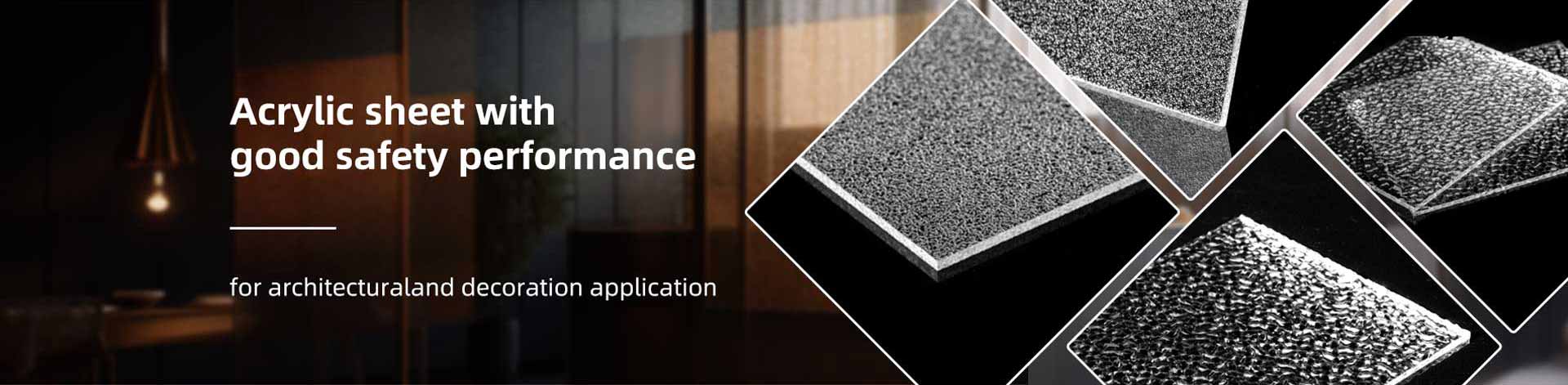
Acrylic sheet—commonly known as PMMA (Polymethyl Methacrylate) or plexiglass—is loved for its clarity, durability, and versatility.
But after cutting or machining, the edges may look rough or cloudy. Many fabricators and designers ask:
Can You Sand Acrylic Sheet?
The answer is yes. You can sand acrylic sheet safely to smooth edges, remove scratches, and prepare surfaces for polishing or bonding.
At KUNXIN Plastics, we use professional sanding, buffing, and polishing techniques to achieve optical-grade clarity on every acrylic panel we manufacture.
Sanding serves several critical purposes in acrylic fabrication:
Smooths cut edges after sawing or laser cutting.
Removes fine scratches and surface haze.
Prepares surfaces for flame polishing or solvent bonding.
Improves transparency by leveling micro-imperfections.
Proper sanding enhances the final appearance, especially for displays, signage, and lighting fixtures, where clean edges highlight the quality of craftsmanship.
| Tool / Material | Purpose |
|---|---|
| Wet-dry sandpaper (400 – 2000 grit) | Gradual edge and surface smoothing |
| Water spray bottle or soapy water | Cooling and dust removal |
| Soft sanding block or sponge pad | Even pressure application |
| Microfiber cloth | Cleaning after sanding |
| Protective gloves & goggles | Safety during wet sanding |
| Polishing compound / buffing wheel (optional) | For glossy finish |
Always keep the protective film on areas not being sanded to avoid scratching.
Begin with 400 – 600 grit wet-dry paper to remove rough saw marks or deep scratches.
Wrap the paper around a sanding block and apply light, even pressure along the edge or surface.
Move in one direction—avoid circular motion at this stage.
Acrylic softens with heat. Regularly spray water or mild soapy solution on the sanding area.
Wet sanding prevents melting, clogging, and static dust while giving smoother results.
Gradually switch to 800 → 1000 → 1500 → 2000 grit.
Each step removes the scratches left by the previous grit, refining the surface toward transparency.
After the final sanding stage, wipe the surface with a clean microfiber cloth.
If the finish looks satin-smooth with no visible scratches, you’re ready for polishing.
For optical clarity, apply acrylic polishing compound with a buffing wheel or use flame polishing under expert supervision.
At KUNXIN Plastics, our polishing lines produce mirror-clear edges for export-grade products.
| Tip | Benefit |
|---|---|
| Always sand wet | Prevents melting and improves finish |
| Keep motion consistent | Avoids uneven surfaces |
| Do not press too hard | Reduces risk of stress cracking |
| Change sandpaper frequently | Dull paper causes heat buildup |
| Avoid high-speed power sanders | Can warp or burn the acrylic |
| Use fine grits for transparent results | Maintains optical clarity |
Patience is key—acrylic rewards careful, gradual finishing.
| Method | Recommended For | Notes |
|---|---|---|
| Manual Wet Sanding | Small parts, precision edges | Greater control, minimal heat |
| Orbital Sander (Low Speed) | Large panels | Use only with very fine grits (≥ 800) |
| Professional Belt Polisher | Industrial finishing | Found in KUNXIN’s fabrication facility |
At KUNXIN Plastics, we use belt and wheel polishing systems to deliver consistent, uniform finishes for lighting and decorative projects.
Always wear eye protection and gloves.
Work in a well-ventilated area; fine acrylic dust can irritate skin or eyes.
Keep water handy to cool surfaces.
Avoid flammable solvents near sanding stations.
Handle polished edges carefully—they can be very sharp.
Sanding dry—causes heat and white streaks.
Skipping grit levels—leaves visible lines.
Using power tools at high speed—melts the surface.
Pressing unevenly—creates distortion along edges.
Rushing the process—reduces clarity and smoothness.
Consistent, light motion and fine grit progression are the secrets to perfect acrylic finishing.
Our Jiangmen, Guangdong facility is equipped with advanced CNC machining, laser cutting, sanding, and polishing equipment.
We provide:
Optical-grade edge finishing for lighting and display applications.
Custom thickness and surface texture options (clear, frosted, mirrored, colored).
OEM/ODM fabrication for global buyers.
Quality control at every step, ensuring consistency across large orders.
With over a decade of manufacturing experience, KUNXIN Plastics helps international clients achieve superior results in optical and decorative acrylic products.
Q1: Can I sand both sides of an acrylic sheet?
Yes, but use light pressure and fine grits to avoid distorting optical clarity.
Q2: Will sanding make acrylic clear again?
Sanding removes scratches; polishing afterward restores full transparency.
Q3: Can I use an electric sander?
Yes, at low speed and with constant water cooling to prevent melting.
Q4: What grit sandpaper should I finish with?
End with 1500–2000 grit for best results before polishing.
Q5: Do you offer factory-sanded or polished edges?
Absolutely. KUNXIN Plastics provides ready-finished acrylic sheets with smooth or mirror-clear edges for export clients.
Previous: Can You Score And Snap Acrylic Sheet