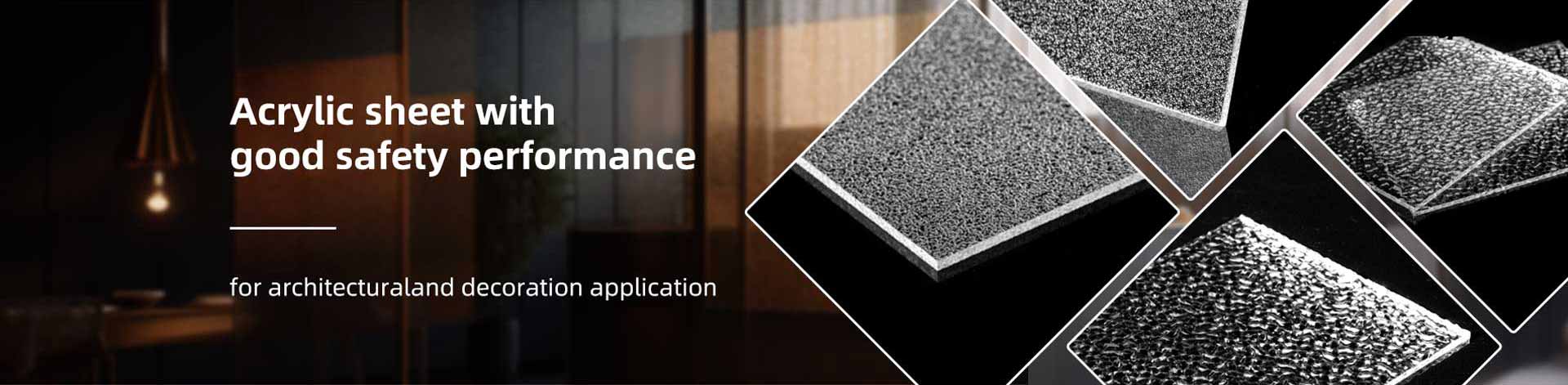
Acrylic sheet—also called PMMA (Polymethyl Methacrylate) or plexiglass—is one of the most versatile transparent plastics used in lighting, signage, and decorative design.
When working with thin sheets, a common question arises:
Can You Score And Snap Acrylic Sheet instead of cutting it with power tools?
The answer is yes. You can score and snap acrylic safely and cleanly when the sheet is thin (≤ 3 mm) and you use the proper tools and technique.
At KUNXIN Plastics, we guide global clients in both hand-cutting methods and CNC fabrication, offering solutions that fit every production scale.
Scoring and snapping is the simplest way to cut acrylic without machinery. It’s ideal when you need:
Straight cuts on thin sheets up to 3 mm (⅛ inch)
Quick adjustments or small DIY projects
Clean edges without power-tool noise or dust
On-site trimming where laser or saw access is limited
However, for thicker panels or curved designs, mechanical or laser cutting (available at KUNXIN Plastics) ensures higher precision.
| Tool | Purpose |
|---|---|
| Acrylic scoring knife / utility knife | Creates the cutting groove |
| Metal straight edge / ruler | Guides a straight line |
| Flat workbench | Supports the sheet during scoring |
| Clamps | Prevents slipping |
| Protective gloves & goggles | Safety |
| Fine sandpaper or file | Smooths snapped edges |
Keep the protective film on both sides of the sheet during cutting to prevent surface scratches.
Use a fine marker or masking tape to mark your cutting line. Align your straight edge precisely along it.
Hold the scoring knife at a 45-degree angle.
Pull the blade along the straight edge 10 – 15 times, applying even pressure until you form a deep groove about ⅓ of the sheet’s thickness.
Always score on the front side of the sheet.
Place the acrylic on the edge of a sturdy table with the scored line aligned exactly with the edge.
Clamp or hold the larger side down flat.
Press firmly and evenly on the overhanging piece.
The sheet will snap along the scored line, producing a straight break.
Use fine sandpaper (600 – 1000 grit) or a deburring tool to smooth the edge.
For optical clarity, edges can later be flame-polished—a finishing process available at KUNXIN Plastics.
| Tip | Why It Matters |
|---|---|
| Use a sharp scoring blade | Dull blades cause cracks and uneven breaks |
| Score multiple times instead of pressing harder | Prevents chipping |
| Keep the sheet supported | Avoids bending stress |
| Do not rush the snap | Ensures straight, clean break |
| Sand after snapping | Removes sharp edges |
If you’re cutting repeatedly or working with thicker sheets, switch to circular-saw or laser cutting for consistency.
| Factor | Score & Snap | Machine Cutting (KUNXIN Plastics) |
|---|---|---|
| Speed | Fast for single cuts | High for bulk cuts |
| Cost | Very low | Moderate |
| Precision | Basic, straight lines only | High, complex shapes |
| Thickness Range | ≤ 3 mm | Up to 20 mm + |
| Edge Finish | Requires sanding | Smooth / polished |
| Safety | Simple | Professional setup |
The score-and-snap technique is excellent for small jobs and prototypes, but production-grade finishing demands machine processing for accuracy and optical quality.
Always wear gloves and eye protection.
Work on a stable surface free of debris.
Don’t force the snap—apply steady pressure.
Keep children and bystanders away during cutting.
Store unused blades properly to avoid injury.
At KUNXIN Plastics, we provide both manual-friendly thin acrylic sheets and precision-cut thick panels through advanced fabrication lines:
CNC laser and router cutting for high accuracy
Saw cutting and edge polishing for bulk production
Custom sizes, shapes, and textures—clear, frosted, mirrored, colored
OEM/ODM fabrication for international customers
Strict quality control ensuring clarity and dimensional precision
Our facility in Jiangmen, Guangdong combines efficiency and craftsmanship, supporting lighting, signage, and decorative industries worldwide.
Q1: How thick can acrylic be to score and snap?
Up to 3 mm (⅛ inch) for best results. Thicker panels should be saw-cut or laser-cut.
Q2: Can I score both sides for a cleaner break?
Yes, scoring both sides helps when working with 3 mm sheets for more even stress distribution.
Q3: What if my acrylic cracked unevenly?
Cracks result from shallow scoring or bending pressure too far from the line. Score deeper and apply even force next time.
Q4: Can I curve-cut acrylic with scoring?
No. Scoring is suitable only for straight cuts. For curves, use jigsaw or laser cutting.
Q5: Do you supply pre-cut acrylic panels?
Yes. KUNXIN Plastics offers custom-cut, polished, and packaged acrylic sheets for global OEM/ODM projects.
Previous: Can You Screw into Acrylic Sheet