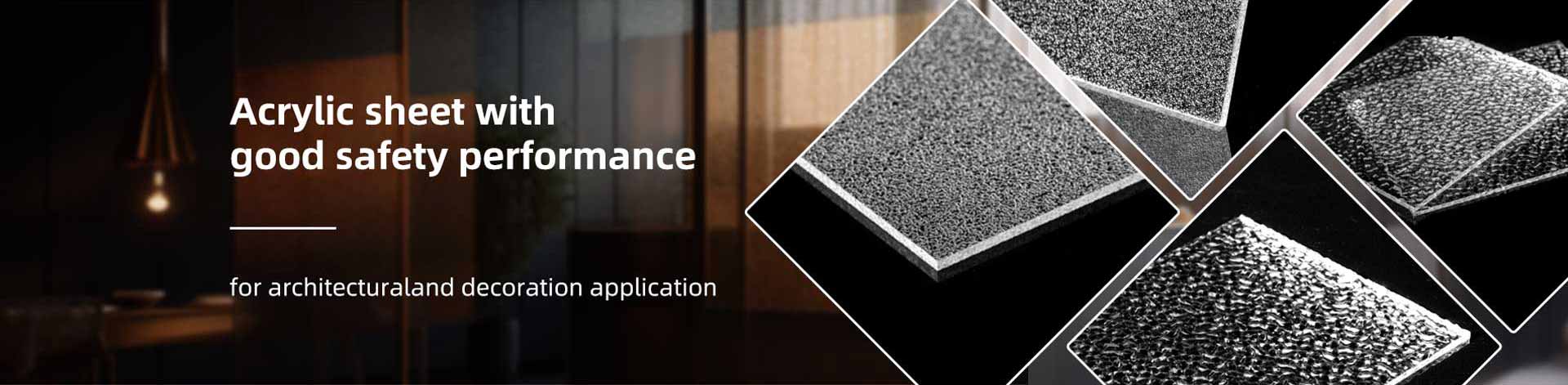
Customizing an acrylic diffuser sheet for LED fixtures requires balancing light transmission, diffusion performance, appearance, thickness, and processing requirements. A diffuser sheet is not simply a transparent cover. It controls how LED light spreads, reduces visible hot spots, improves visual comfort, and affects the final performance of the lighting fixture.
For different lighting projects, manufacturers need to adjust optical properties, surface texture, material structure, and fabrication methods to achieve the required lighting effect. (KUNXIN)
LED technology provides high brightness and energy efficiency, but concentrated LED chips can create uneven illumination. Without proper diffusion, users may see bright spots, glare, or inconsistent light distribution.
An acrylic diffuser sheet helps by:
Spreading light evenly
Reducing LED hot spots
Improving visual comfort
Maintaining sufficient brightness
Creating different lighting appearances
Clear PMMA acrylic can reach around 92% light transmission under ASTM D1003 testing. For LED diffuser applications, manufacturers adjust transmission and haze levels according to fixture design, often balancing brightness and diffusion performance. (KUNXIN)
Different LED fixtures require different diffuser sheet specifications.
A customization project usually considers:
| Requirement | Customization Direction |
|---|---|
| Brightness | Adjust light transmission |
| Uniformity | Control diffusion level |
| Glare reduction | Add anti-glare structure |
| Appearance | Select surface texture |
| Installation | Match thickness and size |
| Environment | Choose suitable material properties |
For example, commercial LED panels may require high uniformity, while decorative lighting may focus more on texture and visual effects.
Light transmission and diffusion are two important factors that must be balanced.
Higher transmission allows more light output, but excessive transparency may expose LED points. Higher diffusion improves uniformity but may reduce brightness.
| Optical Performance | Effect |
|---|---|
| Higher transmission | More light output |
| Higher haze | Better LED hiding ability |
| Controlled diffusion | Improved uniform illumination |
| Surface texture | Creates specific lighting effects |
KUNXIN provides acrylic diffuser sheets with customized light transmission levels and optical performance according to different LED applications. The company offers diffuser solutions designed for lighting fixtures, including acrylic diffuser sheets, anti-glare diffuser sheets, Prismatic Diffuser Sheets, and Light Guide Plates. (KUNXIN)
Surface design plays an important role in acrylic diffuser customization.
Common options include:
Frosted surface
Prism pattern
Textured pattern
Matte finish
Customized optical structures
Different textures change how light travels through the sheet.
For example:
| Surface Design | Application Effect |
|---|---|
| Frosted texture | Soft light appearance |
| Prism structure | Better light control |
| Anti-glare surface | Reduced visual discomfort |
| Custom pattern | Decorative lighting effect |
For architectural and decorative lighting, customized textures can combine functional diffusion with design requirements. (KUNXIN)
Material selection affects long-term performance.
Important considerations include:
Light stability
Heat resistance
Thickness consistency
Surface quality
Processing capability
A professional acrylic diffuser sheet manufacturer should evaluate:
LED power level
Fixture structure
Working temperature
Installation environment
Required lifetime
KUNXIN focuses on Optical Plastic sheet manufacturing and supplies acrylic diffuser sheets, polycarbonate diffuser sheets, optical PMMA sheets, and decorative acrylic products. (KUNXIN)
The quality of a customized diffuser sheet depends on the complete manufacturing process.
A typical production workflow includes:
Raw material preparation
Material feeding
Heating and melting
Extrusion and molding
Cooling and shaping
Thickness inspection
Surface treatment
Cutting and packaging
KUNXIN uses virgin raw materials at the beginning of production and controls extrusion, cooling, thickness checking, protective film application, and cutting processes to maintain stable sheet quality. (KUNXIN)
Consistent manufacturing helps ensure that large quantities of diffuser sheets maintain similar optical performance.
For customized LED fixtures, diffuser sheet development should start from the lighting design requirements.
A practical OEM and ODM process includes:
Manufacturers evaluate:
Fixture structure
LED arrangement
Required brightness
Diffusion effect
Sheet dimensions
Prototype testing helps confirm:
Light uniformity
Glare control
Appearance
Assembly compatibility
After approval, manufacturers control:
Material consistency
Optical performance
Thickness tolerance
Surface quality
This approach reduces risks before bulk production.
Large lighting projects require consistent diffuser sheet performance across every batch.
Important quality control checkpoints include:
| Inspection Item | Purpose |
|---|---|
| Light transmission | Maintain brightness |
| Haze level | Ensure diffusion consistency |
| Thickness tolerance | Support installation |
| Surface inspection | Prevent visual defects |
| Dimension accuracy | Match fixture structure |
For international projects, stable quality is especially important because inconsistent diffuser performance can affect the final lighting effect after installation.
Working directly with an acrylic diffuser sheet manufacturer provides better control over:
Optical material selection
Custom texture development
Production parameters
Quality inspection
Fabrication options
A trader may provide standard diffuser sheets, but a manufacturer can adjust the product according to lighting requirements.
KUNXIN provides one-stop optical plastic solutions with customization capabilities covering different thicknesses, colors, textures, light transmission levels, and shapes. Its fabrication capabilities include laser cutting, CNC milling, heat bending, diamond polishing, thermoforming, surface treatment, and acrylic laminating. (KUNXIN)
Before mass production, manufacturers should confirm:
Required material standards
Testing requirements
Packaging method
Shipping conditions
Application environment
A complete project sourcing checklist should include:
LED fixture type
Required optical performance
Acrylic thickness
Surface texture
Production quantity
Processing requirements
Quality standards
Customizing acrylic diffuser sheets for LED fixtures is a combination of optical engineering, material selection, and manufacturing control. By adjusting light transmission, diffusion performance, surface structure, and fabrication methods, manufacturers can create diffuser solutions that improve both lighting performance and product appearance.
With optical plastic manufacturing experience, customized production capability, and controlled quality systems, KUNXIN helps provide acrylic diffuser sheet solutions for LED panels, commercial lighting, architectural lighting, and decorative applications.