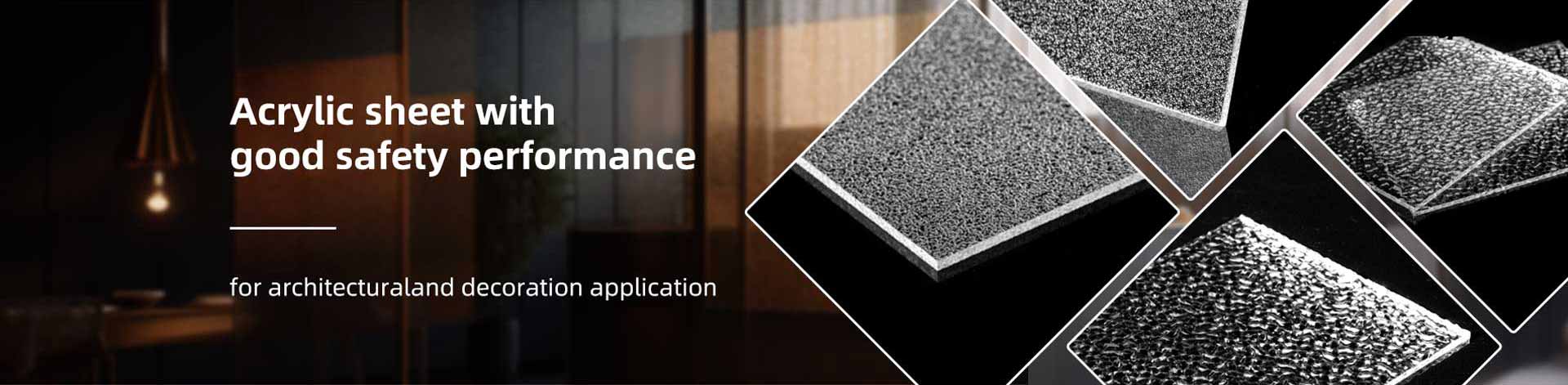
PMMA diffuser sheets usually provide better optical clarity and stable light diffusion, while PC diffuser films offer flexibility and impact resistance. The best choice depends on LED design requirements.
PMMA diffuser sheet and PC diffuser film are two important optical materials used in LED lighting systems. Both solutions are designed to improve light distribution, reduce glare, and create a more comfortable lighting experience, but they have different performance characteristics.
PMMA diffuser sheet, also known as acrylic diffuser sheet, is widely used in LED panels, ceiling lights, and architectural lighting because of its excellent optical properties and surface quality. PC diffuser film, made from polycarbonate material, provides higher flexibility, impact resistance, and lightweight characteristics for compact lighting designs.
From a manufacturing perspective, the selection between PMMA diffuser sheet and PC diffuser film should focus on light uniformity, product structure, processing requirements, and application environment.
PMMA diffuser sheet generally provides more consistent light uniformity for LED lighting applications.
PMMA has excellent optical transparency and can be precisely engineered with diffusion particles, surface textures, and optical patterns. This allows manufacturers to control haze levels and light scattering performance, reducing bright spots from LED chips while maintaining sufficient brightness.
PC diffuser film also provides effective light diffusion, especially in thin lighting structures. However, because film thickness is usually lower than rigid diffuser sheets, achieving the same level of optical control may require additional optical design or layered structures.
For LED panel lights and commercial lighting products that require smooth illumination and minimal LED visibility, PMMA diffuser sheets are often preferred.
Both materials help reduce LED glare by scattering concentrated light from LED sources.
PMMA diffuser sheets achieve glare control through a combination of material diffusion technology and surface design. Different haze levels and textures can be developed to balance brightness and visual comfort.
PC diffuser films provide glare reduction through thin optical layers and flexible installation methods. They are suitable for lighting products where space limitations require lightweight optical components.
For applications such as offices, retail spaces, and architectural lighting, PMMA diffuser sheets often provide better control of visual appearance because they maintain stable optical performance across larger areas.
PMMA diffuser sheet usually offers higher light transmission compared with PC diffuser film.
PMMA is known for its excellent transparency, with optical transmission commonly exceeding 90% in clear grades. After adding diffusion technology, PMMA can maintain high brightness while achieving uniform light output.
Polycarbonate also has good transparency, but PC diffuser films are often optimized for flexibility and mechanical performance rather than maximum optical clarity.
A comparison of typical performance characteristics:
| Feature | PMMA Diffuser Sheet | PC Diffuser Film |
|---|---|---|
| Light transmission | Excellent | Very good |
| Light uniformity | Excellent | Good |
| Thickness options | Wide range | Mainly thin designs |
| Flexibility | Limited | Excellent |
| Impact resistance | Good | Excellent |
| Surface appearance | Premium | Good |
| Optical customization | High | Moderate |
Yes, PC diffuser film generally provides better impact resistance and flexibility.
Polycarbonate is an engineering plastic known for its toughness. PC diffuser films can withstand bending, vibration, and mechanical stress better than rigid PMMA sheets.
This makes PC diffuser film suitable for:
Flexible LED lighting
Thin light modules
Transportation lighting
Compact electronic products
Applications requiring lightweight structures
PMMA diffuser sheets provide better rigidity and surface quality, making them suitable for applications where appearance, optical stability, and long-term transparency are important.
PMMA diffuser sheet is commonly selected for LED panel lights because it provides excellent light uniformity and a high-quality visual effect.
LED panel lighting requires diffuser materials that can:
Eliminate visible LED points
Maintain even brightness across the panel
Reduce glare
Support consistent production quality
Maintain appearance over long-term use
PMMA diffuser sheets can be customized with different thicknesses, diffusion rates, and surface patterns to match different LED layouts.
PC diffuser film is more suitable for ultra-thin lighting designs where flexibility and lightweight construction are important.
Professional LED manufacturers evaluate several factors when selecting optical materials.
Rigid LED panels and large-area lighting products usually benefit from PMMA diffuser sheets. Thin and flexible lighting structures may require PC diffuser films.
Projects focusing on brightness efficiency and smooth illumination often select PMMA because of its excellent optical control capability.
When products need resistance against bending, vibration, or impact, PC diffuser film provides additional advantages.
Thickness tolerance, cutting methods, assembly processes, and optical consistency all influence material selection. Experienced Optical Plastic manufacturers analyze the complete lighting structure rather than selecting materials based only on cost.
PMMA diffuser sheet is the better choice when LED lighting projects require superior light uniformity, high optical clarity, and premium appearance.
PC diffuser film is a better option when the design requires flexibility, lightweight construction, and stronger impact resistance.
For commercial LED panel lights, ceiling lighting, and architectural illumination, PMMA diffuser sheets provide reliable optical performance. For compact, flexible, or high-impact applications, PC diffuser films offer greater design flexibility.
As an optical plastic manufacturer, Kunxin provides customized PMMA diffuser sheet solutions and optical plastic products for LED lighting applications, supporting different requirements in material selection, diffusion performance, thickness, and surface design.