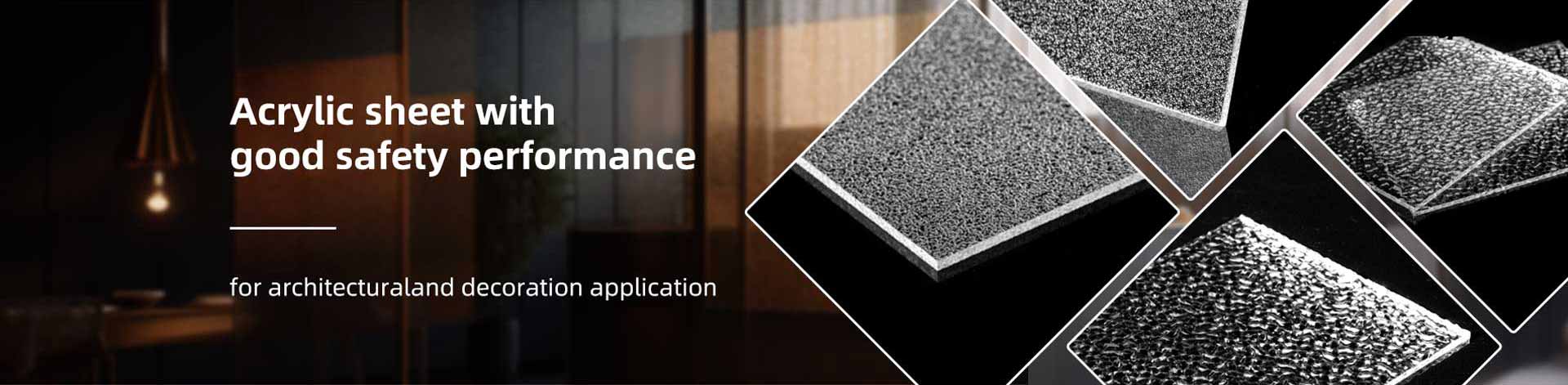
Acrylic Diffuser Plates provide better optical clarity and light efficiency, while polycarbonate diffuser panels offer stronger impact resistance and durability. The right choice depends on LED fixture requirements.
Acrylic diffuser plates and polycarbonate diffuser panels are two commonly used optical components in LED fixtures. Both materials help improve light distribution, reduce glare, and create a comfortable lighting environment, but their performance characteristics are different.
Acrylic diffuser plate, made from PMMA material, is widely used in led panel lights, ceiling fixtures, and commercial lighting because of its excellent transparency, surface quality, and optical stability.
Polycarbonate diffuser panel uses PC material, which is known for high impact resistance, toughness, and dimensional stability. It is commonly selected for lighting products exposed to mechanical stress or demanding environments.
From a manufacturing perspective, choosing between acrylic and polycarbonate requires evaluating optical performance, fixture structure, environmental conditions, and product positioning.
Acrylic diffuser plates generally provide higher light efficiency because of their excellent optical properties.
PMMA acrylic has high transparency and allows efficient light transmission while maintaining controlled diffusion. Through optical additives and surface structures, acrylic diffuser plates can distribute LED light evenly without significantly reducing brightness.
Polycarbonate diffuser panels also provide good light transmission and diffusion performance, but their primary advantage is mechanical strength rather than maximum optical efficiency.
For LED fixtures that require high brightness output, such as commercial panel lights, office lighting, and architectural illumination, acrylic diffuser plates are often selected to achieve better energy efficiency.
Both acrylic diffuser plates and polycarbonate diffuser panels can improve LED light uniformity, but acrylic usually provides more precise optical control.
Acrylic diffuser plates can be customized with different haze levels, textures, and diffusion structures. This allows manufacturers to reduce LED hotspots and achieve smooth illumination across large lighting surfaces.
Polycarbonate diffuser panels provide reliable diffusion performance and are suitable for applications where durability is a priority. However, achieving premium optical effects may require additional design considerations.
For LED fixtures where appearance and visual comfort are critical, acrylic diffuser plates typically provide better uniformity performance.
Yes, polycarbonate diffuser panels generally offer higher impact resistance than acrylic diffuser plates.
Polycarbonate is an engineering plastic with excellent toughness. It can withstand stronger impacts, vibration, and mechanical stress, making it suitable for industrial lighting, public facilities, and outdoor fixtures.
Acrylic diffuser plates have good rigidity, surface hardness, and weather resistance. They maintain excellent optical appearance during long-term use but are more sensitive to strong impact compared with polycarbonate.
| Performance Factor | Acrylic Diffuser Plate | Polycarbonate Diffuser Panel |
|---|---|---|
| Optical clarity | Excellent | Very good |
| Light efficiency | Higher | Good |
| Light uniformity | Excellent | Very good |
| Impact resistance | Good | Excellent |
| Surface appearance | Premium | Good |
| Weather resistance | Excellent | Good |
| Processing flexibility | Excellent | Good |
Acrylic diffuser plates are widely used in commercial LED fixtures that require high-quality lighting performance.
Commercial lighting products often need:
High light transmission
Low glare performance
Uniform illumination
Stable appearance
Consistent production quality
Acrylic diffuser plates can be produced with customized thicknesses, diffusion levels, and optical patterns to meet different fixture designs.
Polycarbonate diffuser panels are more suitable for commercial lighting projects where additional protection is needed, including factories, warehouses, transportation facilities, and public areas.
Temperature conditions are an important factor when selecting diffuser materials for LED fixtures.
Polycarbonate diffuser panels provide strong thermal stability and maintain structural performance in environments with temperature fluctuations.
Acrylic diffuser plates also perform well in normal LED applications when proper heat management is applied. Their advantage is maintaining excellent optical clarity and surface appearance over time.
For standard indoor LED fixtures, acrylic is often sufficient. For high-temperature or mechanically demanding environments, polycarbonate may provide additional reliability.
Professional LED manufacturers usually evaluate several aspects before selecting diffuser materials.
When the fixture requires maximum brightness, smooth illumination, and premium appearance, acrylic diffuser plates are commonly selected.
When the fixture requires stronger protection and impact resistance, polycarbonate diffuser panels may be more suitable.
Indoor commercial lighting generally focuses on optical quality, while industrial and outdoor applications often require stronger material durability.
Large-area LED panels usually benefit from rigid acrylic diffuser plates because they provide stable optical performance. Compact or protective lighting structures may use polycarbonate panels.
Material selection also depends on processing requirements, including cutting accuracy, thickness control, surface treatment, and assembly methods. Experienced Optical Plastic manufacturers evaluate the entire fixture design to achieve the best balance between performance and cost.
Acrylic diffuser plate is the better choice for LED fixtures that prioritize optical performance, brightness efficiency, and premium appearance.
Polycarbonate diffuser panel is the better choice for applications requiring higher impact resistance, stronger protection, and long-term mechanical durability.
For commercial LED panels, office lighting, and architectural lighting systems, acrylic diffuser plates provide excellent optical results. For industrial, outdoor, and safety-focused fixtures, polycarbonate diffuser panels offer additional advantages.
As an optical plastic manufacturer, Kunxin develops customized diffuser solutions for LED fixtures, providing support in material selection, optical design, surface processing, and stable production quality.