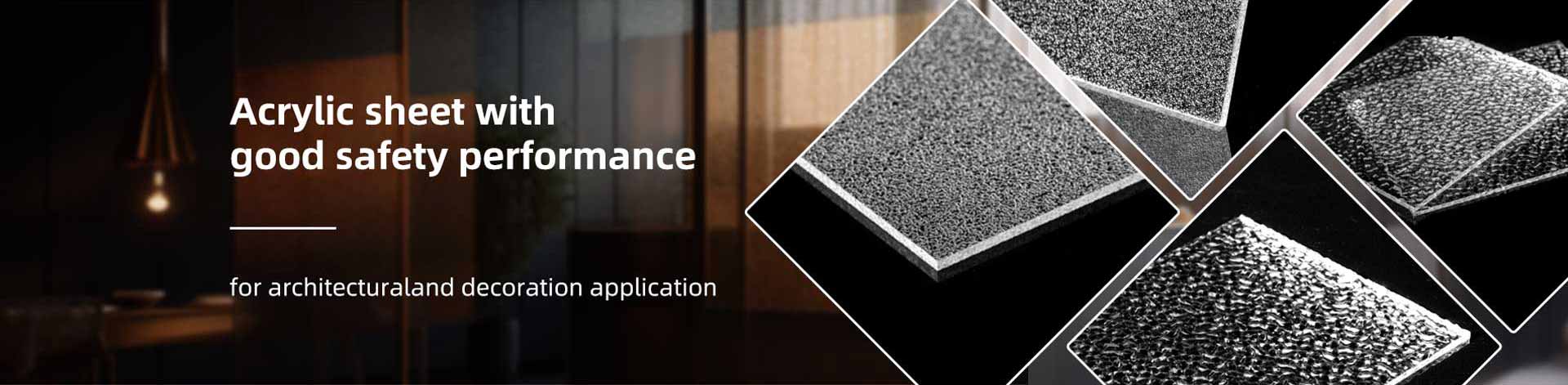
LED diffuser sheets improve light uniformity and reduce glare, while Optical Films enhance light control and efficiency in compact lighting systems. The better solution depends on the LED structure and performance goals.
LED diffuser sheets and optical films are two important optical components used in modern LED lighting systems. Although both products help improve lighting performance, they solve different optical problems.
LED diffuser sheets are designed to scatter light from LED sources, reducing visible hotspots and creating a softer illumination effect. They are commonly used in LED panel lights, ceiling fixtures, commercial lighting, and architectural applications.
Optical films are thin functional materials designed to control light direction, improve brightness utilization, or enhance optical efficiency. They are often used in thin LED modules, displays, and compact lighting structures where space is limited.
From a manufacturing perspective, selecting between an LED diffuser sheet and an optical film requires evaluating light distribution, fixture structure, brightness requirements, and production design.
LED diffuser sheets generally provide better light uniformity for large-area lighting applications.
A diffuser sheet works by spreading light through internal diffusion particles or surface textures. This helps eliminate LED hotspots and creates consistent brightness across the entire lighting surface.
Optical films mainly control light direction rather than providing full-area diffusion. They can improve brightness concentration but may require combination with diffuser materials to achieve optimal uniformity.
For LED panel lights, office lighting, and commercial fixtures requiring smooth illumination, diffuser sheets are usually the primary optical component.
LED diffuser sheets improve lighting efficiency by balancing brightness and light distribution.
A well-designed diffuser sheet can:
Reduce direct LED glare
Improve visual comfort
Minimize uneven brightness
Increase usable light output
Create consistent illumination
Advanced diffuser sheets can be customized with different haze levels, thicknesses, and optical structures. This allows manufacturers to achieve a balance between high transmission and effective diffusion.
When diffusion performance is properly designed, less LED power is wasted due to excessive glare or uneven light distribution.
Optical films improve LED performance by managing how light travels through the fixture.
Different optical films can provide functions such as:
Light enhancement
Directional control
Brightness improvement
Reflection management
Beam angle adjustment
In thin LED products, optical films help maximize available light output within limited installation space.
However, optical films usually work as part of a complete optical system rather than replacing diffuser sheets completely. Many high-performance LED products combine diffuser sheets and optical films to achieve both uniformity and efficiency.
Both LED diffuser sheets and optical films can provide high light transmission, but their functions are different.
LED diffuser sheets focus on achieving a balance between transmission and diffusion. The goal is not only to allow light through but also to distribute it evenly.
Optical films are often designed to maximize light utilization and may provide higher efficiency in specific optical directions.
| Comparison | LED Diffuser Sheet | Optical Film |
|---|---|---|
| Main function | Light diffusion | Light control |
| Light uniformity | Excellent | Good |
| Brightness enhancement | Good | Excellent |
| Glare reduction | Excellent | Moderate |
| Thickness | Medium | Very thin |
| Large-area lighting | Excellent | Limited |
| Compact lighting design | Good | Excellent |
LED diffuser sheets are generally more suitable as the main optical layer for LED panel lights.
Large-area LED panels require materials that can provide:
Uniform brightness across the panel
Reduced LED visibility
Comfortable viewing experience
Stable optical performance
Easy production integration
Diffuser sheets can cover large surfaces and maintain consistent illumination quality.
Optical films are often added to LED panels when additional brightness improvement or directional light control is required. They work together with diffuser sheets to optimize the final lighting performance.
Yes, LED diffuser sheets and optical films are often used together in advanced lighting designs.
A typical optical structure may include:
LED light source
Reflective layer
Light guide component
Optical film
Diffuser sheet
The optical film improves light management, while the diffuser sheet creates final light uniformity and visual comfort.
This combined approach is common in high-performance LED lighting products that require both efficiency and appearance quality.
Professional lighting manufacturers usually consider several factors before selecting optical components.
Large commercial fixtures usually prioritize diffuser sheets for uniform illumination. Thin electronic lighting products may require optical films because of limited space.
Projects requiring maximum light output may combine optical films with diffuser sheets to improve efficiency.
Applications such as offices, schools, and retail environments often require better glare control, making diffuser sheets an important component.
The available installation space, LED arrangement, and optical design determine whether a diffuser sheet, optical film, or combination solution is most suitable.
LED diffuser sheets are the better choice when the priority is light uniformity, glare reduction, and comfortable illumination.
Optical films are more suitable when the goal is improving brightness efficiency, controlling light direction, or supporting ultra-thin LED designs.
For most commercial LED lighting applications, diffuser sheets provide the foundation for high-quality illumination, while optical films serve as additional optical enhancement components.
As an Optical Plastic manufacturer, Kunxin provides customized diffuser sheet solutions and optical materials for LED lighting applications, supporting different requirements in diffusion performance, thickness, surface design, and optical efficiency.