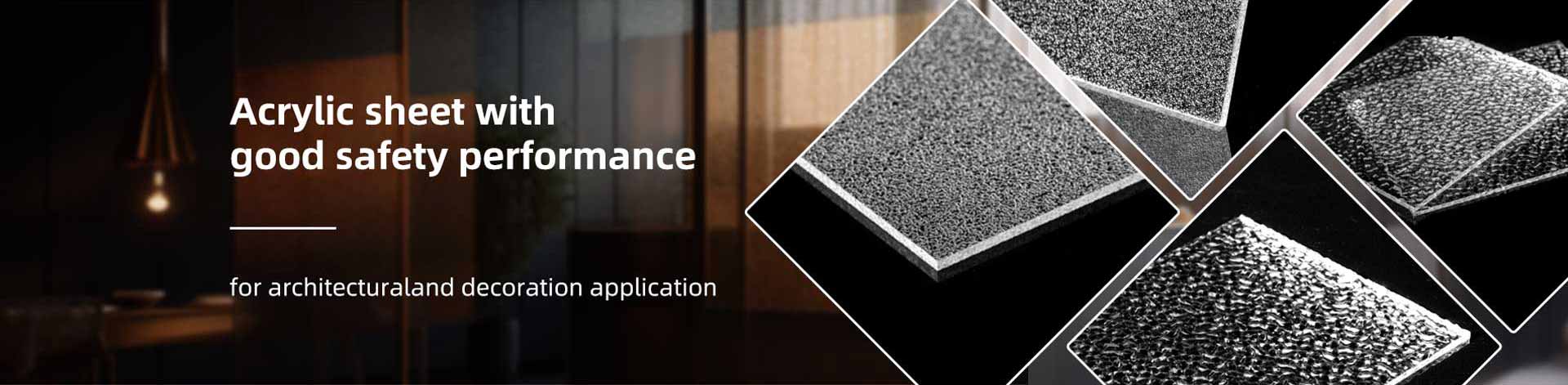
Acrylic diffuser sheets reduce LED glare through light scattering, while Prismatic Diffuser Sheets control glare by redirecting light with optical patterns. The better choice depends on lighting design requirements.
Acrylic diffuser sheet and prismatic diffuser sheet are two common optical solutions used in LED lighting systems. Both materials help improve visual comfort, but they control LED glare through different optical principles.
Acrylic diffuser sheets use diffusion technology to scatter concentrated LED light. The material structure and surface treatment distribute light evenly, reducing visible hotspots and creating a softer illumination effect.
Prismatic diffuser sheets use specially designed prism structures to redirect light at controlled angles. Instead of simply scattering light, they manage the direction of light output to improve efficiency and reduce uncomfortable glare.
From a manufacturing perspective, the selection between acrylic diffuser sheets and prismatic diffuser sheets depends on fixture design, required brightness, viewing angle, and application environment.
Acrylic diffuser sheet reduces glare by spreading LED light through controlled diffusion.
LED chips produce highly concentrated light points that can cause visual discomfort when viewed directly. Acrylic diffuser sheets contain optical diffusion elements that scatter this concentrated light and create a more uniform surface brightness.
The main advantages of acrylic diffuser sheets for glare control include:
Softening direct LED light
Reducing visible hotspots
Improving illumination uniformity
Creating comfortable viewing conditions
Maintaining good light transmission
Acrylic diffuser sheets are widely used in LED panel lights, ceiling fixtures, commercial lighting, and architectural illumination where balanced brightness and visual comfort are required.
Prismatic diffuser sheet controls glare through optical surface structures.
The prism pattern changes the direction of light passing through the sheet. By controlling the distribution angle, prismatic structures can reduce excessive light concentration in certain viewing directions while improving light utilization.
Unlike traditional diffusion methods, prismatic technology focuses more on directional light management.
Prismatic diffuser sheets are often used in applications where lighting efficiency and controlled beam distribution are important, such as:
Office lighting
Commercial LED panels
Troffer fixtures
Display lighting
High-efficiency lighting systems
The answer depends on the type of glare and lighting requirements.
Acrylic diffuser sheets are better for creating soft, evenly distributed light across a large surface. They are effective when the goal is reducing LED visibility and achieving comfortable illumination.
Prismatic diffuser sheets are better for controlling the direction of light and optimizing brightness distribution. They are useful when designers need to manage viewing angles and improve optical efficiency.
| Comparison | Acrylic Diffuser Sheet | Prismatic Diffuser Sheet |
|---|---|---|
| Glare control method | Light scattering | Light redirection |
| Light uniformity | Excellent | Very good |
| Directional control | Moderate | Excellent |
| Visual comfort | Excellent | Excellent |
| Brightness efficiency | Good | Higher |
| Surface design | Diffusion texture | Prism structure |
| Common applications | Panel lights, decorative lighting | Office and commercial fixtures |
Both acrylic diffuser sheets and prismatic diffuser sheets can maintain high light transmission, but their optical goals are different.
Acrylic diffuser sheets balance transmission and diffusion. They allow sufficient light to pass through while spreading it evenly across the lighting surface.
Prismatic diffuser sheets focus on improving light extraction efficiency by controlling the path of light. In suitable applications, they can direct more usable light toward the target area.
For general LED lighting that requires soft illumination, acrylic diffuser sheets are often preferred. For projects requiring controlled light distribution, prismatic diffuser sheets provide additional advantages.
Both materials are suitable for LED panel lights, but they support different lighting objectives.
Acrylic diffuser sheets are commonly selected for:
Residential lighting
Commercial ceiling panels
Decorative LED fixtures
Applications requiring smooth brightness
They help create a comfortable lighting experience by minimizing visible LED points.
Prismatic diffuser sheets are often selected for professional lighting systems where efficiency and optical control are important.
Typical applications include:
Office environments
Schools
Hospitals
Commercial buildings
Energy-efficient lighting projects
Yes, some advanced LED lighting designs combine different optical layers to achieve better performance.
A diffuser sheet can provide surface uniformity and glare reduction, while a prismatic layer can improve light direction and efficiency.
A combined optical structure may help achieve:
Higher light utilization
Better brightness distribution
Reduced glare
Improved visual comfort
The final design depends on LED arrangement, light guide structure, fixture size, and required performance.
Professional LED manufacturers evaluate several factors before selecting diffuser materials.
When the main goal is soft and uniform illumination, acrylic diffuser sheets are usually suitable. When directional control is required, prismatic diffuser sheets may perform better.
Office, education, and healthcare spaces often require strict glare control and comfortable viewing conditions. Different diffuser structures can be selected according to the lighting environment.
Prismatic diffuser sheets can improve optical efficiency by directing light more effectively. Acrylic diffuser sheets focus on maintaining balanced brightness and uniformity.
Thickness, LED arrangement, fixture structure, and surface appearance all influence material selection. Experienced Optical Plastic manufacturers evaluate the complete lighting system before recommending the appropriate diffuser solution.
Acrylic diffuser sheet is the better choice when LED lighting requires soft illumination, excellent uniformity, and comfortable visual appearance.
Prismatic diffuser sheet is the better choice when the project requires stronger light control, directional distribution, and improved optical efficiency.
For general commercial and architectural lighting, acrylic diffuser sheets provide reliable glare reduction and visual comfort. For professional LED systems requiring precise optical management, prismatic diffuser sheets offer additional performance advantages.
As an optical plastic manufacturer, Kunxin provides customized diffuser sheet solutions for LED lighting applications, supporting different requirements in optical performance, surface design, thickness, and production consistency.