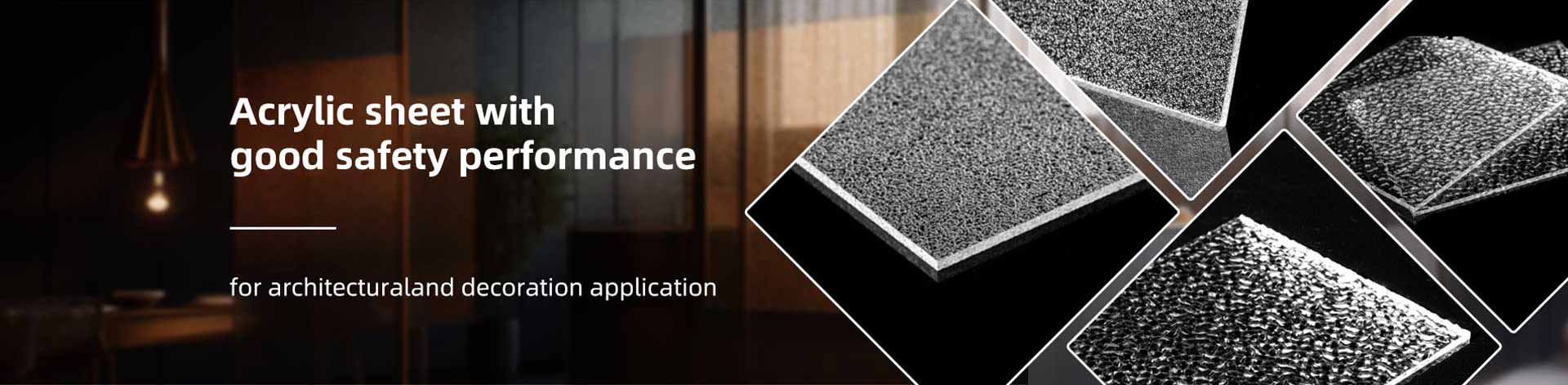
Prismatic sheets provide more precise directional light control, while Optical Films offer advanced light enhancement and efficiency improvement. The better choice depends on lighting structure and distribution requirements.
Prismatic sheet and optical film are two important optical components used in LED lighting systems. Both are designed to improve light performance, but they control light in different ways.
Prismatic sheet uses a structured surface with precise prism patterns to redirect light. It controls the direction of emitted light and helps achieve more accurate beam distribution.
Optical film is a thin functional material designed to enhance brightness, improve light extraction, or adjust optical performance. It is commonly used in compact LED systems where space and efficiency are important.
From a manufacturing perspective, selecting between prismatic sheets and optical films requires evaluating light distribution accuracy, fixture structure, brightness requirements, and optical system design.
Prismatic sheet controls light distribution through optical refraction.
The prism structure changes the path of passing light, allowing manufacturers to manage beam angles and direct more light toward target areas.
The main advantages include:
Precise directional control
Improved light utilization
Reduced unwanted glare
Controlled beam angles
Better optical efficiency
Prismatic sheets are widely used in:
LED panel lights
Office lighting systems
Commercial fixtures
Architectural lighting
They are especially suitable for applications where accurate light positioning is required.
Optical film improves LED performance by managing light within thin optical structures.
Different optical films can provide functions such as:
Brightness enhancement
Light redirection
Reflection management
Light extraction improvement
Optical efficiency optimization
Optical films are commonly used in:
Thin LED modules
Display lighting
Electronic devices
Compact illumination systems
Their main advantage is improving optical performance while maintaining a slim product design.
Prismatic sheet generally provides more accurate light distribution.
Because prismatic sheets use fixed geometric structures, they can control the direction of light more precisely. This makes them suitable for lighting applications where beam angle and illumination position are important.
Optical films improve light efficiency but usually focus more on enhancing brightness rather than controlling large-area light distribution.
| Comparison | Prismatic Sheet | Optical Film |
|---|---|---|
| Main function | Directional light control | Optical enhancement |
| Light distribution accuracy | Excellent | Good |
| Beam angle control | Excellent | Moderate |
| Brightness improvement | Good | Excellent |
| Thickness | Medium | Very thin |
| Large-area LED lighting | Excellent | Good |
| Compact optical systems | Good | Excellent |
Prismatic sheets are often preferred for LED panel lighting because these applications require controlled and uniform illumination.
LED panel lights need:
Even brightness
Reduced glare
Controlled light direction
Comfortable viewing
Efficient light output
Prismatic structures help distribute light toward the required area while reducing unnecessary light loss.
Optical films can also be used in LED panels, especially when additional brightness improvement is required.
Yes, prismatic sheets and optical films can be combined in advanced LED optical systems.
A combined structure may include:
LED light source
Reflective layer
Optical film
Prismatic sheet
Diffuser layer
Each component performs a different function:
Optical film improves brightness efficiency
Prismatic sheet controls light direction
Diffuser layer improves visual uniformity
This combination helps manufacturers achieve both high efficiency and accurate light distribution.
Prismatic sheet is often better suited for office lighting because offices require controlled illumination and reduced glare.
Office environments need:
Comfortable brightness levels
Reduced direct glare
Proper light distribution
Long-term visual comfort
Prismatic sheets help direct light downward and improve the efficiency of ceiling-mounted LED fixtures.
Optical films may support office lighting systems by improving brightness but usually require additional optical layers.
Optical film generally provides stronger advantages for thin LED products.
Because optical films are lightweight and extremely thin, they are suitable for products where installation space is limited.
Applications include:
Thin display lighting
Portable electronic products
Compact LED modules
Prismatic sheets are better suited for rigid lighting structures where precise light control is required.
Professional LED manufacturers evaluate several factors before selecting optical components.
Applications requiring accurate beam control usually select prismatic sheets.
Applications requiring brightness enhancement may choose optical films.
Material selection depends on:
Available installation space
LED arrangement
Optical layer design
Required thickness
Manufacturers consider:
Light efficiency
Uniformity
Glare control
Viewing angle
Target illumination area
Cutting accuracy, material consistency, and assembly methods also influence the final choice.
Experienced Optical Plastic manufacturers analyze the complete optical system before recommending the suitable solution.
Prismatic sheet is the better choice when LED applications require accurate light distribution, directional control, and improved illumination efficiency.
Optical film is the better choice when lighting products require brightness enhancement, compact design, and advanced optical optimization.
For commercial LED panels, office lighting, and applications requiring precise illumination control, prismatic sheets provide stronger advantages. For thin and compact LED systems, optical films provide greater flexibility.
As an optical plastic manufacturer, Kunxin provides customized optical solutions, including prismatic sheets, diffuser sheets, and optical materials designed for different LED lighting requirements.