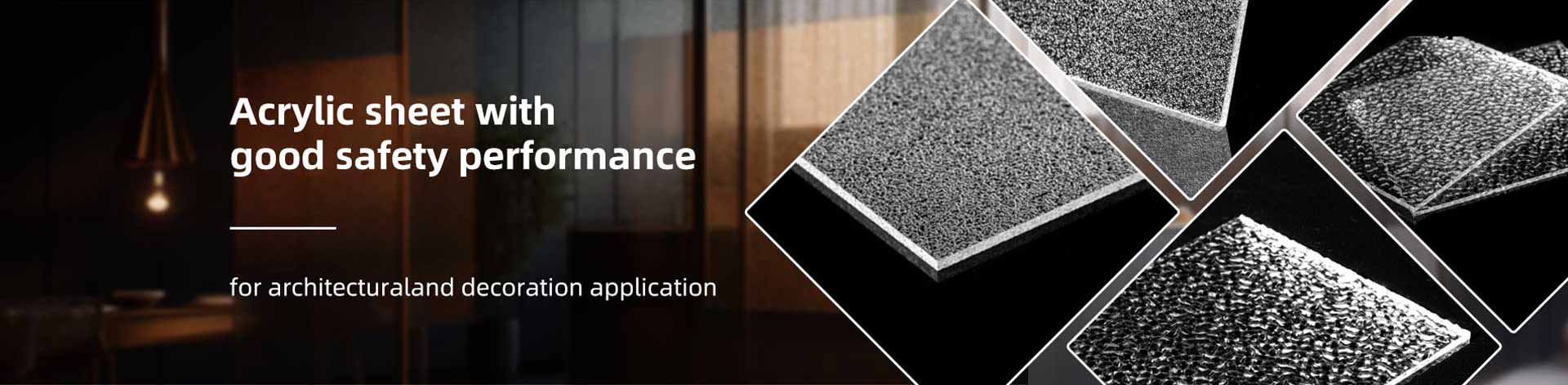
Reeded acrylic sheets create finer vertical textures and privacy effects, while ribbed acrylic sheets provide stronger linear patterns and light control. The right choice depends on the required architectural appearance and optical effect.
Reeded acrylic sheet and ribbed acrylic sheet are textured acrylic materials used for architectural decoration, lighting covers, partitions, and interior applications. Although both feature linear surface patterns, their textures and visual effects are different.
Reeded acrylic sheet usually has narrow, closely spaced grooves that create a refined glass-like appearance. It provides soft light diffusion while maintaining a modern decorative style.
Ribbed acrylic sheet generally features wider raised or recessed linear structures. It creates stronger visual depth and more noticeable light and shadow effects.
From a manufacturer’s perspective, selecting between reeded and ribbed acrylic sheets depends on texture preference, privacy requirements, lighting effects, and the overall design concept.
Reeded acrylic sheet creates a sophisticated textured appearance through fine vertical lines.
The narrow grooves change how light passes through the sheet, creating a soft visual effect while maintaining a relatively open appearance.
The main advantages include:
Elegant linear texture
Soft light diffusion
Improved visual privacy
Modern architectural appearance
Glass-like decorative effect
Reeded acrylic sheets are commonly used in:
Interior partitions
Office dividers
Decorative wall panels
Cabinet doors
Lighting applications
Retail displays
They are suitable for projects requiring a refined and premium design style.
Ribbed acrylic sheet creates stronger texture and deeper visual patterns.
The wider rib structures interact with light differently, producing more noticeable shadows and dimensional effects.
The main advantages include:
Strong visual texture
Enhanced light reflection
Decorative depth
Better privacy effect
Distinct architectural appearance
Ribbed acrylic sheets are commonly used in:
Decorative panels
Feature walls
Lighting covers
Furniture designs
Commercial interiors
They are suitable for designs that require a stronger visual statement.
The main difference is the pattern scale and visual intensity.
Reeded acrylic focuses on fine, closely arranged lines.
Ribbed acrylic focuses on wider and more pronounced linear structures.
| Comparison | Reeded Acrylic Sheet | Ribbed Acrylic Sheet |
|---|---|---|
| Texture style | Fine vertical grooves | Strong linear ribs |
| Visual effect | Elegant and subtle | Bold and dimensional |
| Light control | Soft diffusion | Stronger pattern effect |
| Privacy level | Moderate | Higher |
| Design style | Premium minimalist | Decorative and expressive |
| Application focus | Refined interiors | Feature designs |
Both materials provide light diffusion, but the effect is different.
Reeded acrylic sheet creates softer and more uniform light changes because of its fine texture.
Ribbed acrylic sheet creates stronger light variation due to deeper surface structures.
For applications requiring:
Soft ambient lighting
Comfortable appearance
Subtle decoration
reeded acrylic is often preferred.
For applications requiring:
Strong visual effects
Decorative shadows
More noticeable textures
ribbed acrylic provides stronger results.
Ribbed acrylic sheet usually provides stronger privacy because its deeper texture creates more visual distortion.
The surface structure reduces direct visibility while allowing natural or artificial light to pass through.
Reeded acrylic also improves privacy, but its finer texture creates a more transparent and elegant appearance.
Applications requiring more separation often choose ribbed designs, while applications requiring balance between openness and privacy may choose reeded designs.
The choice depends on the desired lighting effect.
Reeded acrylic sheet is suitable for:
Decorative lighting
Modern interiors
Soft illumination panels
Premium design projects
Ribbed acrylic sheet is suitable for:
Feature lighting
Statement architectural elements
Decorative light covers
Spaces requiring stronger visual impact
Both materials can enhance lighting designs by controlling how light interacts with the surface.
Yes, both Textured Acrylic Sheets can be customized according to project requirements.
Manufacturers can adjust:
Texture depth
Pattern spacing
Sheet thickness
Surface finish
Sheet dimensions
Customization allows designers to achieve specific visual and optical effects.
Professional acrylic manufacturers evaluate the final application before recommending suitable texture designs.
Professional designers and manufacturers consider several factors before selecting textured acrylic materials.
Reeded acrylic is often selected for:
Minimalist architecture
Modern interiors
Premium decorative applications
Ribbed acrylic is often selected for:
Creative spaces
Feature designs
Strong visual effects
Manufacturers evaluate:
Light diffusion
Shadow effects
Brightness appearance
Viewing distance
Different spaces require different levels of visual separation.
Important factors include:
Cutting method
Installation structure
Thickness tolerance
Surface protection
Experienced acrylic manufacturers select materials based on the complete design requirement rather than texture appearance alone.
Reeded acrylic sheet is the better choice when architectural projects require refined textures, soft light diffusion, and elegant privacy effects.
Ribbed acrylic sheet is the better choice when projects require stronger patterns, deeper visual effects, and higher privacy.
For modern interiors, decorative lighting, and premium design applications, reeded acrylic provides a sophisticated appearance. For feature walls, creative spaces, and stronger architectural effects, ribbed acrylic offers greater visual impact.
As an acrylic sheet manufacturer, Kunxin provides customized textured acrylic solutions, including reeded acrylic sheets, ribbed acrylic sheets, and other decorative acrylic products designed for architectural and lighting applications.