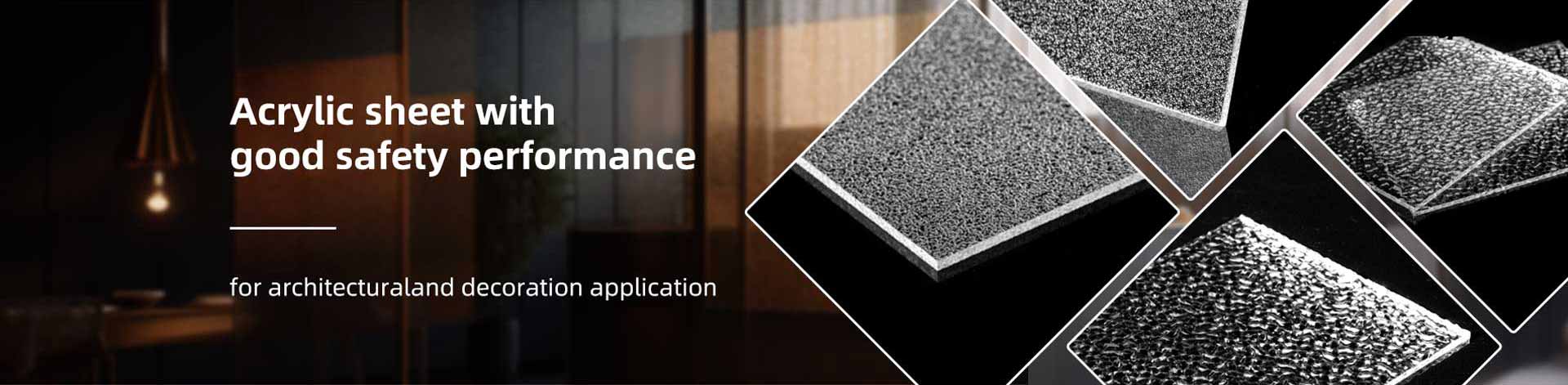
Acrylic sheet is less likely to shatter like traditional glass, but it can still crack or break when exposed to excessive impact, improper installation, or unsuitable application conditions. The main advantage of acrylic is that it provides high transparency with better impact resistance and safer breakage behavior compared with standard glass.
For projects involving lighting covers, architectural panels, displays, and protective barriers, understanding how acrylic fails is important before selecting the right material specification.
Acrylic sheet, also known as PMMA, is a rigid thermoplastic material with excellent optical clarity and weather resistance. However, standard acrylic has a relatively brittle structure compared with impact-modified plastics.
When acrylic reaches its impact limit, it usually develops cracks rather than breaking into many sharp fragments like ordinary glass. Technical data from acrylic material suppliers shows that clear PMMA commonly provides around 92% light transmission under ASTM D1003 testing, while maintaining good rigidity and surface hardness.
Common reasons acrylic sheets may crack include:
Excessive impact force
Incorrect drilling or cutting
Internal stress after processing
Improper installation
Wrong thickness selection
Extreme temperature changes
Acrylic is often selected as an alternative to glass because of its combination of transparency, lightweight structure, and impact performance.
| Factor | Acrylic Sheet | Glass |
|---|---|---|
| Transparency | Around 92% light transmission | High transparency |
| Weight | Approximately half the weight of glass | Heavier |
| Impact behavior | More resistant before failure | More likely to shatter into sharp pieces |
| Processing | Easier cutting, drilling, bending | More limited processing |
| Design flexibility | Higher customization options | Lower flexibility |
Acrylic sheets are widely used in applications where glass breakage creates safety concerns. Compared with glass, acrylic generally provides better impact resistance and does not break into small sharp fragments when failure occurs.
The durability of acrylic depends on more than the material itself.
Thicker acrylic sheets generally provide higher structural strength. The required thickness depends on:
Panel size
Installation method
Support structure
Expected impact level
Application environment
During an OEM or ODM project, manufacturers should evaluate the complete structure instead of selecting thickness only based on appearance.
Standard acrylic works well for many applications, but some projects require impact-modified acrylic.
Impact-resistant PMMA uses special modifiers to improve toughness while maintaining transparency and weather resistance. These grades are commonly used in applications requiring higher impact strength, such as building sheets, lighting profiles, and protective panels.
Cutting, drilling, bending, and polishing can influence internal stress.
A professional acrylic sheet manufacturer should control:
Cutting speed
Edge finishing
Heat treatment
Surface protection
Dimensional accuracy
Poor processing may create stress points that increase the risk of cracking during installation.
KUNXIN focuses on Optical Plastic manufacturing and provides acrylic solutions for lighting, architecture, display, and customized applications.
The manufacturing process includes:
Raw material preparation
Extrusion
Calendering
Cooling
Protective film application
Cutting
Quality inspection
KUNXIN uses optical-grade materials and computer-controlled production lines. The company states that it uses Mitsubishi raw materials from Japan and completes extrusion, calendaring, cooling, and masking processes under dust-free conditions. Its monthly processing capability reaches approximately 600 tons.
These manufacturing controls help maintain stable thickness, surface quality, and optical performance across large production volumes.
For applications where safety and durability matter, manufacturers should evaluate:
| Inspection Area | Purpose |
|---|---|
| Thickness tolerance | Ensure structural consistency |
| Surface quality | Prevent defects and scratches |
| Transparency | Maintain optical performance |
| Edge condition | Reduce stress concentration |
| Material quality | Confirm performance stability |
| Packaging | Prevent transportation damage |
A complete project sourcing checklist should also include:
Acrylic type
Required thickness
Impact requirements
Processing method
Surface finish
Installation environment
Expected quantity
Packaging requirements
Standard acrylic is suitable for many decorative and functional applications, but high-impact environments may require specially modified materials.
Common applications include:
LED diffuser panels
Display covers
Architectural glazing
Machine protection panels
Decorative partitions
Custom plastic components
KUNXIN provides different acrylic solutions including clear acrylic sheets, frosted acrylic sheets, Textured Acrylic Sheets, mirrored acrylic sheets, and customized processing options. The company supports laser cutting, CNC milling, heat bending, diamond polishing, thermoforming, surface treatment, and acrylic laminating.
Acrylic performance depends on correct material selection, processing control, and application design. Working directly with a manufacturer allows better evaluation of thickness, material grade, fabrication method, and quality requirements.
Unlike a trader who mainly handles product sourcing, an experienced manufacturer can adjust production parameters and recommend suitable solutions before bulk supply begins.
Acrylic sheet does not normally shatter like glass, but selecting the wrong specification or processing method can still lead to cracking. By controlling material selection, manufacturing processes, and quality checkpoints, KUNXIN helps provide reliable acrylic solutions for lighting, architectural, display, and customized applications.
Previous: Does Acrylic Sheet Shrink Over Time?