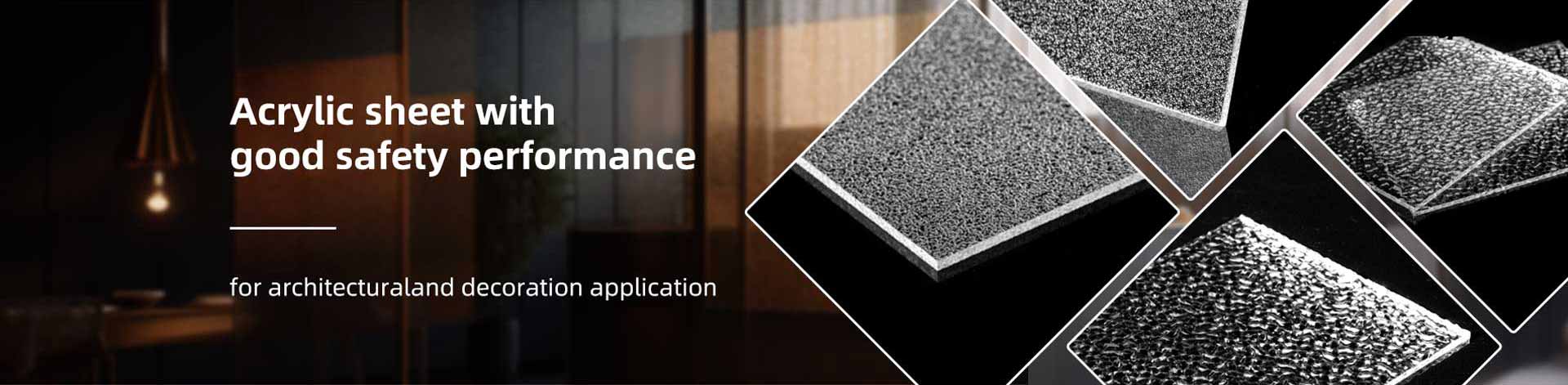
Ordering decorative acrylic sheet in bulk requires more than confirming price and quantity. Large-volume projects depend on consistent appearance, stable material performance, accurate specifications, and reliable production capability.
Putting a picture on acrylic sheet requires the right printing method, surface preparation, and material selection to achieve a clear, durable, and professional result.
Cast acrylic sheet is produced by transforming liquid methyl methacrylate monomer into solid PMMA through a controlled polymerization process. Unlike extruded acrylic, which is formed by melting and pushing plastic pellets through a die, cast acrylic is created inside molds.
Cutting an acrylic sheet requires the right method based on thickness, shape, production volume, and final application. While thin acrylic panels can be cut manually with scoring tools, larger or precision projects usually require professional processing methods such as laser cutting, CNC machining, or saw cutting.
Although acrylic has a smooth and non-porous surface, its low surface energy can make paint adhesion more challenging compared with traditional materials. A professional coating process helps improve adhesion, appearance consistency, and long-term durability.
Cutting acrylic sheet requires the right method, tools, and processing conditions to achieve clean edges, accurate dimensions, and minimal cracking risk. The best cutting method depends on acrylic thickness, production volume, surface requirements, and final application.
An acrylic sheet can make a good table protector because it provides a lightweight, transparent, and customizable surface layer that helps protect furniture from scratches, stains, moisture, and daily wear.
Acrylic sheet can warp under certain conditions, but high-quality acrylic manufactured with proper material control and processing technology can maintain excellent dimensional stability. Warping usually happens because of uneven heating, internal stress, improper installation, incorrect thickness selection, or unsuitable fabrication methods.
The thickness of an acrylic sheet does not automatically make it clearer. Optical clarity mainly depends on material quality, raw material purity, surface condition, thickness consistency, and manufacturing control. A thicker acrylic sheet can provide better structural stability, but transparency and visual quality depend more on how the sheet is produced.
Acrylic sheet generally has good dimensional stability, but it can experience slight shrinkage or dimensional changes over time under certain conditions. Temperature changes, internal stress, processing methods, material quality, and installation conditions all influence whether acrylic sheets maintain their original dimensions.
Acrylic sheet is less likely to shatter like traditional glass, but it can still crack or break when exposed to excessive impact, improper installation, or unsuitable application conditions. The main advantage of acrylic is that it provides high transparency with better impact resistance and safer breakage behavior compared with standard glass.
Acrylic sheet can scratch, especially when exposed to sharp objects, rough cleaning methods, or improper handling. However, high-quality acrylic with controlled manufacturing processes can maintain a smooth and clear surface for long-term applications.