Acrylic sheet can warp under certain conditions, but high-quality acrylic manufactured with proper material control and processing technology can maintain excellent dimensional stability. Warping usually happens because of uneven heating, internal stress, improper installation, incorrect thickness selection, or unsuitable fabrication methods.
For applications such as LED diffuser panels, architectural panels, display covers, and decorative acrylic products, preventing deformation starts with choosing the right material specification and manufacturing process.
Acrylic sheet is a thermoplastic material, which means it responds to temperature changes. When exposed to heat, acrylic expands, and when temperatures decrease, it contracts.
Warping usually occurs when different areas of the sheet expand or contract at different rates.
Common causes include:
Uneven temperature exposure
Direct sunlight without proper design consideration
Internal stress after processing
Incorrect support structure
Improper storage
Excessive heat during fabrication
PMMA acrylic has a thermal expansion coefficient of around 70 × 10⁻⁶ per degree Celsius, meaning temperature changes can create measurable dimensional movement in large panels.
For example, a 1-meter acrylic panel exposed to a 30°C temperature increase may expand by approximately 2 mm. Proper design should consider this movement during installation.
Thickness influences rigidity and structural stability, but thicker acrylic does not automatically eliminate warping.
| Acrylic Thickness | Effect On Warping |
|---|---|
| Thin sheet | More flexible and easier to deform |
| Medium thickness | Balanced strength and processing |
| Thick sheet | Higher rigidity but requires proper support |
The correct thickness depends on:
Panel size
Installation method
Load requirements
Temperature conditions
Processing method
During OEM and ODM projects, manufacturers should evaluate the complete application instead of selecting thickness only based on appearance.
Acrylic sheet quality is strongly influenced by how it is produced.
The manufacturing process typically includes:
Raw material preparation
Extrusion
Calendering
Cooling
Thickness inspection
Protective film application
Cutting and packaging
During extrusion, acrylic material is heated, formed, and cooled. If cooling is not controlled evenly, internal stress may remain inside the sheet and later cause deformation.
KUNXIN uses optical-grade materials and computer-controlled production lines. The company states that it uses Mitsubishi raw materials from Japan, while key processes including extrusion, calendaring, cooling, and masking film application are completed under dust-free conditions. Its monthly processing capability reaches approximately 600 tons. (KUNXIN)
These production controls help maintain stable thickness, surface quality, and dimensional consistency.
One hidden factor behind acrylic warping is residual stress.
During cutting, drilling, bending, or thermoforming, stress can build inside the sheet. When the material is later exposed to heat or mechanical pressure, these stresses may release and cause bending.
A professional acrylic sheet manufacturer should control:
Extrusion temperature
Cooling speed
Cutting method
Edge finishing
Heat treatment
Storage conditions
KUNXIN provides acrylic fabrication services including laser cutting, CNC milling, heat bending, diamond polishing, thermoforming, surface treatment, and acrylic laminating. (KUNXIN)
These processes allow manufacturers to optimize acrylic sheets for different applications.
A practical project sourcing checklist should include:
Acrylic material type
Sheet thickness
Expected temperature range
Installation environment
Support structure
Processing requirements
Packaging method
Final application
For large panels, designers should also consider expansion gaps and fixing methods.
| Control Method | Benefit |
|---|---|
| Correct thickness selection | Improves rigidity |
| Proper support design | Reduces bending |
| Controlled processing | Minimizes internal stress |
| Protective packaging | Prevents transportation damage |
| Stable raw materials | Improves consistency |
For large-volume acrylic projects, dimensional stability should be included in quality inspections.
Important quality control checkpoints include:
Thickness tolerance
Flatness inspection
Surface quality
Transparency consistency
Edge condition
Material uniformity
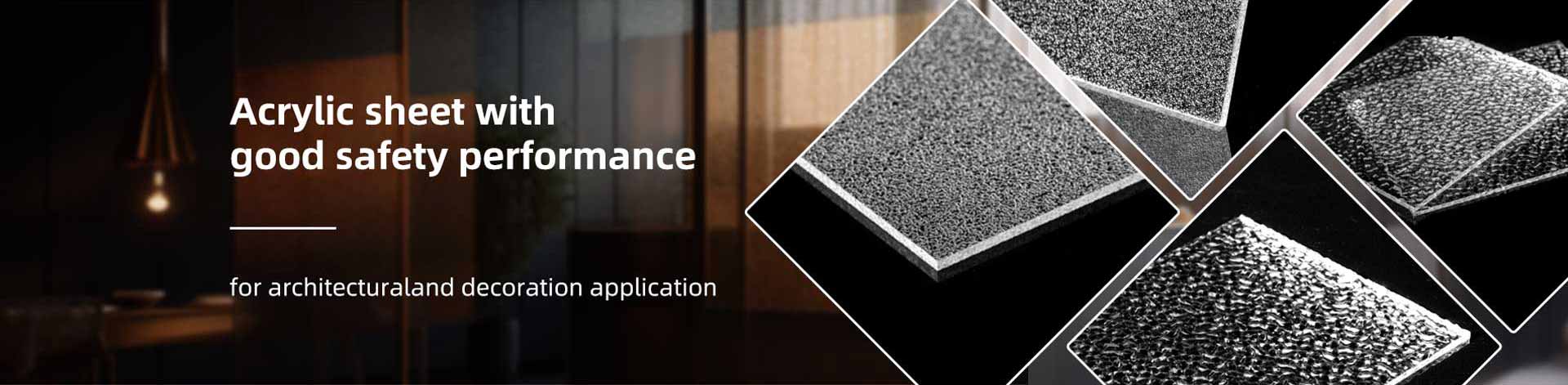
KUNXIN focuses on Optical Plastic manufacturing, including acrylic diffuser sheets, optical PMMA sheets, textured acrylic panels, and customized acrylic solutions for lighting, architecture, and display applications. (KUNXIN)
Stable production quality is especially important when thousands of sheets must maintain the same dimensions and appearance.
Working directly with an acrylic sheet manufacturer provides better control over material selection, production parameters, and customization.
A manufacturer can evaluate:
Whether the acrylic grade suits the environment
Whether thickness matches the structure
Whether processing may create stress
Whether packaging protects the sheet during transport
A trader may provide available products, but a manufacturer can adjust production methods according to the final application requirements.
For international projects, acrylic sheet performance should be evaluated before mass production.
Important considerations include:
Weather exposure
Transportation conditions
Processing requirements
Surface protection
Documentation requirements
KUNXIN follows ISO9001 quality management standards and controls production processes to maintain product consistency. (KUNXIN)
Acrylic sheet does not normally warp under normal conditions when the correct material, thickness, processing method, and installation design are selected. By combining controlled manufacturing, customized fabrication, and quality inspection, KUNXIN helps provide acrylic solutions with stable performance for lighting, architectural, display, and decorative applications.