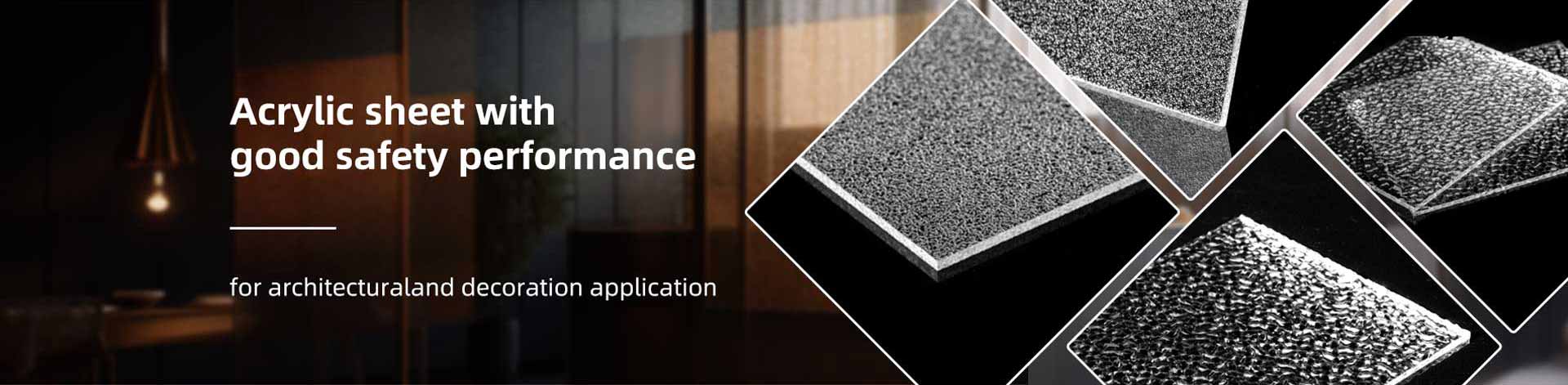
The thickness of an acrylic sheet does not automatically make it clearer. Optical clarity mainly depends on material quality, raw material purity, surface condition, thickness consistency, and manufacturing control. A thicker acrylic sheet can provide better structural stability, but transparency and visual quality depend more on how the sheet is produced. (KUNXIN)
For applications such as LED lighting covers, display panels, architectural partitions, and decorative acrylic products, choosing the correct thickness requires balancing clarity, strength, processing requirements, and project conditions.
Acrylic sheet, also known as PMMA, is widely used because of its excellent optical performance. Clear acrylic can reach around 92% light transmission under ASTM D1003 testing, which makes it suitable for applications requiring high transparency. (KUNXIN)
However, transparency is affected by several factors:
Raw material purity
Manufacturing process
Surface quality
Thickness tolerance
Internal stress
Processing method
A thin acrylic sheet made from high-quality optical material may appear clearer than a thicker sheet produced with poor material control.
Increasing acrylic thickness mainly improves rigidity and impact resistance rather than optical clarity.
For example:
| Acrylic Thickness | Main Effect |
|---|---|
| Thin sheet | Lightweight and easier processing |
| Medium thickness | Balance between clarity and strength |
| Thick sheet | Higher rigidity and structural stability |
For architectural panels, partitions, and large display structures, thicker sheets may reduce bending and improve installation stability. However, the light transmission rate may slightly change because light travels through a longer material path.
The correct thickness should be selected according to the final application rather than simply choosing the thickest option.
A practical project sourcing checklist should include:
Panel size
Installation method
Required transparency
Load requirements
Indoor or outdoor environment
Processing method
Surface finish
For example, LED diffuser applications often focus on controlling light distribution rather than maximizing transparency. KUNXIN provides Optical Plastic solutions including acrylic diffuser sheets, anti-glare diffuser sheets, prismatic sheets, and Light Guide Plates designed for different lighting requirements. (KUNXIN)
Acrylic sheet clarity is created during manufacturing, not only determined by thickness.
A professional acrylic sheet manufacturing process includes:
Raw material selection
Extrusion
Calendering
Cooling
Thickness inspection
Protective film application
Cutting and packaging
During extrusion, temperature control and cooling stability influence internal stress, surface smoothness, and thickness consistency.
KUNXIN uses optical-grade materials and computer-controlled production lines. The company states that it uses Mitsubishi raw materials from Japan and completes extrusion, calendaring, cooling, and masking processes under controlled production conditions. Its monthly processing capability reaches approximately 600 tons. (KUNXIN)
These production controls help maintain stable optical performance across large-volume orders.
For standard decorative applications, small visual differences may not be obvious. However, for optical applications, small variations can affect lighting performance and appearance.
Important quality control checkpoints include:
| Inspection Item | Purpose |
|---|---|
| Thickness tolerance | Maintain consistent optical path |
| Surface flatness | Prevent distortion |
| Transparency | Ensure visual clarity |
| Material consistency | Maintain batch stability |
| Surface defects | Avoid visible marks |
| Cutting accuracy | Support precise assembly |
For LED lighting projects, diffuser sheets need to balance transparency and diffusion. Excessive clarity may reveal LED hotspots, while controlled diffusion improves visual comfort.
During the OEM and ODM process, thickness should be reviewed together with design requirements.
A manufacturer should evaluate:
Product structure
Processing method
Required bending or forming
Surface treatment
Final installation conditions
Transportation protection
KUNXIN provides customized acrylic solutions with different light transmission levels, surface textures, and shaping options. The company also supports fabrication processes including laser cutting, CNC milling, heat bending, diamond polishing, thermoforming, surface treatment, and acrylic laminating. (KUNXIN)
This allows acrylic thickness to be matched with the complete product design instead of selected independently.
Working directly with an acrylic sheet manufacturer provides better control over material selection, thickness accuracy, processing capability, and quality consistency.
A trader may provide different sheet options, but a manufacturer can evaluate whether the selected thickness is suitable for extrusion, cutting, forming, and final application requirements.
For bulk supply, manufacturers can also maintain consistent thickness, optical performance, and surface quality between production batches.
A thicker acrylic sheet does not always mean better clarity or better quality. The ideal choice depends on the balance between transparency, strength, processing requirements, and application conditions.
For lighting, architecture, decoration, and display projects, the best acrylic solution comes from selecting the right material grade, thickness, surface treatment, and manufacturing process together.
With optical plastic manufacturing experience, customized processing capability, and controlled production systems, KUNXIN helps provide acrylic sheet solutions that combine optical performance, dimensional stability, and reliable quality for different applications.
Previous: Does Acrylic Sheet Warp?