Cutting an acrylic sheet requires the right method based on thickness, shape, production volume, and final application. While thin acrylic panels can be cut manually with scoring tools, larger or precision projects usually require professional processing methods such as laser cutting, CNC machining, or saw cutting.
For manufacturers handling acrylic projects, the cutting process is not only about separating the sheet. It also affects edge quality, dimensional accuracy, surface appearance, and final product performance.
The best way to cut acrylic depends on the material specification and project requirements.
| Cutting Method | Suitable Application |
|---|---|
| Scoring and snapping | Thin acrylic sheets and straight cuts |
| Laser cutting | Complex shapes and smooth edges |
| CNC machining | Precision parts and custom designs |
| Saw cutting | Large panels and high-volume processing |
| Thermoforming | Three-dimensional structures |
Acrylic sheet is a thermoplastic material with high optical clarity and flexible processing characteristics. Clear PMMA acrylic can achieve around 92% light transmission under ASTM D1003 testing, which is why cutting quality is especially important for applications requiring visual performance. (KUNXIN)
For thin acrylic sheets, scoring is one of the simplest cutting methods.
The basic process includes:
Marking the cutting line
Creating a deep groove with an acrylic scoring tool
Repeating the scoring process several times
Applying controlled pressure to snap the sheet
This method works best for straight cuts and thinner materials.
However, scoring is not recommended for:
Thick acrylic panels
Complex shapes
Precision components
Optical products requiring perfect edges
For these applications, professional fabrication methods provide better results.
Laser cutting is commonly used when appearance and precision are important.
Advantages include:
Smooth cutting edges
High dimensional accuracy
Complex design capability
Reduced secondary processing
During laser cutting, heat melts the acrylic along the cutting path. Proper control of laser power and speed is necessary to avoid:
Edge discoloration
Thermal stress
Surface damage
KUNXIN provides laser cutting services as part of its acrylic fabrication capabilities, together with CNC milling, saw cutting, heat bending, diamond polishing, and thermoforming. (KUNXIN)
CNC machining is suitable for acrylic products requiring precise dimensions and structural details.
It can create:
Accurate holes
Curved designs
Complex shapes
Assembly components
Custom panels
Compared with simple cutting methods, CNC processing gives manufacturers better control over tolerance and repeatability.
During OEM and ODM projects, manufacturers usually review drawings, thickness requirements, surface finish, and installation conditions before selecting the best cutting method.
Saw cutting remains an effective solution for large acrylic panels and production orders.
The final quality depends on:
Blade selection
Cutting speed
Material support
Cooling control
Operator experience
Incorrect cutting parameters may cause:
Cracked edges
Rough surfaces
Stress marks
Material waste
A professional acrylic sheet manufacturer controls these factors during production to maintain stable results across different batches.
Cutting quality starts from acrylic sheet production.
A complete acrylic manufacturing process includes:
Raw material preparation
Extrusion or casting
Thickness control
Cooling
Surface protection
Cutting
Inspection
Packaging
KUNXIN uses optical-grade materials and automated production systems. The company states that it uses Mitsubishi raw materials from Japan, while extrusion, calendaring, cooling, and masking film processes are completed under dust-free conditions. Its monthly processing capability reaches approximately 600 tons. (KUNXIN)
Stable thickness and lower internal stress help reduce cutting problems such as cracking and deformation.
Not all acrylic sheets behave the same during fabrication.
A project sourcing checklist should consider:
| Requirement | Material Consideration |
|---|---|
| High transparency | Optical acrylic sheet |
| Light diffusion | Acrylic diffuser sheet |
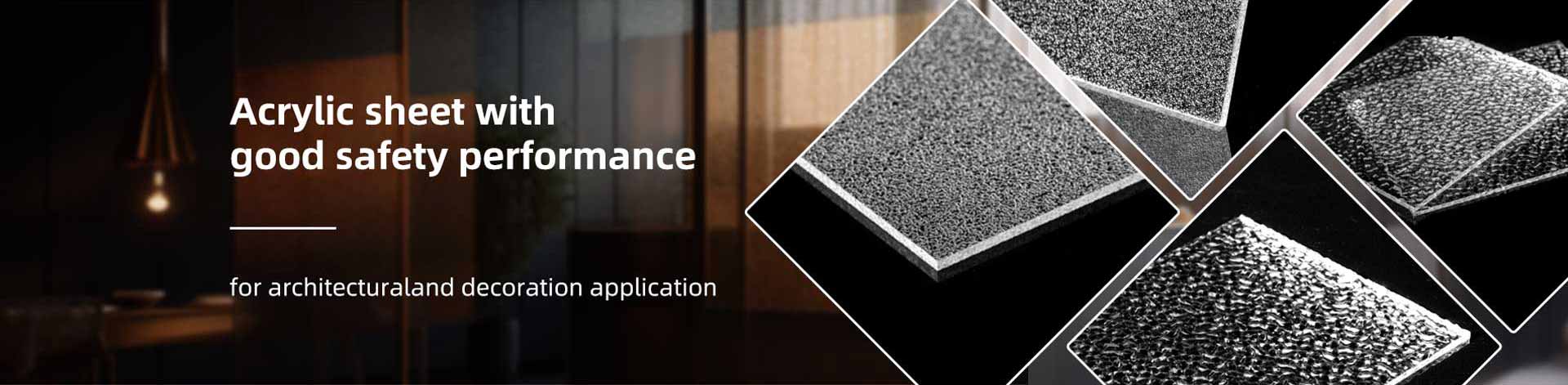
| Decorative design | Textured Acrylic Sheet |
| Outdoor use | Weather-resistant acrylic material |
| Precision parts | Stable thickness acrylic sheet |
KUNXIN supplies optical acrylic sheets, acrylic diffuser sheets, textured acrylic panels, and Decorative Acrylic Sheets for lighting, architecture, display, and customized applications. (KUNXIN)
For bulk acrylic supply, cutting accuracy should be included in quality inspections.
Important quality control checkpoints include:
Sheet thickness
Cutting dimensions
Edge smoothness
Surface condition
Optical clarity
Protective film condition
| Inspection Item | Purpose |
|---|---|
| Dimension check | Ensure assembly accuracy |
| Edge inspection | Prevent cracks and defects |
| Surface inspection | Maintain appearance |
| Thickness measurement | Ensure consistency |
| Packaging inspection | Prevent transportation damage |
These checks are especially important for export projects where replacement costs and delivery delays can affect the entire project schedule.
Working directly with an acrylic sheet manufacturer provides more control over:
Material selection
Cutting method
Production consistency
Surface treatment
Quality inspection
Customized processing
A trader may provide standard acrylic sheets, but a manufacturer can evaluate the complete production process and recommend the most suitable fabrication solution.
KUNXIN focuses on acrylic and polycarbonate sheet manufacturing, offering Optical Plastic products, acrylic diffuser sheets, textured acrylic panels, and customized fabrication services. The company supports OEM and ODM projects with different light transmission levels, surface textures, and shaping requirements. (KUNXIN)
For large-volume projects, acrylic cutting should be planned before mass production.
Important considerations include:
Final product drawings
Required tolerance
Cutting method
Surface protection
Packaging requirements
Application environment
Acrylic sheet cutting is not simply a mechanical process. The right method depends on material quality, design requirements, production scale, and final application. By combining stable acrylic manufacturing, professional fabrication equipment, and strict quality control, KUNXIN helps provide reliable acrylic solutions for lighting, architectural, display, and decorative projects.