Acrylic sheet can help reduce noise when it is designed and installed as part of an appropriate acoustic solution. While standard acrylic panels are not designed as soundproof materials, thick PMMA sheets can block and reflect airborne sound because of their density, rigidity, and continuous surface structure. This makes acrylic suitable for applications such as transparent acoustic barriers, office partitions, display enclosures, and architectural panels.
Acrylic sheet reduces noise mainly through sound reflection and transmission loss.
When sound waves reach an acrylic panel, part of the energy is reflected, while the remaining energy must pass through the material. A thicker and denser panel generally provides better resistance to sound transmission.
PMMA acrylic is a transparent thermoplastic with a density of around 1.18 g/cm³, making it lighter than glass while still providing good rigidity and transparency. This balance allows acrylic to be used in applications where both visibility and noise control are required.
Common applications include:
Transparent noise barriers
Office partitions
Indoor acoustic panels
Equipment covers
Architectural spaces requiring visibility
The acoustic performance of acrylic depends on several design factors.
| Factor | Impact On Noise Reduction |
|---|---|
| Sheet thickness | Thicker sheets usually provide higher sound insulation |
| Panel size | Larger unsupported areas require stronger structures |
| Installation gaps | Small gaps can reduce acoustic performance |
| Material quality | Consistent density improves stability |
| Panel structure | Multi-layer designs can improve performance |
For example, acrylic acoustic barriers are commonly manufactured with thicker PMMA sheets because the increased mass helps reduce airborne sound transmission. Some acrylic acoustic barrier systems use 15 mm sheets and can achieve measurable noise reduction performance depending on the complete structure.
Acrylic and glass both have applications in transparent acoustic solutions, but they offer different advantages.
| Feature | Acrylic Sheet | Glass |
|---|---|---|
| Weight | Lightweight | Heavier |
| Transparency | High optical clarity | High optical clarity |
| Processing | Easier cutting and shaping | More limited processing |
| Impact resistance | Higher flexibility | More brittle |
| Customization | Easier for special shapes and textures | More restricted |
For projects requiring custom sizes, curved designs, or lightweight structures, acrylic provides more manufacturing flexibility.
Not every acrylic sheet is suitable for noise reduction projects.
A professional acrylic sheet manufacturer should evaluate:
Sheet thickness
Material grade
Transparency requirements
Surface finish
Installation method
Environmental conditions
KUNXIN produces optical acrylic sheets and customized acrylic panels using controlled production processes. The company provides different thicknesses, textures, colors, and surface solutions for architectural and functional applications.
The quality consistency of acrylic sheets depends on the manufacturing process.
A typical acrylic sheet production process includes:
Raw material preparation
Extrusion
Calendering
Cooling
Surface protection
Quality inspection
KUNXIN uses optical-grade materials and computer-controlled production lines. The company states that it uses Mitsubishi raw materials from Japan and completes extrusion, calendaring, cooling, and protective film processes under dust-free conditions. Its monthly processing capacity reaches approximately 600 tons.
Consistent thickness and surface quality are important because uneven panels may affect installation accuracy and acoustic performance.
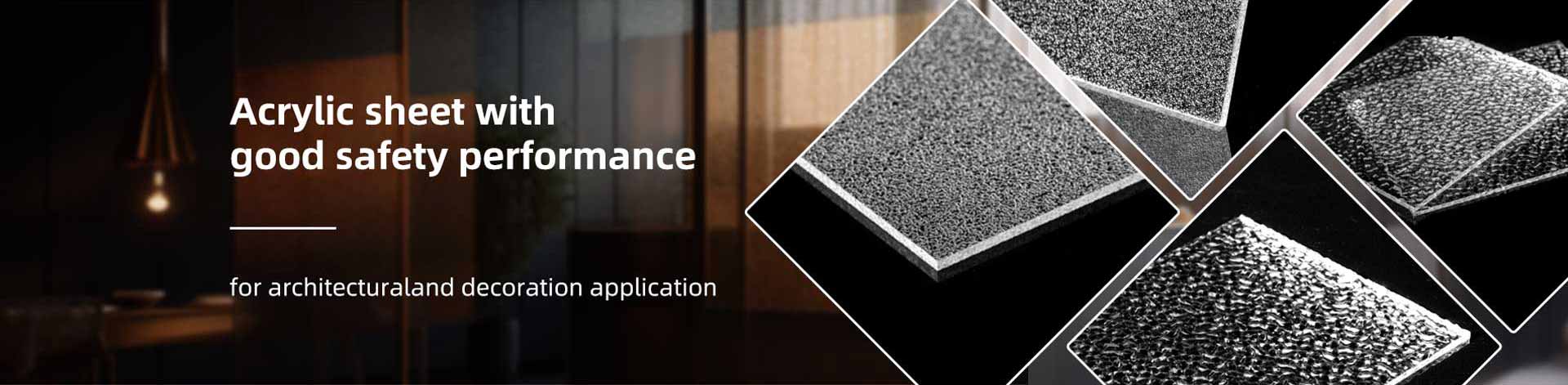
Textured Acrylic Sheets are mainly designed for decorative effects, light diffusion, and visual privacy. Their surface structure may influence how sound interacts with the panel, but they are not automatically acoustic materials.
For noise-sensitive applications, the main focus should remain on:
Panel thickness
Structural design
Sealing method
Installation quality
Overall system performance
KUNXIN offers textured acrylic sheets, frosted acrylic sheets, clear acrylic sheets, and decorative acrylic panels that can be customized according to different application requirements.
For customized acrylic projects, working directly with a manufacturer provides advantages in material selection, thickness adjustment, processing evaluation, and quality control.
A complete project sourcing checklist should include:
Required noise reduction target
Acrylic thickness
Panel dimensions
Surface finish
Processing requirements
Packaging method
Installation environment
During the OEM and ODM process, manufacturers can evaluate whether the selected acrylic structure is suitable before bulk production begins.
Important quality control checkpoints include:
Thickness tolerance
Surface flatness
Transparency consistency
Scratch protection
Edge quality
Material stability
For large projects, stable production quality is essential because small variations across panels may affect installation results.
Acrylic sheet can reduce noise when the material thickness, structure, and installation method are properly designed. It is not a replacement for every acoustic solution, but its combination of transparency, lightweight structure, and processing flexibility makes it valuable for architectural and customized applications. With optical material expertise, customized fabrication capabilities, and controlled manufacturing systems, KUNXIN supports acrylic solutions for lighting, decoration, display, and functional panel applications.
Previous: Does Acrylic Sheet Scratch?