High-end lighting applications require more than a transparent plastic cover. The right optical plastic must control brightness, reduce glare, hide LED dots, maintain color consistency, and keep the fixture appearance clean after long-term use.
Light diffusion performance should not be judged by transparency alone. PMMA and PC can both be used for LED diffuser sheets, but they perform differently in brightness, haze, impact resistance, heat stability, processing, and final lighting comfort.
Diffuser sheet plays a critical role in LED lighting by controlling how light is distributed, softened, and transmitted. Without proper diffusion, LED light sources can create glare, hotspots, and uneven brightness. A well-designed diffuser sheet improves visual comfort while maintaining high optical efficiency.
Acrylic sheet and polycarbonate sheet are both widely used transparent plastic materials, yet their performance characteristics and application focus are clearly different. Acrylic sheet is known for its excellent optical clarity, smooth surface finish, and strong weather resistance.
KUNXIN’s own installation guidance says acrylic can be mechanically fastened safely if the holes are drilled correctly, the right hardware is used, and the sheet is not over-tightened.
KUNXIN’s own acrylic thickness guide lists cast acrylic sheet in the 1 mm to 50 mm range for applications including aquariums, while its manufacturing article also names aquarium and exhibit panels as a common use for acrylic sheets. Industry aquarium guidance likewise explains that acrylic is often preferred over glass where strength, weight savings, and fabrication flexibility matter.
KUNXIN’s own processing guides state that acrylic softens in a forming range of about 140°C to 180°C, which is why PMMA can be bent into covers, display parts, guards, and custom lighting components after heating.
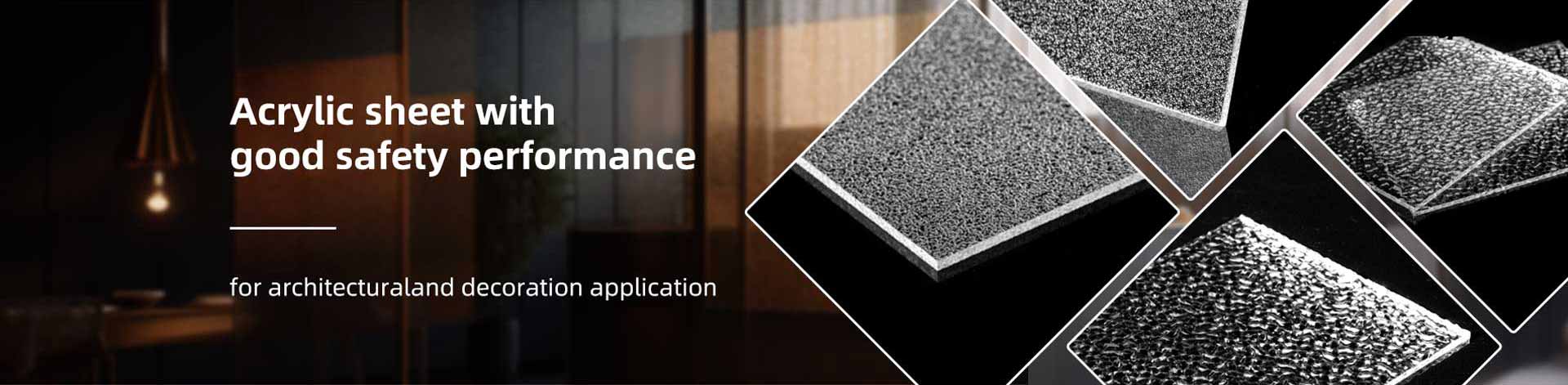
KUNXIN’s own product range includes Frosted Satin Ice Acrylic Sheet, and its application pages describe frosted acrylic as a material used for privacy, light diffusion, and decorative surfaces in interiors, lighting, and display projects.
KUNXIN’s PMMA product page states that clear acrylic reaches light transmission up to 92 percent, weighs only about half as much as glass, and can deliver impact resistance roughly 7 to 18 times higher than glass. KUNXIN’s comparison article also notes density around 1.19 g/cm³ for acrylic versus about 2.5 g/cm³ for glass, with acrylic showing significantly better impact tolerance.
KUNXIN states that its clear PMMA sheet can be recycled and reused by both physical and chemical methods, and its product pages repeatedly describe acrylic sheet as recyclable and environmentally friendly. Beyond plant-level scrap reuse, industry sources also note that PMMA can be chemically recycled through depolymerization, which converts acrylic waste back into methyl methacrylate for reuse in new material production.
KUNXIN’s own processing content states that acrylic can be laser cut, engraved, drilled, heat-bent, and polished, and its recent laser-cutting guides describe laser processing as one of the most precise and efficient methods for acrylic sheet fabrication.
KUNXIN’s own bonding guides explain that solvent cement is the most widely used solution for acrylic sheet, especially where clear joints, stable edge bonding, and clean appearance are required. Industry fabrication guidance says the same and notes that acrylic sheet is typically joined with solvent cement because the material is effectively welded at the joint line.